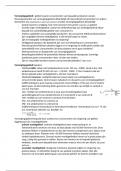
Mankiw & Taylor:
Economics 2
University of Applied Sciences Utrecht
Summary by: Viktória Dévényi (2017)
Viktória Dévényi – IBMS HU 2017
, Table of Contents
CHAPTER 4 – Elasticity and its applications ....................................................................... 4
The price elasticity of demand ........................................................................................................ 4
The price elasticity of demand and its determinants ...................................................................... 4
Computing the price elasticity of demand ....................................................................................... 5
Using the midpoint (arc elasticity of demand) method ................................................................... 5
Using the point elasticity of demand method .................................................................................. 5
The variety of demand curves .......................................................................................................... 6
Total expenditure, total revenue and the price elasticity of demand ............................................ 6
Elasticity and total expenditure along a linear demand curve....................................................... 7
Other demand elasticities ................................................................................................................ 7
The income elasticity of demand ...................................................................................................... 7
The cross-price elasticity of demand ................................................................................................ 8
Price elasticity of supply ................................................................................................................. 8
The price elasticity of supply and its determinants ........................................................................ 8
The midpoint (arc) method of calculating percentage changes and elasticities............................ 9
Point elasticity of supply method ...................................................................................................... 9
Total revenue and the price elasticity of supply ............................................................................ 11
Summary ....................................................................................................................................... 11
CHAPTER 8 – Supply, demand and government policies ...................................................12
Controls on prices ......................................................................................................................... 12
How price ceilings affect market outcomes ................................................................................... 12
How price floors affect market outcomes ...................................................................................... 12
Summary .......................................................................................................................................... 13
Taxes ............................................................................................................................................. 13
How taxes on sellers affect market outcomes ................................................................................ 13
Elasticity and tax incidence............................................................................................................. 14
Subsidies ....................................................................................................................................... 15
How subsidies affect market outcomes .......................................................................................... 15
Conclusion..................................................................................................................................... 15
Summary ....................................................................................................................................... 16
CHAPTER 7 – Consumers, producer and the efficiency of markets ...................................17
Consumer surplus ......................................................................................................................... 17
Producer surplus ........................................................................................................................... 19
Market efficiency .......................................................................................................................... 20
Summary ....................................................................................................................................... 22
CHAPTER 5 – Background to demand: the theory of consumer choice .............................23
The standard economic model ...................................................................................................... 23
The budget constraint: what the consumer can afford ................................................................. 23
Preferences: what the consumer wants ......................................................................................... 25
Optimization: what the consumer chooses .................................................................................... 27
Summary ....................................................................................................................................... 30
CHAPTER 6 – Background to supply: firms in competitive markets .................................31
The costs of production ................................................................................................................. 31
Production and costs – in the short run ........................................................................................ 31
Viktória Dévényi – IBMS HU 2017 2
, The various measures of cost ........................................................................................................ 32
Costs in the short run and in the long run .................................................................................... 33
Returns to scale ............................................................................................................................. 34
What is a competitive market? ..................................................................................................... 34
Profit maximization and the competitive firm’s supply curve ...................................................... 35
The supply curve in a competitive market .................................................................................... 39
Summary ....................................................................................................................................... 41
CHAPTER 13 – Firms’ production decisions ......................................................................42
Isoquants and isocosts ................................................................................................................... 42
The least-cost input combination .................................................................................................. 43
Summary ....................................................................................................................................... 43
CHAPTER 14 – Market structures I: Monopoly .................................................................44
Imperfect competition ................................................................................................................... 44
Why monopolies arise ................................................................................................................... 44
How monopolies make production and pricing decisions ............................................................. 45
The welfare cost of monopoly ....................................................................................................... 47
Price discrimination ...................................................................................................................... 49
Public policy towards monopolies ................................................................................................. 50
Conclusion..................................................................................................................................... 51
Summary ....................................................................................................................................... 52
CHAPTER 15 – Market structures II: Monopolistic competition .......................................53
Competition with differentiated products..................................................................................... 53
Advertising and branding ............................................................................................................. 56
Contestable markets ..................................................................................................................... 57
Conclusion..................................................................................................................................... 58
Summary ....................................................................................................................................... 59
CHAPTER 16 – Market structures III: Oligopoly ..............................................................60
Characteristics of oligopoly........................................................................................................... 60
Game theory and the economics of cooperation ........................................................................... 61
Public policy toward oligopolies.................................................................................................... 64
Summary ....................................................................................................................................... 65
CHAPTER 17 – The economics of labor markets................................................................66
The demand of labor ..................................................................................................................... 66
The supply of labor ....................................................................................................................... 67
Equilibrium in the labor market ................................................................................................... 69
Wage differentials ......................................................................................................................... 71
The economics of discrimination................................................................................................... 73
The other factors of production: land and capital ........................................................................ 74
Economic rent ............................................................................................................................... 75
Summary ....................................................................................................................................... 76
Viktória Dévényi – IBMS HU 2017 3
, CHAPTER 4 – Elasticity and its applications
The price a firm charges for its products is a vital part of its product positioning – what the product
offering is in relation to competitors. Elasticity: a measure of how much buyers and sellers respond
to changes in market conditions.
The price elasticity of demand
Businesses cannot directly control demand. They can seek to influence demand by utilizing a
variety of strategies and tactics but ultimately the consumer decides whether to buy a product or
not. One important way in which consumer behavior can be influenced is through a firm changing
the prices of its goods.
The price elasticity of demand and its determinants
Law of demand: a fall in the price of a good raises the quantity demanded (and vice versa).
Price elasticity of demand: a measure of how much the quantity demanded of a good responds to
a change in the price of that good.
• Demand for a good is said to be elastic or price sensitive if the quantity demanded responds
substantially to changes in the price.
• Demand is said to be inelastic or price insensitive if the quantity demanded responds only
slightly to changes in the price.
General rules about what determines the price elasticity of demand:
• Availability of close substitutes: goods with close substitutes tend to have more elastic
demand because it is easier for consumers to switch from that good to others. e.g. butter
and margarine
• Necessities versus luxuries: necessities tend to have relatively inelastic demands, whereas
luxuries have relatively elastic demands. Of course, whether a good is a necessity or a
luxury depends not on the intrinsic properties of the good but on the preferences of the
buyer. e.g. gas and electricity
• Definition of the market: narrowly defined markets tend to have more elastic demand
than broadly defined markets, because it is easier to find close substitutes for narrowly
defined goods. e.g. food is a broad category and has a fairly inelastic demand – ice cream
is a narrower category and has a more elastic demand
• Proportion of income devoted to the product: the higher the proportion of income
devoted to the product the greater the price elasticity is likely to be.
• Time horizon: goods tend to have more elastic demand over longer time horizons.
Viktória Dévényi – IBMS HU 2017 4
, Computing the price elasticity of demand
Elasticity can have a value which lies between 0 and infinity.
• Between 0 and 1, elasticity is said to be inelastic = the percentage change in quantity
demanded is less than the percentage change in price.
• If elasticity is greater than 1, it is said to be elastic = the percentage change in quantity
demanded is greater than the percentage change in price.
• If the percentage change in quantity demanded is the same as the percentage change in
price then the elasticity is equal to 1 and is called unit or unitary elasticity.
Using the midpoint (arc elasticity of demand) method
The midpoint method computes a percentage change by dividing the change by the midpoint (or
average) of the initial and final levels. It is often used when calculating the price elasticity of
demand between two points.
Using the point elasticity of demand method
Point elasticity of demand measures elasticity at a particular point on the demand curve. This
considers the change in quantity and the change in price as the ratio tends to the limit, in other
words how quantity demanded responds to an infinitesimally small change in price.
Viktória Dévényi – IBMS HU 2017 5
Economics 2
University of Applied Sciences Utrecht
Summary by: Viktória Dévényi (2017)
Viktória Dévényi – IBMS HU 2017
, Table of Contents
CHAPTER 4 – Elasticity and its applications ....................................................................... 4
The price elasticity of demand ........................................................................................................ 4
The price elasticity of demand and its determinants ...................................................................... 4
Computing the price elasticity of demand ....................................................................................... 5
Using the midpoint (arc elasticity of demand) method ................................................................... 5
Using the point elasticity of demand method .................................................................................. 5
The variety of demand curves .......................................................................................................... 6
Total expenditure, total revenue and the price elasticity of demand ............................................ 6
Elasticity and total expenditure along a linear demand curve....................................................... 7
Other demand elasticities ................................................................................................................ 7
The income elasticity of demand ...................................................................................................... 7
The cross-price elasticity of demand ................................................................................................ 8
Price elasticity of supply ................................................................................................................. 8
The price elasticity of supply and its determinants ........................................................................ 8
The midpoint (arc) method of calculating percentage changes and elasticities............................ 9
Point elasticity of supply method ...................................................................................................... 9
Total revenue and the price elasticity of supply ............................................................................ 11
Summary ....................................................................................................................................... 11
CHAPTER 8 – Supply, demand and government policies ...................................................12
Controls on prices ......................................................................................................................... 12
How price ceilings affect market outcomes ................................................................................... 12
How price floors affect market outcomes ...................................................................................... 12
Summary .......................................................................................................................................... 13
Taxes ............................................................................................................................................. 13
How taxes on sellers affect market outcomes ................................................................................ 13
Elasticity and tax incidence............................................................................................................. 14
Subsidies ....................................................................................................................................... 15
How subsidies affect market outcomes .......................................................................................... 15
Conclusion..................................................................................................................................... 15
Summary ....................................................................................................................................... 16
CHAPTER 7 – Consumers, producer and the efficiency of markets ...................................17
Consumer surplus ......................................................................................................................... 17
Producer surplus ........................................................................................................................... 19
Market efficiency .......................................................................................................................... 20
Summary ....................................................................................................................................... 22
CHAPTER 5 – Background to demand: the theory of consumer choice .............................23
The standard economic model ...................................................................................................... 23
The budget constraint: what the consumer can afford ................................................................. 23
Preferences: what the consumer wants ......................................................................................... 25
Optimization: what the consumer chooses .................................................................................... 27
Summary ....................................................................................................................................... 30
CHAPTER 6 – Background to supply: firms in competitive markets .................................31
The costs of production ................................................................................................................. 31
Production and costs – in the short run ........................................................................................ 31
Viktória Dévényi – IBMS HU 2017 2
, The various measures of cost ........................................................................................................ 32
Costs in the short run and in the long run .................................................................................... 33
Returns to scale ............................................................................................................................. 34
What is a competitive market? ..................................................................................................... 34
Profit maximization and the competitive firm’s supply curve ...................................................... 35
The supply curve in a competitive market .................................................................................... 39
Summary ....................................................................................................................................... 41
CHAPTER 13 – Firms’ production decisions ......................................................................42
Isoquants and isocosts ................................................................................................................... 42
The least-cost input combination .................................................................................................. 43
Summary ....................................................................................................................................... 43
CHAPTER 14 – Market structures I: Monopoly .................................................................44
Imperfect competition ................................................................................................................... 44
Why monopolies arise ................................................................................................................... 44
How monopolies make production and pricing decisions ............................................................. 45
The welfare cost of monopoly ....................................................................................................... 47
Price discrimination ...................................................................................................................... 49
Public policy towards monopolies ................................................................................................. 50
Conclusion..................................................................................................................................... 51
Summary ....................................................................................................................................... 52
CHAPTER 15 – Market structures II: Monopolistic competition .......................................53
Competition with differentiated products..................................................................................... 53
Advertising and branding ............................................................................................................. 56
Contestable markets ..................................................................................................................... 57
Conclusion..................................................................................................................................... 58
Summary ....................................................................................................................................... 59
CHAPTER 16 – Market structures III: Oligopoly ..............................................................60
Characteristics of oligopoly........................................................................................................... 60
Game theory and the economics of cooperation ........................................................................... 61
Public policy toward oligopolies.................................................................................................... 64
Summary ....................................................................................................................................... 65
CHAPTER 17 – The economics of labor markets................................................................66
The demand of labor ..................................................................................................................... 66
The supply of labor ....................................................................................................................... 67
Equilibrium in the labor market ................................................................................................... 69
Wage differentials ......................................................................................................................... 71
The economics of discrimination................................................................................................... 73
The other factors of production: land and capital ........................................................................ 74
Economic rent ............................................................................................................................... 75
Summary ....................................................................................................................................... 76
Viktória Dévényi – IBMS HU 2017 3
, CHAPTER 4 – Elasticity and its applications
The price a firm charges for its products is a vital part of its product positioning – what the product
offering is in relation to competitors. Elasticity: a measure of how much buyers and sellers respond
to changes in market conditions.
The price elasticity of demand
Businesses cannot directly control demand. They can seek to influence demand by utilizing a
variety of strategies and tactics but ultimately the consumer decides whether to buy a product or
not. One important way in which consumer behavior can be influenced is through a firm changing
the prices of its goods.
The price elasticity of demand and its determinants
Law of demand: a fall in the price of a good raises the quantity demanded (and vice versa).
Price elasticity of demand: a measure of how much the quantity demanded of a good responds to
a change in the price of that good.
• Demand for a good is said to be elastic or price sensitive if the quantity demanded responds
substantially to changes in the price.
• Demand is said to be inelastic or price insensitive if the quantity demanded responds only
slightly to changes in the price.
General rules about what determines the price elasticity of demand:
• Availability of close substitutes: goods with close substitutes tend to have more elastic
demand because it is easier for consumers to switch from that good to others. e.g. butter
and margarine
• Necessities versus luxuries: necessities tend to have relatively inelastic demands, whereas
luxuries have relatively elastic demands. Of course, whether a good is a necessity or a
luxury depends not on the intrinsic properties of the good but on the preferences of the
buyer. e.g. gas and electricity
• Definition of the market: narrowly defined markets tend to have more elastic demand
than broadly defined markets, because it is easier to find close substitutes for narrowly
defined goods. e.g. food is a broad category and has a fairly inelastic demand – ice cream
is a narrower category and has a more elastic demand
• Proportion of income devoted to the product: the higher the proportion of income
devoted to the product the greater the price elasticity is likely to be.
• Time horizon: goods tend to have more elastic demand over longer time horizons.
Viktória Dévényi – IBMS HU 2017 4
, Computing the price elasticity of demand
Elasticity can have a value which lies between 0 and infinity.
• Between 0 and 1, elasticity is said to be inelastic = the percentage change in quantity
demanded is less than the percentage change in price.
• If elasticity is greater than 1, it is said to be elastic = the percentage change in quantity
demanded is greater than the percentage change in price.
• If the percentage change in quantity demanded is the same as the percentage change in
price then the elasticity is equal to 1 and is called unit or unitary elasticity.
Using the midpoint (arc elasticity of demand) method
The midpoint method computes a percentage change by dividing the change by the midpoint (or
average) of the initial and final levels. It is often used when calculating the price elasticity of
demand between two points.
Using the point elasticity of demand method
Point elasticity of demand measures elasticity at a particular point on the demand curve. This
considers the change in quantity and the change in price as the ratio tends to the limit, in other
words how quantity demanded responds to an infinitesimally small change in price.
Viktória Dévényi – IBMS HU 2017 5