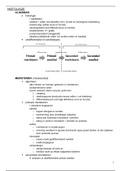
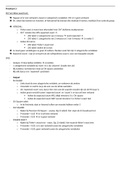
Notes problem 4 Eating disorders: disorders that are characterised by a persistent disturbance in
eating behaviour.
Similarities bulimia nervosa and anorexia nervosa:
- Both have a striking fear of becoming overweight and fat and an accompanying pursuit of
thinness.
- Sometimes deadly.
Differences bulimia nervosa and anorexia nervosa
- Anorexic patients are always severely underweight but this not true for bulimic patients.
o Bulimic persons are usually of normal weight or slightly overweight.
- Bulimic persons are pre-occupied with shame and guilt.
All differences between eating disorders:
Anorexia nervosa
- Means lack of appetite.
- Intense fear of gaining weight or becoming fat.
- Difference DSM-IV and DSM-5: lack of menstruation is no longer one of the criteria to be
diagnosed.
-
- Many patients deny having a problem.
- Ballet dancers at high risk artistic standards emphasize a slender physique (slim body).
- Higher mortality rate.
, Different types
- Binge-eating/purging type and the restricting type
o Key difference: the way they maintain their very low weight.
Restricting:
Every effort is made to limit the quantity of food consumed.
Caloric intake is tightly controlled.
Avoid eating in presence of others.
Binge-eating/purging
Binge, purge or both.
Binge: out-of-control consumption of amount of food that is far
bigger than a normal person would under the circumstances and
time.
Purge: remove the food they have eaten from their bodies.
o May include self-inflicted vomiting, use of laxatives, diuretics
or enemas.
Other compensations
o Excessive exercise or fasting.
comorbidity
- High comorbidity wit OCD symptoms and personality traits.
Bulimia nervosa
- Characterised by uncontrollable binge eating and
efforts to prevent resulting weight gain by using
self-inflicted vomiting and excessive exercise.
- May consume up to 4800 calories in one binge.
- Process
o Begins with restricted eating.
Eats low calorie foods.
o After a while the gradually restricted
eating fades and then they start to eat
‘forbidden’ foods.
eating behaviour.
Similarities bulimia nervosa and anorexia nervosa:
- Both have a striking fear of becoming overweight and fat and an accompanying pursuit of
thinness.
- Sometimes deadly.
Differences bulimia nervosa and anorexia nervosa
- Anorexic patients are always severely underweight but this not true for bulimic patients.
o Bulimic persons are usually of normal weight or slightly overweight.
- Bulimic persons are pre-occupied with shame and guilt.
All differences between eating disorders:
Anorexia nervosa
- Means lack of appetite.
- Intense fear of gaining weight or becoming fat.
- Difference DSM-IV and DSM-5: lack of menstruation is no longer one of the criteria to be
diagnosed.
-
- Many patients deny having a problem.
- Ballet dancers at high risk artistic standards emphasize a slender physique (slim body).
- Higher mortality rate.
, Different types
- Binge-eating/purging type and the restricting type
o Key difference: the way they maintain their very low weight.
Restricting:
Every effort is made to limit the quantity of food consumed.
Caloric intake is tightly controlled.
Avoid eating in presence of others.
Binge-eating/purging
Binge, purge or both.
Binge: out-of-control consumption of amount of food that is far
bigger than a normal person would under the circumstances and
time.
Purge: remove the food they have eaten from their bodies.
o May include self-inflicted vomiting, use of laxatives, diuretics
or enemas.
Other compensations
o Excessive exercise or fasting.
comorbidity
- High comorbidity wit OCD symptoms and personality traits.
Bulimia nervosa
- Characterised by uncontrollable binge eating and
efforts to prevent resulting weight gain by using
self-inflicted vomiting and excessive exercise.
- May consume up to 4800 calories in one binge.
- Process
o Begins with restricted eating.
Eats low calorie foods.
o After a while the gradually restricted
eating fades and then they start to eat
‘forbidden’ foods.