NRNP 6566 week 1 to 5 Key Concepts (VERIFIED)
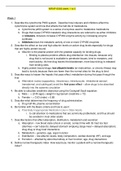
NRNP 6566 week 1 to 5 Week 1 1. Describe the cytochrome P450 system. Describe how inducers and inhibitors affect the cytochrome system and how that affects the half-life of medications. a. Cyt ochrome p450 system is a series of enzymes used to metabolize medications. b. Drugs that cause CYP450 metabolic drug interactions are referred to as either inhibitors or inducers. Inducers increase CYP450 enzyme activity by increasing enzyme synthesis c. Inhibitors block the metabolic activity of one or more CYP450 enzymes 2. Describe the affect on low and high albumin levels on active drug levels especially for drugs that are highly protein bound. a. Albumin is the plasma protein with the greatest capacity for binding drugs. i. Binding to plasma proteins affects drug distribution into tissues, because only drug that is not bound is available to penetrate tissues, bind to receptors, and exert activity. As free drug leaves the bloodstream, more bound drug is released from binding sites. b. Highly protein bound drugs, low albumin levels (w/ malnutrition, or chronic illness) may lead to toxicity because there are fewer than the normal sites for the drug to bind 3. Describe ways to lessen the hepatic first pass effect: metabolism during first pass through the liver a. Alternative routes (suppository, intravenous, intramuscular, inhalational aerosol, transdermal, and sublingual) avoid the first-pass effect allow drugs to be absorbed directly into the systemic circulation 4. Be able to calculate creatinine clearance using the Cockgraft Gault equiation: a. Male = ([140-age] × weight in kg)/(serum creatinine × 72) b. Female = CrCl (male) × 0.85 5. Describe what determines the frequency of drug administration: a. Drug half-life, plasma concentration 6. Be familiar with the Beers criteria and how to use it: a. Potentially Inappropriate Medication Use in Older Adults i. to call attention to medications that are commonly problematic, and thus should be avoided in most older adults 7. Describe factors that affect absorption, distribution, metabolism and excretion: a. Absorption low blood state (shock or arrest); contact time with GI tract too fast (diarrhea = can’t absorb); delayed stomach emptying (large meal = delayed absorption); drug-drug or drug-food interactions b. Metabolism genetics, age, organ function c. Distribution low albumin levels, body composition, cardiac decomp (HF), and age d. Excretion affected by abnormal kidney or liver function; age, drug interactions 8. Define narrow therapeutic index How would you monitor a patient with a narrow therapeutic index? a. Therapeutic index: dose range where efficacy of med is optimized while side effects minimized b. Narrow therapeutic index (NTI) drugs are defined as those drugs where small differences in dose or blood concentration may lead to dose and blood concentration dependent, serious therapeutic failures or adverse drug reactions. c. Blood tests to monitor blood concentrations and dose adjustments accordingly 9. Describe how aging affect absorption, distribution, metabolism, and excretion a. Decreased organ function, poorly tolerate drugs that require metabolism, lower rates of excretion b. decrease in small-bowel surface area, slowed gastric emptying, and an increase in gastric pH, changes in drug absorption c. With age, body fat generally increases and total body water decreases. Increased fat increases the volume of distribution for highly lipophilic drugs (eg, diazepam, chlordiazepoxide) and may increase their elimination half-lives. d. Serum albumin decreases and alpha 1-acid glycoprotein increases i. Phenytoin and warfarin are examples of drugs with a higher risk of toxic effects when the serum albumin level decreases e. hepatic metabolism of many drugs through the cytochrome P-450 enzyme system decreases with age. For drugs with decreased hepatic metabolism clearance typically decreases 30 to 40%. i. Drugs metabolized in phase 1 reactions likely prolonged ii. First-pass metabolism (metabolism, typically hepatic, that occurs before a drug reaches systemic circulation) decreasing by about 1%/yr after age 40. 1. Thus, for a given oral dose, older adults may have higher circulating drug concentrations. f. Decreased renal elimination Week 2 and 3 1. Identify and describe 12 lead EKGs that demonstrate: a. 1st, 2nd, and 3rd degree AV blocks i. 1st degree HBcards consult ii. 2nd degree HB type 1 & 2 1. Type 1: Echo (r/o structural dx), Thyroid levels, meds, lytes to identify and treat cause 2. Type 2: PPM, continuous tele with transcutaneous pacing if needed, determine cause; IV atropine if poor perfusion s/s q 3-5m with max 3mg if s/s poor perfusion; 3. If no response to atropine dopa, epi, isoproterenol iii. 3rd degree/ complete HB: PPM; tele and transcutaneous pace if neded; identify cause; IV atropine if s/s poor perfusion; If no response to atropine dopa, epi, isoproterenol b. STEMI in any lead (know what area of the heart is affected based on lead location) c. Atrial fibrillation: i. Stable Rate control vs rhythm control strategy (AV nodal blockers, antiarrhythmics, anticoagulation); ablation if no response to meds; ii. unstable DCC/CV d. Atrial flutter i. CV; rate control not as responsive as afib e. Ventricular fibrillation: i. Defibrillate and CPR f. VT: stable i. Stable/nonsustained BB ii. Amiodarone, sotalol, mexiletine to reduce # shocks iii. Mg if torsades iv. EPS/ablation v. Unstable CPR, epi vaso (2nd dose), amio, lidocaine, mg, airway management g. Tachycardia: i. Vagal maneuver, adenosine (6/12mg), BB or Ca channel; ablation; antiarrhythmics if no response to BB or don’t want ablation h. Asystole: CPR 2. Distinguish between dihydropyridine and non-dihydropyridine calcium channel blocker. Know what conditions each class would be used to treat. a. dihydropyridine calcium channel blocker: (e.g., nifedipine, amlodipine) primarily act on vascular smooth muscles i. use for HTN b. non-dihydropyridine calcium channel blocker: (diltiazem verapamil) primarily act on the heart i. use for CP, SVT (verap); controlling irregular rapid HR and lowering BP (Diltiazem) 3. Describe the medications to treat atrial fibrillation (rate, rhythm, and embolus prevention). Know the side effects, needed monitoring, and interaction for each of these medications. a. 4. Calculate a CHADS2 score and describe treatment based on the score: a. 1 point for the following h/o: HF, HTN, DM, stroke/TIA (2 pt) and age /= 75 i. 0 = low risk, 1-2 = mod risk, 3 = high risk start anticoag 5. Calculate a HASBLED score and describe treatment based on the score: a. 1 point for each of the following: i. Hypertension ii. Uncontrolled, 160 mmHg systolic iii. Renal disease (Dialysis, transplant, Cr 2.26 mg/dL or 200 µmol/L) iv. Liver disease (Cirrhosis or bilirubin 2x normal with AST/ALT/AP 3x normal) v. Stroke history vi. Prior major bleeding or predisposition to bleeding vii. Labile INR (Unstable/high INRs, time in therapeutic range 60%) viii. Age 65 ix. Medication usage predisposing to bleeding (Aspirin, clopidogrel, NSAIDs) x. Alcohol use (≥8 drinks/week) b. Risk of major bleeding in one year: i. Score 0 points: Major bleeding risk 1% per year ii. Score 1 points: Major bleeding risk 3.4% per year iii. Score 2 points: Major bleeding risk 4.1% per year iv. Score 3 points: Major bleeding risk 5.8% per year v. Score 4 points: Major bleeding risk 8.9% per year vi. Score 5 points: Major bleeding risk 9.1% per year vii. Score 5 points: Major bleeding risk 12-15% per year 6. Describe the symptoms of hyperthyroidism, lab values that are altered, and medications to treat the disease and symptoms: a. s/s: hypermetabolism, heat intolerance , fatigue, anxiety, nervousness, manic, confusion/restless, emotional lability, fine tremors, diaphoresis, hyperreflexia of DTR, resting tachy/palpatations/afib, exertional dyspnea, low-grade fever, increased appetite, wgt loss, frew BM, smooth/warm/velvet skin, fine/thin hair, exopthalamus, eyelid lag, infreq blinking, Graves’ opthalmopathy (20-40% cases) b. Abnormal labs: i. LOW TSH ii. ELEVATED T3, T4, thyroid resin uptake, and free thyroxine index (FTI) 1. sometimes T4 is normal but T3 ALWAYS high iii. ELEVATED SED rate iv. ELEVATED antinuclear antibody (ANA) elevated, without evidence of lupus or autoimmune DO v. Hypercalcemia and low H/H c. RX: i. For s/s: 1. Propanolol (Inderal) 10mg 4 times/day (up to 80mg) 2. Metoprolol (Lopressor) 25 mg PO (up to 50 mg) q 6-8h ii. Antithyroid meds: 1. Methimazole (tapazole) intital = 30-60 mg/day in 3 doses; maintenance = 5-15 mg PO daily a. If intolerant propylthiouracil initial dose = 300-600 mg /day in 4 doses; maintenance = 100-150 mg daily in 3 doses 7. Identify when cardioversion is indicated and relevant testing that should occur prior to it. a. Unstable afib/aflutter causing RVR, MI, hypotension, or HF; WPW syndrome in afib b. TEE should ALWAYS proceed DCCV to rule out valve dx or thrombus 8. Describe ACLS guidelines: Week 4 HYPERTENSION: 1. Know the diagnostic criteria for hypertension, hypertensive urgency, and hypertensive emergency. Describe goals of treatment (goal BP): a. HTN sustained BP of =/ 140’s/90’s for a sustained period of time 1. Stage 1: 140-159/90-99 2. Stage 2: =/ 160/ =/ 100 ii. Primary “essential” or “idiopathic” 1. Unknown cause, 95% of cases, onset age 25-55 iii. Secondary r/t known cause or disease process 1. 5% of cases, etiology = estrogen use, renal dx, prego, endocrine DO iv. Isolated systolic HTN; SBP 140/90 1. Common in the elderly; widening pulse pressure and Framingham point scale good indicator; 65-75% in elderly; 2. EFFECTIVELY treated with diruetics and long-acting Calcium channel blockers v. HTN s/s: may c/o occipital HA in AM, resolving by noon; epitaxis, LH, and visual disturbances; S4 present r/t LVH; retinal changes; hematuria (rare) b. Hypertensive urgency severely elevated BP 180/110 or higher without progressive target organ dysfunction i. s/s: severe HA, SOB, epistaxis, or severe anxiety ii. RX: Clonidine (alpha-adrenergic stimulant) 0.2 mg PO, then 0.1 mg PO every hr until controlled or total of 0.8 mg admin 1. May experience sedation; possible rebound HTN once stopped iii. Captopril (capoten): ACE dose of 12.5-25 mg PO c. Hypertensive EMERGENCY: severely elevated BP 180/120; can occur with lower BP if impending or progressive target organ dysfunction (encephalopathy, ICH, AMI, Pulm edema with acute LV failure, UA, dissecting AA or eclampsia i. RX: IMMEDIATE INTERVENTION goal BP down to 160-180 or 105 diastolic (no 25% in 1-2 hr) then gradually lowered over several days with PO therapy ii. 1st DRUG OF CHOICE Nicardipine 2.5-15 mg /hr IV 1. SE: HA, hypotension, tachycardia, N/V, fever, neck pain, indigestion iii. 2nd DRUG OF CHOICE Nipride 0.25-10 mcg/kg/min IV 1. SE: brady or tachycardia, nausea, abd pain, twitching, dizziness, HA, flushing, sweating, IV site irritation 2. Can cause RAPID profound hypotension 3. DO NOT give for longer than 72h - risk cyanide poisoning iv. Nitro (esp with ischemic pt’s) 5-220 mcg/min IV 1. SE: dizziness, HA, hypotension, ortho +, numbness/tingling, flushing, N/V v. Esmolol hydrochloride (Brevibloc) 500 mcg/kg IV over 1 min; maintenance 5-300 mcg/kg/min 1. No bolus unless HR 100 2. SE: bradycardia, feet/hand edema, wheezing/chest tightness, IV irritation, cold extremities, hyperkalemia, hypoglycemia vi. Labetalol hydrochloride (Normodyne, Trandate) 1. Commonly used with prego; start 10-20 mg then 20-80 mg IV bolus over 10 min OR continuous infusion of 0.5-2 mg/min 2. SE: dizziness, tingling scalp/skin, LH, HA, tiredness, GI upset, stuffy nose vii. Hydralazine (apresoline) 5-20 mg IV, can be repeated in 20 min 1. SE: Headache, pounding/fast heartbeat, loss of appetite, nausea, vomiting, diarrhea, or dizziness 2. DO NOT GIVE to pts with CAD and aortic dissection 3. Vasodilator reduces BP, may increase HR and retain fluid a. May need to combine with BB and diuretic 4. Must give QID= IV or PO 5. If give for too long lupus like condition which goes away with withdrawal of med viii. Minoxidil: vasodilator 1. SE: dizziness, drowsiness, tiredness, temporary edema in hands/feet, wgt gain, HA, confusion, flushing 2. Decreases BP (good for ESRD) 3. Don’t use often 4. Can cause hair growth ix. Fenolodopam (Corlopam): 0.03-0.1 mcg/kg/min; increase or decrease by 0.05-1 mcg/kg/min NO SOONER than q15min; give up to 48 hr 1. SE: headache, cutaneous dilation (flushing), nausea, and hypotension, 2. May cause reflex tachy, hypotension, and increased IOP 2. Identify medications to treat hypertension based on ethnicity and co-existing conditions. Be very familiar with JNC guidelines. a. Non-African Americans Thiazide type diuretic, CCB, ACEI, ARB (grade B) b. African Americans Thiazides, CCB (grade B) ** grade C for pt with DM ** c. Adults =/ 18 with CKD ACEI, ARB (grade B) REAGRDLESS of race or other comorbidities 3. Be familiar with dosing and side effects of each medication class (ACE-I, ARB, Beta blockers, diuretics) a. Thiazide diuretics increase excretion of Na and H20: FIRST LINE DRUG for HTN i. SE: hypokalemia, hypomagnesia, hyperglycemia, hyponatremia, hypercalcemia ii. SCREEN for SULFA allergy prior to initiating b. ACE inhibitors cause vasodilation and block Na and H2o retention i. SE: cough, rash, taste disturbances, hyperkalemia, renal impairment ii. May cause hyperkalemia if given with K sparing diuretic; may rise lithium levels iii. DO NOT use if K 5.5; cant give to prego; DO NOT give with ARB c. Angiotension II-receptor blockers (ARBs) cause vasodilation and block Na and H2o retention i. SE: cough, hyperkalemia, HA, taste disturbances, renal impairment ii. DO NOT use with ACE or if K 5.5; cant give to prego d. Calcium channel blockers (CCB) i. SE: HA, flushing bradycardia ii. Can use for CP, arrythmias, and migraines e. Beta blockers DIRECTLY relaxes heart muscle i. NOT FIRST line therapy ii. SE: dizziness, brady, heart block, fatigue, insomnia, nausea iii. AVOID in pts with asthma/COPD f. Peripheral alpha-1 antagonists (blood vessels) vasodilators (prazosin, terazosin) i. Used as adjunct; take 1st dose at bedtime ii. SE: 1st dose hypotension/ syncope, dry mouth, ortho +, dizziness, HA, nausea iii. MOA: decreased BP due to vasodilation; typically used for BPH; can be used for PTSD g. Central alpha-2 agonsists (brain) reduces CO and PVR to lower BP; vasodilator, prevents vasoconstriction and slows HR i. Metyldopa use for prego, clonidine transdermal ii. DO NOT d/c abruptly rebound HTN and withdrawals iii. Can be used for opioid withdrawl iv. SE: dry mouth, sedation, depression, HA, brady h. Nitrates: veno-dilation reduce pressures in RA (preload reduction) and increase flow to myocardium (increase coronary perfusion) and vaso-dilation to lower peripheral resistance/SVR i. Good for pt with HF with pulmonary edema ii. If cant tolerate BB can use as alterantive with addition of hydralazine iii. DO NOT GIVE with RV infarction or RV failure iv. Should be nitrate free interval daily to minimize tolerance 4. Describe end organ damage related to hypertension a. End organ damage: classic manifestations include vascular and hemorrhagic stroke, retinopathy, coronary heart disease/myocardial infarction and heart failure, proteinuria and renal failure and in the vasculature, atherosclerotic change including the development of stenoses and aneurysms Diagnosis of HTN: Normal Elevated Hypertension 120 mm Hg 120–129 mm Hg and and 80 mm Hg 80 mm Hg Stage 1 130–139 mm Hg or 80–89 mm Hg Stage 2 ≥140 mm Hg or ≥90 mm Hg 1. Identify what diagnostics are indicated and medications to treat hypertension a. Diagnostic testing for common cause: o Renal parenchymal dx: renal u/s o Renovascular dx: renal duplex, doppler u/s, MRA, abd CT o Primary aldosteronism: plasma aldosterone/renin ratio o OSA: polysonography o ETOH/drug: U-Tox o Pheochromocytoma/paraganglioma: CT or MRI of pelvis/abd o Cushings syndrome: overnight 1mg dexamethasome suppression test o Hypothyroidism/Hyperthyroidism: TSH, free tyroxine o Aortic coarctation: echo, CT or MRA thoracic and abd o Primary hyperparathyroidism: serum calcium and PTH o Congenital adrenal hyprplasia: HTN with hypokalemia and low or normal aldosterone and renin o Acromegaly: serum GH 1 during oral glucose load SHOCK: 2. Identify the 4 types of shock and be able to distinguish between all four. Know the classic presentation (symptoms), medications to treat, and hemodynamic readings that would lead to diagnosis of each. a. Hypovolemic: r/t issue with vasculature/ not enough blood to maintain adequate circulation r/t exogenous and endogenous loss of circulating volume hemorrhagic (traumatic [ruptured spleen/liver, long bone fx] or non-traumatic [GIB, hemorrhagic pancreatitis]) OR Non hemorrhagic (GI losses +V/D, poor oral intake, fistulas); renal losses excessive diuresis DI, SIADH, addison’s DX; exudative lesions or burns; excessive diaphoresis i. S/S: increased HR, decreased BP, decreased CVP/CP/CI/PA/PCW pressures, postural hypotension, flat neck veins 1. s/s more prominent with more blood loss; 10% may not have any s/s, some tachy; s/s start when 15-30% and ii. RX: fluid repletion (crystalloids) via fluid challenges 250-500 cc of NS or LR; blood products, colloids (albumin); 1. MAST: military antishock trousers external counterpressure device to redistribute peripheral circulation b. Cardiogenic: r/t heart failure (pump failure) decreased SV and CO inadequate tissue perfusion tissue hypoxia i. Causes: AMI, arrythmias, HF, myocardial contusion, dissecting aortic aneurysm, hart valve damage/disease, myocarditis, end stage CM, septic shock with severe myocardial depression, any severe myocardial damage ii. s/s: Increased PAP/PCW/SVR; CVP may OR MAY NOT be elevated depending on RV involvement; DECREASED SV/CO/CI 1.8; reduced EF; pulm congestion: rales rhonchi, decreased PaO2/PaCO2, and mixed venous O2; S3/S4, possible palpable thrill, rapid/faint pulse, + murur systolic of MR or VSD; peripheral edema, JVD, s/s of decreased tissue perfusion oliguria, clouded sensorium, cool/mottled skin 1. diagnosis made once myocardial dysfunction and exclusion of correlation of such factors hypovolemia/hypoxia/acidosis iii. RX: goal = improve contractility and CO 1. Fluids unless pulm edema present 2. Correct electrolyte abnormalities (esp hypokalemia/hypomag) 3. Drugs a. intotropic agents Dopa, dobutamine, milrinone, vasodilating agents b. agents to reduce afterload nipride, vasopressors c. agents to reduce preload vasopressin, norepi, dopamine, epi, neo, nitro, diuretics 4. counterpulsation IABP increases pump efficiency via diastolic augmentation to increase coronary end-organ perfusion; reduces afterload, reduces MI demand; Impella; LVAD c. Obstructive: r/t obstruction of flow in the cardiac circuit leading to impairment of diastolic filling on increased afterload r/t (tumors, high inthrathoracic pressures [tension pneumo, high PEEP], decreased cardiac compliance [constrictive pericarditis, tamponade], increased ventricle afterload [aortic dissection, PE, abd dissection, constricrive pericarditis, acute pulm HTN]. i. s/s and RX as per underlying etiology d. Distributive (Septic, neurogenic and anaphylactic): all types involve vasodilation and loss of vasomotor tone venous pooling of blood and decreased venous return decreased CO inadequate tissue perfusion i. Sepsis SIRS plus infection; overwhelming inflammatory response that allows for infective organisms in bloodstream that alter vasomotor tone relative hypovolemia; coagulation and inflammation due to infection (bacterial [ gram +/-], viral, fungal) 1. Nosocomial infections major cause r/t malnutrition, invasive procedures, trauma, surgical wounds, advanced age, imunnosuppresive therapy, neoplastic diseases, immunosuppressive therapy (steroids, ctyotoxins), chronic Dx (DM, renal failure) 2. Sites of infection: GU, resp tract, wounds, invasive devices (catheters), meinges, GI tract 3. DX: leukocytosis, thrombycytopenis, elevated procalcitonin/CRP; C-xray to r/o PNA, UA, culture and sensitivity of wounds 4. RX: initial resusiciation (goals during first 6 hr) CVP: 8-12, MAP 65, UO 0.5 ml/kg/hr, SvO2 65% or ScvO2 70% a. Fluid/volume resuscitation b. NS or LR prior to pressors c. Antimicrobial therapy within FIRST HOUR: cefepime 1g IV with metronazole 500 mg IV every 8 hr; piperacillin/tazobactum 4.5g IV q6h PLUS gentamycin/tobramycin/amikacin: consult pharm for dose; vanco: consult pharm d. IF IMMUNOSUPPRESSED antiobiotic coverage for atypical recomm e. Hemodynamic support f. Vasopressors to keep MAP =/ 65 g. Cooling blanket/antipyretics h. Inotropic gents i. Dobutamine j. Corticosteroids if IVF and pressors not working ii. Neurogenic shock: disturbance of nervous system causing massive vasodilation due to interruption or loss of sympathetic innervation; normal blood volume; normal heart function 1. Spinal shock: sudden from damage to spinal cord tissue temp or permanent interruption of neurotransmitter (loss of control or reflex below lesion) 2. Causes: injury/DX of spinal cord, high levels spinal anesthesia, vasomotor center depression, drug that block sympathetic activity 3. s/s: hypotension, bradycardia, hypothermia, warm/dry skin (due to venodialtion and pooling and loss of sweat response), decreased SVR/SV/ venous return (CVP), hyporeflexic/areflexia 4. RX: careful fluid admin to ensure adequate tissue perfusion; pressors once fluid is replaced a. If brady w/ decreased LOC, UO and BP atropine iii. Anaphylactic shock: immediate hypersensitivity reaction antibody/antigen response leads to decreased tissue perfusion and initiation of shock response; includes one or both resp difficulty with hypotension 1. s/s: a. cardiac: hypotension, tachy, arrythmias b. resp: brpnchospasm, laryngeal edema, patient describes “lump in throat” dysphagia, hoarseness, dyspnea, stridor, wheezing, rales/rhonchi, hypoxia c. cutaneous: pruritis, erythema, urticaria, angioedema (swelling) d. CNS: restlessness, uneasiness, apprehension, feeling of impending doom, anxiety, decreased LOC e. GI: +N/V/D, abd cramps, metallic taste f. Hemodynamics: decreased CO/CI/CVP/PA/SVR 2. RX: SPEED of treatment is ESSENTIAL EPI IM or SQ 0.5-1mg (0.5-1 ml) should be given if hypotension or resp difficulty a. Inhaled epi mild/mod laryngeal edema but NOT GIVEN if IM/SQ already admin as first line RX; not a substitute b. Give IV EPI if circulation comp 1 mg SLOW IV push c. May give ETT 2-2.5 times the normal dose (2-2.5 mg) if 1mg/10ml solution; use O2 valve reservoir bag or manually bag pt several times after admin d. 0.1-0.5 mg of 1 mg/10ml epi; repeat q10min until effect achieved e. Maintain airway f. H1 blocker Diphendydramine 50mg IV or PO x1 dose, may need up tp 100 mg, NO MORE than 400 mg/day decrease urticaria, itching, flushing, angioedema g. H2 blocker Ranitidine 50 mg IV decrease flushing, HA h. Albuterol bronchospasm i. LR infusion for volume j. Corticosteroids (Solu-medrol) 125-250 mg/IV or hydrocortisone 200 mg slow IV to decrease inflammation k. Inotropic agents l. Dobutamine m. Vasoconstrictor agents: Levo, Vaso, Epi, Dopa n. Neo NOT RECOMMENDED unless serious arrythmias/high CO/ or salvage states Vasculature (blood is stored) heart pumps oxygenated blood choice of vital or non-vital organs (skin) back to vasculature Normal blood from heart to VITAL and NONVITAL organs to oxygenate them If no O2 to vital organs b/c low volume states, heart not strong enough to pump or if blood is distributed improperly and less to vital organs SHOCK! 3. Know the Surviving Sepsis guidelines for diagnosis, monitoring, and medications to treat: 4. Be able to distinguish the 4 stages of sepsis. Differentiate the stages by symptoms. a. Nonprogressive Stage 1: early changes at cellular level; no real s/s, normal VS b. Progressive Stage II: compensatory mechanisms begin to fail and circulatory and metabolic derangements more pronounced (pg. 737) i. s/s: decreased LOC, decreased pulse pressure, tachy, weak/thread pulse, decreased filling time decreased coronary perfusion MI/arrythmia, decreased cellular metabolism reduces temp and heat production; skin pale/cyanotic, cold/clammy; possible jaundice, decreased UO, increased RR, hypoventilation, rales/rhonchi, resonance leading to dullness; decreased or absent BS, possible paralytic ileus, if bleeding increased BS c. Irreversible Stage III: final irreversible stage of shock cardiac failure, acidosis, blood clot formation/ possible DIC, inadequate cerebral blood flow ischemia of vital function of brain, severe decrease in HR/BP/tissue perfusion DEATH 5. Interpret a WBC differential. Distinguish between a bacterial and viral infections based on the differential. a. WBC differential determines the percentage of each type of white blood cell present in your blood (neutrophils, bands, eosinophils, monocytes and lymphocytes) b. bacterial infection increase of neutrophils and a decrease in lymphocytes. c. viral infection decrease in neutrophils and an increase in lymphocytes. 6. Explain the mechanism of action and common side effects of dobutamine, norepinephrine, labetalol, and amiodarone a. Dobutamine works by acting on the alpha-1, beta-1, and beta-2 adrenergic receptors which produces an inotropic effect increasing CO. i. SE: arrythmogenic, can cause hypokalemia, MI, hypotension and vasodilation. b. Norepinephrine (levo) acts on the alpha-1 and alpha-2 adrenergic receptors causing vasoconstriction. This further causes increased heart rate and cardiac output. i. SE: of this medication include arrythmias and tissue or myocardial ischemia. c. Labetalol acts by blocking the alpha-1, beta-1 and beta-2 adrenergic receptors activity decreasing peripheral vascular resistance. i. SE: dizziness, brady, heart block, fatigue, insomnia, nausea d. Amiodarone antiarrhythmic works by blocking potassium currents that cause repolarization, prolonging cardiac action potential and delaying the refractory period. i. SE: bradyarrhythmia, hypotension, photodermatitis, photosensitivity, thyroid dysfunction, nausea, vomiting, increased liver enzymes, dizziness, paresthesia, visual disturbances, optic neuritis, fatigue, toxic epidermal necrolysis, and pulmonary fibrosis 7. Distinguish the actions and effects between dopamine and dobutamine. a. Dobutamine cardioselective adrenergic agent that augments myocardial contractility, cardiac output and myocardial blood flow with only minimal changes in heart rate or arterial blood pressure b. Dopamine a precursor to norepinephrine in noradrenergic nerves; neurotransmitter in certain areas of the CNS. i. produces positive chronotropic and inotropic effects on the myocardium, resulting in increased heart rate and cardiac contractility 8. Vasopressors constrict certain pathways (brain/kidney/liver) to increase central BP a. Alpha 1 receptors: cause generalized/global vasoconstriction to increase BP; can cause issues with blood flow to end organ if significant enough b. Beta 2 receptors: smooth muscle relaxation to allow more blood flow to target organ; can cause drop in BP c. Beta 1 receptor: on heart inotrope: beats faster (increased HR) and harder pump to increase blood flow; cardio stimulant d. Dopamine receptor: e. Drugs: MOST to LEAST constrictive i. Vasopressin 0.01 u-0.04u/min; acts on AVR1a receptor PURE vasoconstriction to elevate BP and reduce perfusion to end organs (can cause anaerobic metabolism) ii. Phenylephrine (Neo) 20-200 mcg/min; stimulates alpha 1 receptor iii. Norepinephrine (levo) 5-30 mcg/min; stimulates alpha AND beta 1 AND beta 2 (a little bit) vasoconstriction, increase in CO iv. Dopamine 1-20 mcg/kg/min; stim alpha/beta 1/beta 2 vasoconstriction/ little vasodilation/ increased contractility 1. Dopamine receptor activation: works on kidneys v. Epinephrine (adrenaline) 1- 5 mcg/min; stimulates alpha/beta 1/beta 2(little): more vasoconstriction; more cardiac stimulation (inotrope) vi. Dobutamine 2-20 mcg/kg/min; stimulates alpha 1(very small), beta 1 (a lot) and beta 2 more for vasodilation and increased contraction, increasing CO vii. Isoproterenol 0.5-30 mcg/min; stimulates pure beta 1 and beta 2 increased contractility and vasodilation Week 5 1. Be very familiar with the CHEST guidelines on anticoagulation management: a. VTE w/o associated cancer diagnosis all direct oral anticoagulants (dabigatran, rivaroxaban, apixaban, or edoxaban) are recommended over vitamin K antagonist (VKA) (Warfarin) therapy (all Grade 2B); VKA therapy is recommended over low molecular weight heparin (LMWH; Grade 2C). b. VTE assoc. w/cancer LMWH is recommended over VKA (Grade 2B) or any direct oral anticoagulants (all Grade 2C). c. Anticoagulants should stop after 3 months of therapy in patients with an acute, proximal deep venous thrombosis (DVT) provoked by surgery rather than shorter or longer treatment courses (Grade 1B). d. Anticoagulants should also be stopped after 3 months in patients with a proximal DVT or pulmonary embolism (PE) provoked by a nonsurgical transient risk factor over shorter or longer courses (Grade 1B for high bleeding risk patients, Grade 2B for low or moderate bleeding risk patients). e. Anticoagulation should be given for 3 months in patients with a first unprovoked VTE and a high risk of bleeding (Grade 1B), but should be extended without a scheduled stop date in patients with a low or moderate risk of bleeding (Grade 2B). f. Acute VTE and treated with anticoagulation DO NOT USE an inferior vena cava filter g. Unprovoked proximal DVT or PE who are stopping anticoagulant therapy use of aspirin over no aspirin to prevent recurrent VTE if there are no contraindications to aspirin therapy (Grade 2B). h. Acute DVT DO NOT use compression stockings routinely to prevent the post- thrombotic syndrome (Grade 2B). i. Subsegmental PE and no DVT clinical surveillance over anticoagulation when the risk of VTE recurrence is low (Grade 2C). j. Anticoagulation over surveillance when the risk of VTE recurrence is high (Grade 2C). k. Acute PE and hypotension (massive PE), thrombolytic therapy (Grade 2B), preferring systemic therapy over catheter-directed thrombolytic therapy (Grade 2C). l. Recurrent VTE while treated with a non-LMWH anticoagulant, the guideline recommends changing to LMWH therapy (Grade 2C). If patients suffer a recurrent VTE while on LMWH treatment increase the LMWH dose (Grade 2C). Contraindications to thrombolytics: Absolute contraindications: • Prior intracranial hemorrhage (any time) • Malignant intracranial tumor • Intracranial structural cerebral vascular lesion • Ischemic stroke within 3 months (exception for acute stroke within 3 hours) • Active bleeding or bleeding diathesis • Significant head or facial trauma within 3 months • Suspected aortic dissection Relative contraindications: • Severe uncontrolled hypertension (SBP 180 mmHG or DBP 110 mmHg) • Nonhemorrhagic stroke 3 months • Major surgery 3 weeks • Traumatic or Prolonged CPR ( 10 minutes) • Active peptic ulcer • Pregnancy • Noncompressible vascular punctures or Recent invasive procedure • For streptokinase/anistreplase – Prior exposure (more than five days ago) or prior allergic reaction to these agents • Recent internal bleeding (2 to 4 weeks) • Current use of anticoagulant 2. MORE INFORMATION
Written for
- Institution
-
Walden University
- Course
-
NRNP 6566 / NRNP6566
Document information
- Uploaded on
- May 18, 2021
- Number of pages
- 21
- Written in
- 2020/2021
- Type
- Exam (elaborations)
- Contains
- Questions & answers
Subjects
-
1 describe the cytochrome p450 system describe how inducers and inhibitors affect the cytochrome system and how that affects the half life of medications
-
2 describe the affect on low and high albu

Also available in package deal