Unit 1: Communication
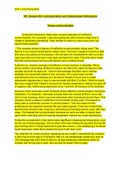
M3: Assess their communication and interpersonal interactions
Group communication
During the interaction, there were several examples of ineffective
communication. For example, I was interrupting the other doctors while their in
middle of explaining something; I also started to raise my voice every time I go
against their proposal.
This example shows a feature of ineffective communication being used. This
feature is an environmental barrier called noise. This had a negative impact on Bob
who was only yelling at me because I did not take into consideration that my music
may have been too loud and I may have not heard his voice. This may have made
Bob feel embarrassed with low self-esteem and a lowered mood.
Furthermore, another example of ineffective communication is disability. This is
shown where I was telling off Bob for lying to me that John hates his leg, but John
actually said that his legs hurt. I did not acknowledge that Bob had a hearing
disability and essentially talked to him normally. This could make me feel
unprofessional as an employee as I should be trained to know how to make
reasonable adjustments in how to communicate with Bob. For Bob, I think he would
feel very arrogant that I failed to account his hearing impairment; making him give off
a negative vibe; whilst being depressed since I told him off because of his disability.
However, there were also some moments where effective communication during the
interaction. For instance, I was able to lower down the volume of Bob’s voice and
John’s loud moaning; which may have distracted other individuals around them. This
example shows a feature of effective communication being used. This feature is
being able to overcome a barrier to communication. This has made me feel
professional and assertive towards the two elderly people. It has also made them
feel that they should make a big fuss; distracting surrounding service users with their
noise. This helped the communication because we were are able to clearly hear
each other; even Bob with his hearing impairment; without any noise distractions.
During the conversation, there were some significant interpersonal interactions, such
as the use of body language. This is when John was holding his leg since he has felt
pain coming from it. Facial expressions was also shown. I was displaying a confused
facial expression when Bob mistook the word ‘hate’ from ‘hurt’.
This affected the communication negatively as we couldn’t understand the situation-
if John has hurt his legs or if he thinks that it is not aesthetically pleasing to look at.
The message that John tried to send to us was eventually understood when he
clarifies that his leg was in pain, and not that he doesn’t like his legs.
M3: Assess their communication and interpersonal interactions
Group communication
During the interaction, there were several examples of ineffective
communication. For example, I was interrupting the other doctors while their in
middle of explaining something; I also started to raise my voice every time I go
against their proposal.
This example shows a feature of ineffective communication being used. This
feature is an environmental barrier called noise. This had a negative impact on Bob
who was only yelling at me because I did not take into consideration that my music
may have been too loud and I may have not heard his voice. This may have made
Bob feel embarrassed with low self-esteem and a lowered mood.
Furthermore, another example of ineffective communication is disability. This is
shown where I was telling off Bob for lying to me that John hates his leg, but John
actually said that his legs hurt. I did not acknowledge that Bob had a hearing
disability and essentially talked to him normally. This could make me feel
unprofessional as an employee as I should be trained to know how to make
reasonable adjustments in how to communicate with Bob. For Bob, I think he would
feel very arrogant that I failed to account his hearing impairment; making him give off
a negative vibe; whilst being depressed since I told him off because of his disability.
However, there were also some moments where effective communication during the
interaction. For instance, I was able to lower down the volume of Bob’s voice and
John’s loud moaning; which may have distracted other individuals around them. This
example shows a feature of effective communication being used. This feature is
being able to overcome a barrier to communication. This has made me feel
professional and assertive towards the two elderly people. It has also made them
feel that they should make a big fuss; distracting surrounding service users with their
noise. This helped the communication because we were are able to clearly hear
each other; even Bob with his hearing impairment; without any noise distractions.
During the conversation, there were some significant interpersonal interactions, such
as the use of body language. This is when John was holding his leg since he has felt
pain coming from it. Facial expressions was also shown. I was displaying a confused
facial expression when Bob mistook the word ‘hate’ from ‘hurt’.
This affected the communication negatively as we couldn’t understand the situation-
if John has hurt his legs or if he thinks that it is not aesthetically pleasing to look at.
The message that John tried to send to us was eventually understood when he
clarifies that his leg was in pain, and not that he doesn’t like his legs.