Midterm Exam 602 (A+) questions and answers
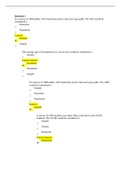
Midterm Exam 602 Questions 1. The primary care pediatric nurse practitioner is obtaining a medical historyabout a child. To integrate both nursing and medical aspects of primary care, which will be included in the medical history? A. Complementary medications, alternative health practices, and chief complaint B. Developmental delays, nutritional status, and linear growth patterns C. Medication currently taking, allergy information, and family medical history D. Speech and language development, beliefs about health, and previous illnesses Correct 2. When formulating developmental diagnoses for pediatric patients, the primary care pediatric nurse practitioner may use which resource? A. DC: 03R Correct B. ICD10CM C. ICSD3 D. NANDA International 3. The primary care pediatric nurse practitioner sees a 3yearold child who chronically withholds stools, in spite of the parents’ attempts to stop the behavior, requiring frequent treatments with laxative medications. Which diagnosis will the nurse practitioner use to facilitate thirdparty reimbursement? A. Altered elimination pattern B. Elimination disorder C. Encopresis Correct D. Parenting alteration 4. The primary care pediatric nurse practitioner is assessing a toddler whoseweight and body mass index (BMI) are below the 3rd percentile for age. The nurse practitioner learns that the child does not have regular mealtimes and is allowed to carry a bottle of juice around at all times. The nurse practitioner plans to work with this family to develop improved meal patterns. Which diagnosis will the nurse practitioner use for this problem? A. Failure to thrive B. Home care resources inadequateC. Nutrition alteration – less than required D. Parenting alteration Correct 5. The primary care pediatric nurse practitioner is performing a well child check up on a 20monthold child. The child was 4 weeks premature and, according to a parent completed developmental questionnaire, has achieved milestones for a 15monthold infant. Which action is correct? A. Perform an indepth developmental assessment screen at this visit to evaluate this child. Correct B. Reassure the parent that the child will catch up to normal development by age 2 years. C. Reevaluate this child’s development and milestone achievements at the 2year visit. D. Refer the child to a specialty clinic for evaluation and treatment of developmental delay. 6. The primary care pediatric nurse practitioner performs a developmentalassessment on a 3yearold child and notes normal cognitive, finemotor, and grossmotor abilities. The child responds appropriately to verbal commands during the assessment but refuses to speak when asked questions. The parent tells the nurse practitioner that the child talks at home and that most other adults can understand what the child says. The nurse practitioner will A. ask the parent to consider a possible speech delay and report any concerns. B. continue to evaluate the child’s speech at subsequent visits. Correct C. refer the child for a speech and hearing evaluation. D. tell the parent to spend more time in interactive conversations with the child. 7. The parent of a toddler is concerned that the child may have autism. Theprimary care pediatric nurse practitioner completes a Modified Checklist for Autism in Toddlers (MCHAT) tool, which indicates several areas of concern. What will the nurse practitioner do? A. Administer a Childhood Autism Rating Scale (CARS) in the clinic. B. Consult a specialist to determine appropriate early intervention strategies.C. Refer the child to a behavioral specialist for further evaluation. Correct D. Tell the parent that this result indicates that the child has autism. 8. The primary care pediatric nurse practitioner learns that the mother of a 3 yearold child has been treated for depression for over 5 years. Which aspect of this child’s development will be of the most concern to the nurse practitioner? A. Fine motor B. Gross motor C. Social/emotional D. Speech and language Correct 9. When meeting with a new family, the primary care pediatric nurse practitioner devel ops a database that identifies family members and others living in the household, relationships with others outside the household, and significant behavioral and emotional problems. Which tool will the nurse practitioner use to record this information? A. CRAFFT B. Ecomap C. Genogram Correct D. Pedigree 10. A child is in the clinic for evaluation of an asthma action plan. The primarycare pediatric nurse practitioner notes that the child’s last visit was for a prekindergarten physical and observes that the child is extremely anxious. What will the nurse practitioner do initially? A. Ask the child’s parent why the child is so anxious. B. Perform a physical assessment to rule out shortness of breath. C. Reassure the child that there is nothing to be afraid of. D. Review the purpose of this visit and any anticipated procedures. Correct11. The primary care pediatric nurse practitioner is evaluating health literacy in the mother of a new preschoolage child. How will the nurse practitioner assess A. Ask the child how many books he has at home. Correct B. Ask the mother about her highest grade in school. C. Ask the mother to determine the correct dose of a drug from a label. D. Ask the mother to read a health information handout aloud. 12. The mother of a newborn tells the primary care pediatric nurse practitionerthat she is worried that her child will develop allergies and asthma. Which tool will the nurse practitioner use to evaluate this risk? A. Threegeneration pedigree Correct B. Review of systems C. Genogram D. Ecomap 13. The primary care pediatric nurse practitioner is performing a well childassessment on an adolescent and is concerned about possible alcohol and tobacco use. Which assessment tool will the nurse practitioner use? A. CRAFFT Correct 11190 B. HEEADSSS C. PHQ2 D. RAAPS 14. The primary care pediatric nurse practitioner evaluates a schoolage child whose body mass index (BMI) is greater than the 97th percentile. The nurse practitioner is concerned about possible metabolic syndrome and orders laboratory tests to evaluate this. Which diagnosis will the nurse practitioner document for this visit? A. Metabolic syndrome B. Nutritional alteration: more than required C. Obesity Correct D. Rule out type 2 diabetes mellitusQuestions 11134 11116 11128 11124 1. A single mother of an infant worries that living in a household with only oneparent will cause her child to be maladjusted. To help address the mother’s concerns, the primary care pediatric nurse practitioner will suggest E. developing consistent daily routines for the child. Correct F. exposing her child to extended family members when possible. G. not working outside the home during the first few years. H. taking her child to regular play date activities with other children.2. During a well child exam, the primary care pediatric nurse practitioner learnsthat the parents of a young child fight frequently about finances. The parents state that they do not fight in front of the child and feel that the situation is temporary and related to the father’s job layoff. What will the nurse practitioner do? E. Reassure them that the child is too young to understand. F. Recommend that they continue to not argue in front of the child. G. Suggest counseling to learn ways to handle stress. Correct H. Tell them that the conflict will resolve when the situation changes. 3. During a well child assessment of an 18monthold child, the primary care pediatric nurse practitioner observes the child becoming irritable and uncooperative. The parent tells the child to stop fussing. What will the nurse practitioner do? C. Allow the parent to put the child in a “timeout.” D. Ask the parent about usual discipline practices. E. Offer the child a book or a toy to look at. Correct F. Stop the exam since the child has reached a “meltdown.” 4. Which recommendation will a primary care pediatric nurse practitioner makewhen parents ask about ways to discipline their 3yearold child who draws on the walls with crayons? D. Give the child washable markers so the drawings can be removed easily. E. Provide a roll of paper for drawing and teach the child to use this. Correct F. Put the child in “timeout” each time the child draws on the walls. G. Take the crayons away from the child to prevent the behavior. 5. The primary care pediatric nurse practitioner conducts a well baby exam on 11118an infant and notes mild gross motor delays but no delays in other areas. Which initial course of action will the nurse practitioner recommend? E. Consult a developmental specialist for a more complete evaluation. F. Prepare the parents for a potentially serious developmental disorder. G. Refer the infant to an early intervention program for physical therapy. H. Teach the parents to provide exercises to encourage motor development. Correct 11122 6. The primary care pediatric nurse practitioner is examining a newborn infantrecently discharged from the neonatal intensive care unit after a premature birth. The parent is upset and expresses worry about whether the infant will be normal. What will the nurse practitioner do in this situation? E. Explain to the parent that developmental delays often do not manifest at first. F. Perform a developmental assessment and tell the parent which delays are evident. 11120 G. Point out the tasks that the infant can perform while conducting the assessment. Correct D. Refer the infant to a developmental specialist for a complete evaluation. 7. The primary care pediatric nurse practitioner sees a developmentally delayedtoddler for an initial visit. The family has just moved to the area and asks the nurse practitioner 11132 about community services and resources for their child. What should the nurse practitioner do 11130 initially? E. Ask the parents if they have an individualized family service plan (IFSP). Correct F. Consult with a physician to ensure the child gets appropriate care. G. Inform the family that services are provided when the child begins school.H. Refer the family to a social worker for assistance with referrals and services. 8. The primary care pediatric nurse practitioner has a cohort of patients whohave special health care needs. Which is an important role of the nurse practitioner when caring for these children? A. Care coordination and collaboration Correct D. Developing protocols for parents to follow E. Monitoring individual education plans (IEPs) F. Providing lists of resources for families 9. The primary care pediatric nurse practitioner performs a physical examinationon a 9monthold infant and notes two central incisors on the lower gums. The parent states that the infant nurses, takes solid foods three times daily, and occasionally takes water from a cup. What will the pediatric nurse practitioner counsel the parent to promote optimum dentalhealth? 11126 C. To begin brushing the infant’s teeth with toothpaste D. To consider weaning the infant from breastfeeding E. To discontinue giving fluoride supplements D. To make an appointment for an initial dental examination Correct 10. The primary care pediatric nurse practitioner enters an exam room and findsa 2monthold infant in a car seat on the exam table. The infant’s mother is playing a game on her smart phone. The nurse practitioner interprets this behavior as E. a sign that the mother has postpartum depression. F. extremely concerning for potential parental neglect. G. of moderate concern for parenting problems. Correct H. within the normal range of behavior in early parenthood. Questions 13804 6 13814 1. The parent of a newborn infant asks the primary care pediatric nurse practitioner when to intervene to help the infant’s future intellectual growth. What will the nurse practitioner tell the parent? I. Cognitive learning begins during the toddler years. J. Intellectual growth begin when speech develops. K. Language and literacy skills begin at birth. Correct L. Preschool is an optimal time to begin general learning. 2. The primary care pediatric nurse practitioner performs a well baby examination on a 7dayold infant who is nursing well, according to the mother. The nurse practitioner notes that the infant weighed 3250 grams at birth and 2990 grams when discharged on the second day of life. The infant weighs 3080 grams at this visit. Which action is correct? I. Follow up at the 2month checkup. J. Refer to a lactation consultant. K. Schedule a weight check in 1 week. Correct L. Suggest supplementing with formula. 3. During an assessment of a 4weekold infant, the primary care pediatric nurse practitioner learns that a breastfed infant nurses every 2 hours during the day but is able to sleep for a 4hour period during the night. The infant has gained 20 grams per day in the interval since last seen in the clinic. What will the nurse practitioner recommend? A. Continuing to nurse the infant using the current pattern Correct G. Nursing the infant for longer periods every 4 hours H. Supplementing with formula at the last nighttime feeding I. Waking the infant every 2 hours to nurse during the night4. The primary care pediatric nurse practitioner is performing a well baby examination on a 2monthold infant who has gained 25 grams per day in the last interval. The mother is nursing and tells the nurse practitioner that her infant seems fussy and wants to nurse more often. What will the nurse practitioner tell her? H. She may not be making as much breastmilk as before. I. She should keep a log of the frequency and duration of each feeding. J. The infant may be going through an expected growth spurt. Correct K. The infant should stay on the previously established nursing schedule. 5. The mother of a 6weekold breastfeeding infant tells the primary care pediatric I. J. G. H. E. F. C. D. A.B. nurse practitioner that her baby, who previously had bowel movements with each feeding, now has a bowel movement once every third day. What will the nurse practitioner tell her? I. Her baby is probably constipated. J. It may be related to her dietary intake. K. She should consume more water. L. This may be normal for breastfed babies. Correct 6. The mother of a 3monthold child tells the primary care pediatric nurse practitioner that it is “so much fun” now that her infant coos and smiles and wants to play. What is important for the nurse practitioner to teach this mother? A. Appropriate ways to stimulate and entertain the infant B. How to read the infant’s cues for overstimulation Correct H. The importance of scheduling “play dates” with other infants I. To provide musical toys to engage the infant 7. The parent of a 5monthold is worried because the infant becomes fussy but doesn’t always seem interested in nursing. What will the nurse practitioner tell this parent? I. The infant may be expressing a desire to play or to rest. Correct J. The parent should give ibuprofen for teething pain before nursing. K. This is an indication that the infant is ready for solid foods. L. This may indicate gastrointestinal discomfort such as constipation. 8. The mother of a 6monthold infant is distressed because the infant can say “dada” but not “mama” and asks the primary care pediatric nurse practitioner why this is when she is the one who spends more time with the infant. How will the nurse practitioner respond? G. “At this age, your baby does not understand the meaning of sounds.” Correct H. “Babies at this age cannot make the ‘ma’ sound.” I. “Most sounds made by babies at this age are accidental.” J. “This may mean that your baby doesn’t hear well.” 9. The primary care pediatric nurse practitioner is performing a well child examination on a 9monthold infant whose hearing is normal but who responds to verbal cues with only single syllable vocalizations. What will the nurse practitioner recommend to the parents to improve speech and language skills in this infant? F. Provide educational videos that focus on language. G. Read simple board books to the infant at bedtime. CorrectI. Sing to the child and play lullabies in the baby’s room. A. B. J. Turn the television to Sesame Streetduring the day. 10. The primary care pediatric nurse practitioner is examining a 12monthold infant who was 6 weeks premature and observes that the infant uses a raking motion to pick up small objects. The PEDS questionnaire completed by the parent did not show significant developmental delays. What will the nurse practitioner do first? E. Perform an indepth developmental assessment. Correct F. Reassure the parent that this is normal for a premature infant. G. Refer the infant to a developmental specialist. H. Suggest activities to improve fine motor skills.Questions 37959 37947 37957 37949 1. The primary care pediatric nurse practitioner is evaluating a 2yearold with a documented speech delay. Screenings to assess motor skills and cognition are normal, and the child passed a recent hearing test. What will the pediatric nurse practitioner do next? M. Ask the child’s parents whether they read to the child. Correct N. Give parents educational materials to encourage speech. O. Refer the child to an early intervention program. P. Suggest that they purchase ageappropriate music videos.2. The primary care pediatric nurse practitioner performs a developmentalassessment on a 32monthold child. The child’s parent reports that about 70% of the child’s speech is intelligible. The pediatric nurse practitioner observes that the child has difficulty pronouncing “t,” “d,” “k,” and “g” sounds. Which action is correct? M. Evaluate the child’s cognitive abilities. N. Obtain a hearing evaluation. O. Reassure the parent that this is normal. Correct P. Refer the child to a speech therapist. 3. During a well child assessment of an 18monthold child, the primary care pediatric nurse practitioner observes the child point to a picture of a dog and say, “Want puppy!” The nurse practitioner recognizes this as an example of J. holophrastic speech. K. receptive speech. L. semantic speech. M. telegraphic speech. Correct 4. The primary care pediatric nurse practitioner is offering anticipatory guidanceto the parents of a 12monthold child. The parents are bilingual in Spanish and English and have many Spanishspeaking relatives nearby. They are resisting exposing the child to Spanish out of concern that the child will not learn English well. What will the pediatric nurse practitioner tell the parents? L. Children who learn two languages simultaneously often confuse them in conversation. M. Children with multilanguage proficiency do not understand that others cannot do this. N. Learning two languages at an early age prevents children from developing a dominant language. M. Most bilingual children are able to shift from one language to another when O. appropriate. Correct P.M. N. K. L. 5. The primary care pediatric nurse practitioner is counseling the parents of a toddler about appropriate discipline. The parents report that the child is very active and curious, and they are worried about the potential for injury. What will the pediatric nurse practitioner recommend? ← Allow the child to explore and experiment while providing appropriate limits. Correct ← Be present while the child plays to continually teach the child what is appropriate. ← Let the child experiment at will and to make mistakes in order to learn. ← Say “no” whenever the child does something that is not acceptable. M. The mother of a 3yearold child takes the child to a play group once a week. 37961 She expresses concern that the child plays with toys but does not interact with the other toddlers. What will the primary care pediatric nurse practitioner counsel the mother? ← The child probably is very shy but will outgrow this tendency with repeated exposure to other children. K. The toddler may have a language delay that interferes with socialization with other children. L. Toddlers may be interested in other children but usually do not engage in interactive play. Correct M. Toddlers need more structured play to encourage interaction and socialization with others. 7. The parent of a 4yearold points to a picture and says, “That’s your sister.” The child responds by saying, “No! It’s my baby!” This is an example of which type of thinking in preschoolage children? H. Animism I. ArtificialismJ. Egocentrism D. Realism Correct 8. The parent of a 24monthold child asks the primary care pediatric nurse practitioner when toilet training should begin. How will the pediatric nurse practitioner respond? K. “Begin by reading to your child about toileting.” L. “Most children are capable by age 2 years.” I. “Tell me about your child’s daily habits.” Correct C. D. A. B. J. “We should assess your child’s motor skills.” 9. The primary care pediatric nurse practitioner performs a physical examinationon a 9monthold infant and notes two central incisors on the lower gums. The parent states that the infant nurses, takes solid foods three times daily, and occasionally takes water from a cup. What will the pediatric nurse practitioner counsel the parent to promote optimum dental health? E. To begin brushing the infant’s teeth with toothpaste F. To consider weaning the infant from breastfeeding G. To discontinue giving fluoride supplements D. To make an appointment for an initial dental examination Correct 10. The parents of a 3yearold child are concerned that the child has begun refusing usual foods and wants to eat mashed potatoes and chicken strips at every meal and snack. The child’s rate of weight has slowed, but the child remains at the same percentile for weight on a growth chart. What will the primary care pediatric nurse practitioner tell the parents to do? E. Allow the child to choose foods for meals to improve caloric intake.F. Place a variety of nutritious foods on the child’s plate at each meal. Correct G. Prepare mashed potatoes and chicken strips for the child at mealtimes. H. Suggest cutting out snacks to improve the child’s appetite at mealtimes. 37967 37977 Continue Questions 37975 . The primary care pediatric nurse practitioner is examining a 6yearold child who attends first grade. The child reports “hating” school. The parent states that the child pretends to be sick frequently in order to stay home from school. To further assess this situation, the nurse practitioner will first ask the child Q. about school performance and grades. R. why school is so distressing. S. to name one or two friends. Correct T. whether bullying is taking place. 2. The parent of a 10yearold boy tells the primary care pediatric nurse practitioner that the child doesn’t appear to have any interest in girls and spends most of his time with a couple of other boys. The parent is worried about the child’s sexual identity. The nurse practitioner will tell the parent Q. children at this age who prefer interactions with samegender peers usually have a homosexual orientation. R. children experiment with sexuality at this age as a means of deciding later sexual orientation. S. this attachment to other samegender children is how the child learns to interact with others. Correct T. to encourage mixedgender interactions in order to promote development of sexual values. 3. The parents of a 12yearold child are concerned that some of the child’s older classmates may be a bad influence on their child, who, they say, has been raised to believe in right and wrong. What will the primary care pediatric nurse practitioner tell the parent? N. Allowing the child to make poor choices and accept consequences is important for learning values O. Children at this age have a high regard for authority and social norms, so this is not likely to happen P. Moral values instilled in the early schoolage period will persist throughout childhood Q. The pressures from outside influences may supersede parental teachings and should be confronted Correct 4. During a well child exam of a schoolage child, the primary care pediatric nurse practitioner learns that the child has been having angry episodes at school. The nurse practitioner observes the child to appear withdrawn and sad. Which action is appropriate? A. Ask the child and the parent about stressors at home Correct O. Make a referral to a child behavioral specialist P. Provide information about anger management D. Suggest consideration of a different classroom5. The primary care pediatric nurse practitioner is preparing to conduct a well child 37965 assessment of an 8yearold child. How will the nurse practitioner begin the exam? A. Ask the child about school, friends, home activities, and sports Correct U. V. N. Discuss the purpose of the visit and explain the procedures that will be performed S. T. O. Offer ageappropriate information about usual developmental tasks P. Provide information about healthy nutrition and physical activities 6. The parent of a 6yearold child expresses concern that the child may have ADHD. Which screening tool will the primary care pediatric nurse practitioner use to evaluate this possibility? J. Behavioral and Emotional Screening System for Children (BESS2) K. Behavioral Assessment for Children – 2nd ed. (BASC2) C. Conner’s 3 Parent and Teacher Rating Scale Correct D. Pediatric Symptom Checklist (PSC) Q. R. 7. The parent of a 5yearold child who has just begun kindergarten expresses concern that the child will have difficulty adjusting to the birth of a sibling. What will the primary care pediatric nurse practitioner recommend? N. Allowing the child opportunities to discuss feelings about the baby O. Giving the child specific baby care tasks to promote sibling bonding C. Having snack time with the child each day to discuss the school day CorrectD. Providing reassurance that the sibling will not replace the child 8. A schoolage child has begun refusing all cooked vegetables. What will the primary 37969 care pediatric nurse practitioner recommend to the parent? N. Allow the child to make food choices since this is usually a phase O. Ensure that the child has three nutritious meals and two nutritious snacks each day Correct P. Prepare vegetables separately for the child to encourage adequate intake Q. Teach the child how important it is to eat healthy fruits and vegetables 9. The primary care pediatric nurse practitioner performs a physical examination on a 12yearold child and notes poor hygiene and inappropriate clothes for the weather. The child’s mother appears clean and well dressed. The child reports getting 6 to 7 hours of sleep each night because of texting with friends late each evening. What action by the nurse practitioner will help promote healthy practices? A. Discuss setting clear expectations about selfcare with the mother Correct B. Give the child information about sleep and selfcareK. Reassure the mother that this “noncompliance” is temporary 37979 37985 37981 L. Tell the mother that experimenting with selfcare behaviors is normal 10. During a well child exam on a 5yearold child, the primary care pediatric nurse practitioner assesses the child for school readiness. Which finding may be a factor in limiting school readiness for this child? M. Adherence to daily family routines and regular activities N. Having two older siblings who attend the same school C. Parental concerns about bullying in the school Correct D. The child’s ability to recognize four different colors 11. The primary care pediatric nurse practitioner is examining a schoolage child who complains of frequent stomach pain and headaches. The parent reports that the child misses several days of school each month. The child has a normal exam. Before proceeding with further diagnostic tests, what will the nurse practitioner initially ask the parent? A. About the timing of the symptoms each day and during the week Correct K. How well the child performs in school and in extracurricular activities L. If the parent feels a strong need to protect the child from problems M. Whether there are any unusual stressors or circumstances at home12. The primary care pediatric nurse practitioner is evaluating recurrent stomach pain ina schoolage child. The child’s exam is normal. The nurse practitioner learns that the child reports pain most evenings after school and refuses to participate in sports but does not have nausea or vomiting. The child’s grandmother recently had gallbladder surgery. Which action is correct? A. Encourage the child to keep a log of pain, stool patterns, and dietary intake Correct H. Order radiologic studies and laboratory tests to rule out systemic causes I. Reassure the child and encourage resuming sports when symptoms subside J. Refer the child to a counselor to discuss anxiety about health problems Continue Questions 13868 13862 2 1. The primary care pediatric nurse practitioner is performing a well childassessment on a 13yearold female whose mother asks when her daughter’s periods may start. Which information will the nurse practitioner use to help estimate the onset of periods? A. The age of the mother’s menarche B. The patient’s age at thelarche Correct U. When adrenarche occurred V. Whether linear growth has stopped 2. The primary care pediatric nurse practitioner is examining a 15yearold female who reports having her first period at age 13. She states that she has had five periods in the last year, with the last one 2 months prior. She participates in basketball at school. Which action is correct? U. Perform biometric screening to determine lean body mass. Correct V. Prescribe oral contraceptives pills to regulate her periods. W. Reassure her that this is perfectly normal at her age. X. Refer her to an endocrinologist for hormonal evaluation. 3. During a well child assessment of a 13yearold male, the primary care pediatric nurse practitioner notes small testicles and pubic and axillary hair. To further evaluate these findings, the nurse practitioner will ask the patient about R. alcohol and tobacco use. S. changes in voice. T. increase in height and weight. U. participation in sports. Correct 4. The mother of a 16yearold male was recently divorced after several years of an abusive relationship and tells the primary care pediatric nurse practitioner that the adolescent has begun skipping school and hanging out with friends at the local shopping mall. When she confronts her child, he responds by saying that he hates her. What will the nurse practitioner tell this mother? Q. Adolescence is marked by an inability to comprehend complex situations. R. Adolescence is typically marked by tempestuous and transient episodes. S. Adolescents normally have extreme, disruptive conflicts with parents. T. Adolescents often need counseling to help them cope with life events. Correct 5. The primary care pediatric nurse practitioner is performing a well child exam CC.DD.AA. BB. Y. Z. W. X. on a 12yearold female who has achieved early sexual maturation. The mother reports that she spends more time with her older sister’s friends instead of her own classmates. What will the nurse practitioner tell this parent? Q. Earlymaturing girls need to identify with older adolescents to feel a sense of belonging. R. Girls who join an older group of peers may become sexually active at an earlier age. CorrectS. Spending time with older adolescents indicates a healthy adjustment to her maturing body. T. The association with older adolescents will help her daughter to gain social maturity. 6. The mother of a 15yearold adolescent female tells the primary care pediatric nurse practitioner that her daughter has extreme mood swings prior to her periods, which the adolescent vehemently denies. When asked if she notices anything different just before her periods, the adolescent points to her mother and says, “She gets really hard to live with.” This demonstrates which characteristic of adolescent thinking? A. Apparent hypocrisy Correct L. Imaginary audience M. Overthinking N. Personal fable 7. The primary care pediatric nurse practitioner is performing an exam on anadolescent male who asks about sexual identity because of concern that a friend is worried about being gay. Which response will the nurse practitioner make in this situation? P. Provide the teen with a questionnaire to gain information about his sexuality. Q. Remind the adolescent that mandatory reporting requires disclosure to parents. R. Suggest that the adolescent discuss sexual concerns with his parents. S. Tell the adolescent that, unless he is at risk, what he says will be confidential. Correct 8. The parent of a 14yearold child tells the primary care pediatric nurse practitioner that the child skips classes frequently in spite of various disciplinary measures, such as grounding and extra homework and is earning Cs and Ds in most classes. What will the nurse practitioner recommend? R. Counseling for emotional problems S. Development of an Individual Education Plan C. Evaluation for possible learning disorders Correct D. Referral for a behavioral disorder 0 13884 13874 9. The parent of a 14yearold child tells the primary care pediatric nurse practitioner that the adolescent has expressed a desire to be a vegetarian, is refusing all meat served at home, and wants the family to eat vegetarian meals. What will the nurse practitioner tell the parent? M. Do not allow a vegetarian diet in order to maintain appropriate limits for the adolescent. N. Provide vegetarian options for the adolescent that preserve adequate nutrition and protein intake. O. Suggest that the adolescent prepare appropriate vegetarian dishes to complement family meals. Correct P. Tell the adolescent that a vegetarian diet may be considered in adulthood but not while living at home. 10. The primary care pediatric nurse practitioner is performing a well child examon a 17yearold female whose mother is present during the history. The mother expresses concern that her daughter wishes to have an eyebrow piercing and states that she is opposed to the idea. What will the nurse practitioner do? O. Provide information about piercings and encourage continued discussion. Correct P. Remind the adolescent that her mother is responsible for her health. Q. State that piercings are relatively harmless and are an expression of individuality.R. Suggest that she wait until she is 18 years old and can make her own decisions. 11. The parent of a 16yearold tells the primary care pediatric nurse practitioner that the teen was recently caught smoking an electronic cigarette (ecigarette). What will the nurse practitioner tell this parent? N. Ecigarette use may be a risk factor for later substance abuse. Correct O. Experimentation with ecigarettes does not lead to future tobacco use. P. Most teens who experiment with tobacco usually do not become addicted. Q. This form of nicotine ingestion is safer than regular cigarettes. 12. The parent of an adolescent reports noting cutting marks on the teen’s armsand asks the primary care pediatric nurse practitioner what it means. What will the nurse practitioner tell this parent? K. Cutting is a way of dealing with emotional distress. Correct L. It is a method of fitting in with other adolescents. M. The behavior is common and will usually stop.22942 I. This type of behavior is a type of suicide attempt. 22932 Continue Questions 22936 1. The primary care pediatric nurse practitioner is performing a focused problemassessment on a child who has asthma and learns that one of the child’s parents smokes around the child in spite of being advised against this. The nurse practitioner recognizes this as a possible alteration in which functional health pattern? A. Cognitiveperceptual B. Health perception Correct W. Rolerelationship X. Valuesbeliefs 2. The primary care pediatric nurse practitioner examines an infant whose weight isbelow the 3rd percentile and whose mother does not comply with the feeding regimen. When attempting to enlist the help of the infant’s grandmother, the grandmother says, “My daughter was like this when she was a baby and she turned out all right.” Which approach will the nurse practitioner take to improve the outcome for this infant? Y. Ask the grandmother about her daughter’s health during childhood. Correct Z. Explain that the condition is potentially serious if not treated. AA. Give the grandmother and mother information about normal growth. BB. Refer the family to a social worker to investigate possible neglect.3. The primary care pediatric nurse practitioner provides patient teaching forchildren newly diagnosed with irritable bowel syndrome (IBS). At which stage of development will children be able to understand the link between stress and the symptoms of the disease? A. Concreteoperational stage B. Formaloperational stage Correct V. Preconceptual stage W. Sensorimotor stage4. The primary care pediatric nurse practitioner is counseling an obese adolescent 22928 whose parents both have type 2 diabetes mellitus. Which health behavior prediction model is useful when the nurse practitioner discusses lifestyle changes with this client? A. Behavioral change model B. Health belief model Correct U. Health promotion model V. Transtheoretical model5. The primary care pediatric nurse practitioner is counseling a schoolage child KK. LL. II. JJ. GG. HH. EE. FF. about asthma management strategies. The child states that it is “too much trouble” to remember to use an inhaled corticosteroid medication twice daily and reports feeling fine, in spite of exhibiting expiratory wheezes. Which action uses the health belief and selfefficacy model to teach this child about asthma management? U. Asking the child to try to use the inhaler at least once daily V. Discussing whether the child wants to participate in athletics C. Obtaining pre and posttreatment spirometry testing Correct D. Providing written information about inhaled corticosteroids6. An adolescent who is overweight expresses a desire to lose weight in order to participate in sports but tells the primary care pediatric nurse practitioner that he doesn’t want to give up sweets and soft drinks because he enjoys them too much. Which stage of change does this represent? A. Action B. Contemplation Correct O. Precontemplation P. Preparation 7. The primary care pediatric nurse practitioner sees a 17yearold client who quit smoking almost a year prior but who reports having renewed cravings when around friends who smoke. Using knowledge of the maintenance stage of change, the primary care pediatric nurse practitioner will T. go over with the adolescent about the health risks associated with smoking. U. recommend avoiding friends who smoke and making new friends. V. remind the adolescent about the struggles associated with quitting smoking. W. suggest that the teen consider taking up a sport or other physical activity. Correct 8. The primary care pediatric nurse practitioner is working with a 12yearold female who has poor diabetes control. The child tells the nurse practitioner that the parent forgets to remind her to check her blood sugars. Which action is correct? T. Assess the parent’s knowledge about diabetes management. U. Help the child develop a strategy to remember without parental prompts. Correct V. Refer to a social worker to help the family overcome obstacles to care. W. Remind the child’s parent about the importance of good diabetes control. 9. The primary care pediatric nurse practitioner is counseling an obese 16yearold 22938 client about weight management. The adolescent says, “I know I need to lose weight, but I don’t want to give up all my favorite foods.” When using motivational interviewing techniques, how will the nurse practitioner respond? 0 22926 Q. “Do you think there are any foods you could limit or do without for a while?” Correct R. “I hear you telling me that you really don’t have a desire to lose weight.” S. “If you can’t give up these foods, you won’t see the benefits of weight loss.” T. “In the long run, the sacrifices you make today will improve your health.” 10. The parent of a newborn has quit smoking cigarettes within the past month andreports feeling fidgety. Using a “reframing” technique, how will the primary care pediatric nurse practitioner respond? S. Explore ways that the parent can use this extra energy to do things for the baby. Correct T. Remind the parent that this is a normal, temporary part of nicotine withdrawal. U. Suggest that the parent take up exercise to enjoy the benefits of not smoking. V. Tell the parent that, over time, these symptoms of withdrawal will subside. 11. The primary care pediatric nurse practitioner is assessing the health literacy ofthe parent of a toddler. Which tool will the nurse practitioner use to estimate reading level? R. FleschKincaid Readability Test S. Gunning Fog Index T. Number of children’s books in the home D. SMOG Correct 12. The pediatric nurse practitioner provides primary care for a special needs infantwhose parent takes an active role in the infant’s care. The parent has a high school diploma and asks many questions about her infant’s treatments. Which approach will the nurse practitioner take to ensure health literacy for this parent? N. Ask the parent to read back all information given. Correct O. Encourage the parent to ask questions when confused. P. Provide written materials presented at an 8th grade level. Q. Reinforce written information with verbal instructions.Questions 22968 22956 22954 22964 22960 1. When performing a neurologic exam to assess for meningeal signs in an infant, the primary care pediatric nurse practitioner will attempt to elicit the Kernig sign by Y. bending the infant at the waist to touch fingers to toes.Z. extending the leg at the knee with the infant supine. Correct AA. flexing the infant’s neck to touch chin to chest. BB. turning the infant’s head from side to side. 2. To evaluate brain tissue disorders in infants, which test is useful? CC. Computerized tomography DD. Head radiographs EE. Magnetic resonance imaging D. Ultrasonography Correct 3. A female infant who was developing normally stops meeting developmentalmilestones at age 12 months and then begins losing previously acquired skills. What will the primary care pediatric nurse practitioner expect to tell the parents about this child’s prognosis? X. Cognitive development will be normal but motor skills will be lost. Y. Physical and speech therapy will help the infant regain lost skills. Z. The child’s intellectual development will not progress further. Correct AA. This is a temporary condition with full recovery expected. 4. A 14yearold child has a headache, unilateral weakness, and blurred vision preceded by fever and nausea. The child’s parent reports a similar episode several months prior. The primary care pediatric nurse practitioner will consult with a pediatric neurologist to order W. a lumbar puncture. X. an electroencephalogram (EEG). Y. neuroimaging with magnetic resonance imaging (MRI). Correct Z. positron emission tomography (PET) scan. 5. During a well baby exam on a 9monthold infant, the parent reports that the baby always uses the left hand to pick up objects and asks if the baby will be lefthanded. What will the primary care pediatric nurse practitioner do? W. Explain that it is too soon to tell which hand the infant will prefer later. X. Perform a careful assessment of fine and gross motor skills. CorrectQ. Teach the parent to encourage the infant to use both hands. R. Tell the parent that a hand preference usually develops between 6 and 12 months. E. F. C.A. D. B. 6. The pediatric nurse practitioner provides primary care for a 5yearold child who has cerebral palsy who exhibits athetosis and poor weight gain in spite of receiving highcalorie formula to supplement intake. The child has had several episodes of pneumonia in the past year. Which specialty consultation is a priority for this child? X. Feeding clinic to manage caloric intake Y. Neurology to assess medication needs Z. Pulmonology for possible tracheotomy D. Surgery for possible fundoplication and gastrostomy Correct 7. Because of their inability to ambulate, children with cerebral palsy should be evaluated for which nutrients? A. Calcium and vitamin D Correct X. Fatsoluble vitamins Y. Iron and zincZ. Sodium and potassium 8. A child with a recent history of URI reports tingling and pain in one ear followed bysagging of one side of the face. The primary care pediatric nurse practitioner observes that the child cannot close the eye or mouth on the affected side but does not elicit limb weakness on that side. What will the nurse practitioner do? U. Initiate a short course of antibiotic therapy. V. Perform diagnostic testing to rule out serious causes. W. Prepare the parents for lifelong complications. X. Prescribe oral prednisone 1 mg/kg/day initially. Correct 9. A child who has had a single nonfebrile seizure has a normal neurologic exam. 22958 Which diagnostic test is indicated? A. Computerized tomography (CT) B. Electroencephalogram (EEG) Correct W. Magnetic resonance imaging (MRI) X. Polysomnography 10. The parents of an 18monthold child bring the child to the clinic after observing a 22950brief seizure of less than 2 minutes in their child. In the clinic, the child has a temperature of 103.1°F, and the primary care pediatric nurse practitioner notes a left otitis media. The child is alert and responding normally. What will the nurse practitioner do? U. Order a lumbar puncture, complete blood count, and urinalysis. V. Prescribe an antibiotic for the ear infection and reassure the parents. Correct W. Refer to a pediatric neurologist for anticonvulsant and antipyretic prophylaxis. 22976 X. Send the child to the emergency department for EEG and possible MRI. 22952 22970 11. An adolescent female reports unilateral headache pain associated with abdominalpain and nausea occurring just prior to periods each month. The adolescent has been using naproxen sodium for 6 months but reports little relief from symptoms. What will the primary care pediatric nurse practitioner do? R. Add acetaminophen and ondansetron to the naproxen regimen. S. Consider prophylactic therapy with a betablocker or anticonvulsant drug. T. Prescribe sumatriptan nasal spray at the onset of headache and every 2 hours. Correct U. Refer the adolescent to a pediatric neurologist for neuroimaging studies.12. A child who has sustained a head injury after falling on the playground is broughtto the clinic. The parents report that the child cried immediately and was able to walk around after falling. The primary care pediatric nurse practitioner notes slight slurring of the child’s speech and the child has vomited twice in the exam room. Which course of action is warranted? J. Admit the child to the hospital for a neurology consult. Correct K. Observe the child in the clinic for several hours. L. Order a head CT and observe the child at home. M. Send the child home with instructions for followup. 13. The primary care pediatric nurse practitioner performs a well baby exam on aterm 4monthold infant and observes flattening of the left occiput, bossing of the right occiput, and anterior displacement of the left ear. The parents report performing various positioning maneuvers, but say that the baby’s head shape has worsened. What will the nurse practitioner recommend to correct this finding? C. Allow the infant to sleep on the tummy when the parents are in the room. D. Lay the infant in the “back to sleep” position, alternating the left and right occiput. E. Order a head CT to evaluate the infant for craniosynostosis. F. Refer the infant for orthotic cranial molding helmet therapy. Correct 14. A 4yearold child who has previously met developmental milestones is not toiled 22972 trained. The primary care pediatric nurse practitioner notes decreased reflexes in the lower extremities and observe a dimple above the gluteal cleft. Which diagnosis may be considered for this child? E. ArnoldChiari malformation F. Reye syndrome G. Spina bifida cystica D. Tethered cord CorrectQuestions 11154 11168 11148 11150 11146 1. The primary care pediatric nurse practitioner performs a vision screen on a 4 monthold infant and notes the presence of convergence and accommodation with mild esotropia of the left eye. What will the nurse practitioner do?CC. Patch the right eye to improve coordination of the left eye. DD. Reassure the parents that the infant will outgrow this. EE. Recheck the infant’s eyes in 2 to 4 weeks. FF. Refer the infant to a pediatric ophthalmologist. Correct 2. During a well child exam on a 4yearold child, the primary care pediatric nurse practitioner notes that the clinic nurse recorded “20/50” for the child’s vision and noted that the child had difficulty cooperating with the exam. What will the nurse practitioner recommend? FF. Follow up with a visual acuity screen in 6 months. GG. Refer to a pediatric ophthalmologist. HH. Retest the child in 1 year. II. Test the child’s vision in 1 month. Correct 3. During a well child assessment of an AfricanAmerican infant, the primary care pediatric nurse practitioner notes a dark redbrown light reflex in the left eye and a slightly brighter, redorange light reflex in the right eye. The nurse practitioner will BB. dilate the pupils and reassess the red reflex. CC. order autorefractor screening of the eyes. DD. recheck the red reflex in 1 month. EE. refer the infant to an ophthalmologist. Correct 4. The primary care pediatric nurse practitioner performs a Hirschberg test to evaluate AA. color vision. BB. ocular alignment. Correct CC. peripheral vision. DD. visual acuity. 5. The primary care pediatric nurse practitioner applies fluorescein stain to a child’s eye. When examining the eye with a cobalt blue filter light, the entire cornea appears cloudy. What does this indicate? A. The cornea has not been damaged.Y. There is too little stain on the cornea. 11156 11140 11144 11152 Z. There is damage to the cornea. AA. There is too much stain on the cornea. Correct 6. A toddler exhibits exotropia of the right eye during a coveruncover screen. The primary care pediatric nurse practitioner will refer to a pediatric ophthalmologist to initiate which treatment?S. Botulinum toxin injection T. Corrective lenses U. Occluding the affected eye for 6 hours per day D. Patching of the unaffected eye for 2 hours each day Correct 7. The primary care pediatric nurse practitioner performs a well child examination ona 9monthold infant who has a history of prematurity at 28 weeks’ gestation. The infant was treated for retinopathy of prematurity (ROP) and all symptoms have resolved. When will the infant need an ophthalmologic exam? A. At 12 months of age Correct AA. At 24 months of age BB. At 48 months of age CC. At 60 months of age 8. During a wellbaby assessment on a 1weekold infant who had a normal exam when discharged from the newborn nursery 2 days prior, the primary care pediatric nurse practitioner notes moderate eyelid swelling, bulbar conjunctival injections, and moderate amounts of thick, purulent discharge. What is the likely diagnosis? A. Chemicalinduced conjunctivitis B. Chlamydia trachomatis conjunctivitis Correct AA. Herpes simplex virus (HSV) conjunctivitis BB. Neisseria gonorrhea conjunctivitis 9. The primary care pediatric nurse practitioner performs a well baby assessment ofa 5dayold infant and notes mild conjunctivitis, corneal opacity, and serosanguinous discharge in the right eye. Which course of action is correct? Y. Administer intramuscular ceftriaxone 50 mg/kg. Z. Admit the infant to the hospital immediately. Correct AA. Give oral erythromycin 30 to 50 mg/kg/day for 2 weeks. BB. Teach the parent how to perform tear duct massage. 10. A preschoolage child who attends day care has a 2day history of matted eyelids I. J. G.H. E. F. C. D. in the morning and burning and itching of the eyes. The primary care pediatric nurse practitioner notes yellowgreen purulent discharge from both eyes, conjunctival erythema, and mild URI symptoms. Which action is correct? Y. Culture the conjunctival discharge. Z. Observe the child for several days. AA. Order an oral antibiotic medication. BB. Prescribe topical antibiotic drops. Correct 11. A 14yearold child has a 2week history of severe itching and tearing of both eyes. The primary care pediatric nurse practitioner notes redness and swelling of the eyelids along with stringy, mucoid discharge. What will the nurse practitioner prescribe? Y. Saline solution or artificial tears Z. Topical mast cell stabilizer C. Topical NSAID drops Correct D. Topical vasoconstrictor drops 12. The primary care pediatric nurse practitioner observes a tender, swollen redfuruncle on the upper lid margin of a child’s eye. What treatment will the nurse practitioner recommend? V. Culture of the lesion to determine causative organismW. Referral to ophthalmology for incision and drainage X. Topical steroid medication D. Warm, moist compresses 3 to 4 times daily Correct 13. The primary care pediatric nurse practitioner is treating an infant with lacrimal ductobstruction who has developed bacterial conjunctivitis. After 2 weeks of treatment with topical antibiotics along with massage and frequent cleansing of secretions, the infant’s symptoms have not improved. Which action is correct? N. Perform massage more frequently. O. Prescribe an oral antibiotic. P. Recommend hot compresses. Q. Refer to an ophthalmologist. Correct 14. A preschoolage child is seen in the clinic after waking up a temperature of 11158 102.2°F, swelling and erythema of the upper lid of one eye, and moderate pain when looking from side to side. Which course of treatment is correct? 11164 11142 G. Admit to the hospital for intravenous antibiotics. Correct H. Obtain a lumbar puncture and blood culture. I. Order warm compresses 4 times daily for 5 days. J. Prescribe a 10 to 14day course of oral antibiotics. 15. A schoolage child is seen in the clinic after a fragment from a glass bottle flew into the eye. What will the primary care pediatric nurse practitioner do? H. Refer immediately to an ophthalmologist. CorrectI. Attempt to visualize the glass fragment. J. Irrigate the eye with sterile saline. K. Instill a topical anesthetic. 16. A schoolage child is hit in the face with a baseball bat and reports pain in one eye. The primary care pediatric nurse practitioner is able to see a dark red fluid level between the cornea and iris on gross examination, but the child resists any exam with a light. Which action is correct? A. Administer an oral analgesic medication. B. Apply a Fox shield and reevaluate the eye in 24 hours. C. Instill anesthetic eyedrops into the affected eye. 34119 D. Refer the child immediately to an ophthalmologist. Correct Questions 34125 34103 7 1. A 30monthold girl who has been toilet trained for 6 months has daytime enuresis and dysuria and a lowgrade fever. A dipstick urinalysis is negative for leukocyte esterase and nitrites. What is the next step? GG. Begin empiric treatment with trimethoprimsulfamethoxazole. HH. Discuss behavioral interventions for toilet training. II. Reassure the child’s parents that the child does not have a urinary tract infection. JJ. Send the urine to the lab for culture. Correct 2. The clean catch urine specimen of a child with dysuria, frequency, and fever hasa colony count between 50,000 and 100,000 of E. coli. What is the treatment for this child? JJ. Obtain a complete blood count and Creactive protein. KK. Perform sensitivity testing before treating with antibiotics. LL. Repeat the culture if symptoms persist or worsen. MM. Treat with antibiotics for urinary tract infection. Correct 3. A dipstick urinalysis is positive for leukocyte esterase and nitrites in a schoolage child with dysuria and foulsmelling urine but no fever who has not had previous urinary tract infections. A culture is pending. What will the pediatric nurse practitioner do to treat this child? FF. Order ciprofloxacin ER once daily for 3 days if the culture is positive. GG. Prescribe trimethoprimsulfamethoxazole (TMP) twice daily for 3 to 5 days. Correct HH. Reassure the child’s parents that this is likely an asymptomatic bacteriuria. II. Wait for urine culture results to determine the correct course of treatment. 4. A preschoolage child with no previous history has mild flank pain and fever but no abdominal pain or vomiting. A urinalysis is positive for leukocyte esterase and nitrites. A culture is pending. Which is the correct course of treatment for this child? EE. Hospitalize for intravenous antibiotics. FF. Order amoxicillin clavulanate. Correct GG. Prescribe trimethoprimsulfamethoxazole. HH. Refer for a voiding cystourethrogram. 5. A 3yearold child has just completed a 7day course of amoxicillin for a second febrile urinary tract infection and currently has a negative urine culture. What is the next course of action? A. Obtain a renal and bladder ultrasound. CorrectBB. Prescribe prophylactic antibiotics to prevent recurrence. 31699 34123 34101 CC. Refer the child for a voiding cystourethrogram. DD. Screen urine regularly for leukocyte esterase and nitrites. 6. A 9monthold infant with a history of three urinary tract infections is diagnosed with grade II vesicoureteral reflux. Which medication will be prescribed? V. Amoxicillin 10 mg/kg as a single daily dose W. Ceftriaxone IM 50 mg/kg as a single daily dose X. Nitrofurantoin 12 mg/kg as a single daily dose D. TMPSMX; TMP 2 mg/kg as a single daily dose Correct 7. The parent of a toddler diagnosed with grade V vesicoureteral reflux asks theprimary care pediatric nurse practitioner how the disease will be treated. What will the nurse practitioner tell this parent? A. That longterm antibiotic prophylaxis will prevent scarring B. That surgery to correct the condition is possible Correct DD. that the child will most likely require kidney transplantEE. that the condition will probably resolve spontaneously 8. A healthy 14yearold female has a dipstick urinalysis that is positive for 56 RBCs per hpf but otherwise normal. What is the first question the primary care pediatric nurse practitioner will ask this patient? CC. “Are you sexually active?” DD. “Are you taking any medications?” EE. “Have you had a recent fever?” FF. “When was your last menstrual period (LMP)?” Correct 9. A child has gross hematuria, abdominal pain, and arthralgia as well as a rash. 34129 What diagnosis is most likely? A. HenochSchönlein purpura Correct CC. Rhabdomyosarcoma DD. Sickle cell disease EE. Systemic lupus erythematosus 10. An adolescent has 2+ proteinuria in a random dipstick urinalysis. A subsequent 34107 firstmorning voided specimen is negative. What will the primary care pediatric nurse practitioner do to manage this condition? CC. Monitor for proteinuria at each annual well child examination. Correct DD. Order a 24hour timed urine collection for creatinine and protein excretion. EE. Reassure the parents that this is a benign condition with no followup needed. 34115 FF. Refer the child to a pediatric nephrologist for further evaluation. . A child is diagnosed with nephrotic syndrome, and the pediatric nurse practitionerprovides primary care in consultation with a pediatric nephrologist. The child was treated with steroids and responded well to this treatment. What will the nurse practitioner tell the child’s parents about this disease? AA. “Future episodes are likely to have worse outcomes.” BB. “Steroids will be used when relapses occur.” Correct 31695 CC. “This represents a cure from this disease.” 31697 DD. “Your child will need to take steroids indefinitely.” 12. A child who has nephrotic syndrome is on a steroids and a saltrestricted diet for a relapse of symptoms. A dipstick urinalysis shows 1+ protein, down from 3+ at the beginning of the episode. In consultation with the child’s nephrologist, what is the correct course of treatment considering this finding? Y. Begin a taper of the steroid medication while continuing salt restrictions. Z. Continue with steroids and salt restrictions until the urine is negative for protein. Correct AA. Discontinue the steroids and salt restrictions now that improvement has occurred. BB. Relax salt restrictions and continue administration of steroids until proteinuria is gone. 13. A child who had GABHS 2 weeks prior is in the clinic with periorbital edema,dyspnea, and elevated blood pressure. A urinalysis reveals teacolored urine with hematuria and mild proteinuria. What will the primary care pediatric nurse practitioner do to manage this condition? R. Prescribe a 10 to 14day course of highdose amoxicillin. S. Prescribe highdose steroids in consultation with a nephrologist. T. Reassure the parents that this condition will resolve spontaneously. U. Refer the child to a pediatric nephrologist for hospitalization. Correct14. An adolescent has rightsided flank pain without fever. A dipstick urinalysis reveals gross hematuria without signs of infection or bacteriuria, and the primary care pediatric nurse practitioner diagnoses possible nephrolithiasis. What is the initial treatment for this condition? A. Extracorporeal shockwave lithotripsy (ESWL) B. Increasing fluid intake up to 2 L daily Correct 34105 34111 34113 34109 K. Percutaneous removal of renal calculi L. Referral to a pediatric nephrologist15. During a well child examination of a 2yearold child, the primary care pediatric nurse practitioner palpates a unilateral, smooth, firm abdominal mass which does not cross the midline. What is the next course of action that? L. Order a CT scan of the chest, abdomen, and pelvis. M. Perform urinalysis, CBC, and renal function tests. N. Reevaluate the mass in 1 to 2 weeks. O. Refer the child to an oncologist immediately. Correct 16. A 6monthold infant has a retractile testis that was noted at the 2month well baby exam. What will the primary care pediatric nurse practitioner do to manage this condition? E. Reassure the parent that the testis will most likely descend into place on its own. F. Refer the infant to a pediatric urologist or surgeon for possible orchiopexy. Correct G. Teach the parent to manipulate the testis into the scrotum during diaper changes. H. Tell the parent that hormonal therapy may be needed to correct the condition. 17. A 9monthold infant is brought to the clinic with scrotal swelling and fussiness. The primary care pediatric nurse practitioner notes a tender mass in the affected scrotum that is difficult to reduce. What is the correct action? A. Obtain an abdominal radiograph. B. Refer immediately to a pediatric surgeon. Correct C. Schedule an appointment with a pediatric urologist. D. Teach the parents signs of incarceration. 18. The mother of a 12monthold uncircumcised male infant reports that the child seems to have pain associated with voiding. A physical examination reveals a tight, pinpoint opening of the foreskin, which thickened and inflamed. What will the primary care pediatric nurse practitioner do? A. Attempt to retract the foreskin to visualize the penis. B. Order corticosteroid cream 3 times daily for 4 weeks. C. Refer the child to a pediatric urologist. Correct D. Teach the mother to gently stretch the foreskin with cleaning. 19. An adolescent male comes to the clinic reporting unilateral scrotal pain, nausea, A. B. 17458 and vomiting that began that morning. The primary care pediatric nurse practitioner palpates a17452 painful, swollen testis and elicits increased pain with slight elevation of the testis (a negative Phren’s sign). What will the nurse practitioner do? A. Administer IM ceftriaxone and prescribe doxycycline twice daily for 10 days. 17446 B. Encourage bed rest, scrotal support, and ice packs to the scrotum as tolerated. 17456 C. Prescribe NSAIDs, limited activities, and warm compresses to the scrotum. D. Refer the adolescent immediately to a pediatric urologist or surgeon. Correct Questions 1.
Written for
- Institution
-
Chamberlain College Of Nursng
- Course
-
NUR 602
Document information
- Uploaded on
- August 28, 2021
- Number of pages
- 129
- Written in
- 2021/2022
- Type
- Exam (elaborations)
- Contains
- Questions & answers
Subjects
- which will be i
-
midterm exam 602 questions 1 the primary care pediatric nurse practitioner is obtaining a medical historyabout a child to integrate both nursing and medical aspects of primary care