OCD
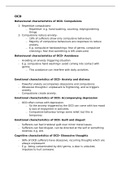
Behavioural characteristics of OCD- Compulsions
1- Repetitive compulsions-
→ Repetitive- e.g. hand washing, counting, tidying/ordering
things.
2- Compulsions reduce anxiety-
→ 10% of sufferers show only compulsive behaviours.
→ Majority of compulsive behaviours are responses to reduce
anxiety.
→ E.g. compulsive handwashing= fear of germs, compulsive
checking= fear that something is left unsecured.
Behavioural characteristics of OCD- Avoidance
- Avoiding an anxiety triggering situation.
- E.g. compulsive hand washing= avoid coming into contact with
germs.
→ This avoidance can interfere with daily activities.
Emotional characteristics of OCD- Anxiety and distress
- Powerful anxiety accompanies obsessions and compulsions.
- Obsessive thoughts= unpleasant & frightening, and so triggers
anxiety.
- Compulsions create anxiety.
Emotional characteristics of OCD- Accompanying depression
- OCD often comes with depression.
→ So the anxiety triggered by the OCD can come with low mood
& lack of enjoyment in activities.
→ Compulsive behaviour brings some relief, but this is
temporary.
Emotional characteristics of OCD- Guilt and disgust
- Sufferers can feel irrational guilt over minor moral issues.
- Sufferers can feel disgust- can be directed at the self or something
external, e.g. dirt.
Cognitive characteristics of OCD- Obsessive thoughts
- 90% of OCD sufferers have obsessive, recurring thoughts which are
always unpleasant.
- E.g.- being contaminated by dirt/ germs, a door is unlocked,
impulses to hurt someone.
Behavioural characteristics of OCD- Compulsions
1- Repetitive compulsions-
→ Repetitive- e.g. hand washing, counting, tidying/ordering
things.
2- Compulsions reduce anxiety-
→ 10% of sufferers show only compulsive behaviours.
→ Majority of compulsive behaviours are responses to reduce
anxiety.
→ E.g. compulsive handwashing= fear of germs, compulsive
checking= fear that something is left unsecured.
Behavioural characteristics of OCD- Avoidance
- Avoiding an anxiety triggering situation.
- E.g. compulsive hand washing= avoid coming into contact with
germs.
→ This avoidance can interfere with daily activities.
Emotional characteristics of OCD- Anxiety and distress
- Powerful anxiety accompanies obsessions and compulsions.
- Obsessive thoughts= unpleasant & frightening, and so triggers
anxiety.
- Compulsions create anxiety.
Emotional characteristics of OCD- Accompanying depression
- OCD often comes with depression.
→ So the anxiety triggered by the OCD can come with low mood
& lack of enjoyment in activities.
→ Compulsive behaviour brings some relief, but this is
temporary.
Emotional characteristics of OCD- Guilt and disgust
- Sufferers can feel irrational guilt over minor moral issues.
- Sufferers can feel disgust- can be directed at the self or something
external, e.g. dirt.
Cognitive characteristics of OCD- Obsessive thoughts
- 90% of OCD sufferers have obsessive, recurring thoughts which are
always unpleasant.
- E.g.- being contaminated by dirt/ germs, a door is unlocked,
impulses to hurt someone.