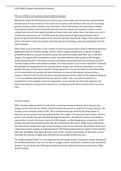
Prime minister and the cabinet
Primus inter pares - a first among equals
Prime minister - the head of the cabinet and the leader of the ministers in the executive branch of governmen
Core executive - that part of government that implements policy. This covers the Prime Minister, the Cabinet, the
Cabinet Committees, the Cabinet Office, the government departments and the Senior Civil Service.
Cabinet government: the idea that power is collective Prime-ministerial government: an idea that
and located in the cabinet. Members run departments recognises growing power of the PM. This theory arose
and are drawn from Parliament, and all ministers have from the development of the political party, and the
an equal say in policy decisions, including the PM. This growing importance of the party leader. According to
is underpinned by collective responsibility and a sense this, cabinet government has been replaced, with the
of solidarity. Under this idea, the PM needs support of PM now at the centre. The PM makes the major
cabinet to survive. This is thought to be an outdated decisions and influences all policy areas, and the
explanation of where power lies in the executive. cabinet provides advice and support to PM (who is not
the ‘first among equals’, but more than this).
Power and limitations of Prime Minister in Cabinet:
Powers Limitations
Promote loyal colleagues and supporters,
Ministers must come from the Commons or Lords, so there is a limited number of
making the cabinet more likely to support
people to choose from. Similarly, ministers will come from the majority party
them
The PM in effect controls the careers of
Particular groups must be represented, such as females
ministers, which should ensure their loyalty
Control how often and how long the cabinet
Cabinet resignations, especially senior ones, can damage the authority of the PM
meets for, and sets the agenda
Prime Minister’s and Cabinet Office: these The PM’s power may be restricted in this area,
institutions give power to the PM, because: because:
1. It gives the PM more staff working for them, 1. The bodies and advisers available to the PM are
helping them to control and oversee the policy considerably less than those available to the US
Prime minister and the cabinet 1
Primus inter pares - a first among equals
Prime minister - the head of the cabinet and the leader of the ministers in the executive branch of governmen
Core executive - that part of government that implements policy. This covers the Prime Minister, the Cabinet, the
Cabinet Committees, the Cabinet Office, the government departments and the Senior Civil Service.
Cabinet government: the idea that power is collective Prime-ministerial government: an idea that
and located in the cabinet. Members run departments recognises growing power of the PM. This theory arose
and are drawn from Parliament, and all ministers have from the development of the political party, and the
an equal say in policy decisions, including the PM. This growing importance of the party leader. According to
is underpinned by collective responsibility and a sense this, cabinet government has been replaced, with the
of solidarity. Under this idea, the PM needs support of PM now at the centre. The PM makes the major
cabinet to survive. This is thought to be an outdated decisions and influences all policy areas, and the
explanation of where power lies in the executive. cabinet provides advice and support to PM (who is not
the ‘first among equals’, but more than this).
Power and limitations of Prime Minister in Cabinet:
Powers Limitations
Promote loyal colleagues and supporters,
Ministers must come from the Commons or Lords, so there is a limited number of
making the cabinet more likely to support
people to choose from. Similarly, ministers will come from the majority party
them
The PM in effect controls the careers of
Particular groups must be represented, such as females
ministers, which should ensure their loyalty
Control how often and how long the cabinet
Cabinet resignations, especially senior ones, can damage the authority of the PM
meets for, and sets the agenda
Prime Minister’s and Cabinet Office: these The PM’s power may be restricted in this area,
institutions give power to the PM, because: because:
1. It gives the PM more staff working for them, 1. The bodies and advisers available to the PM are
helping them to control and oversee the policy considerably less than those available to the US
Prime minister and the cabinet 1