Question: Show to what extent you agree with the view that it is in the nature of tragedy to present little
more than the powerlessness of the tragic hero
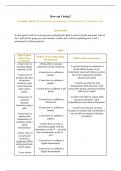
Opinion Plan
Agree Disagree
Powerless to overcome effects of Lear was powerful and willed it away and so it is his
manipulation powerful choices that led to powerless aftermath
Lear and his broken mind Power of regret and repose seen in Lear
Powerless to generate divine natural justice
(as required by Hegelian/Bradley tragedy)
Lear at the whim of the elements
Para Marker Content Guide
INTRO INTRO What is a tragic hero and how does this trope lead to powerlessness?
Who are the tragic heroes of the play?
Who is the focussed hero of the extract? Lear.
Explore, “…little more than the powerlessness…” and explain
Para 1 P Within the play the tragic heroes presented as powerless to overcome effects of
manipulation that profoundly imprint on the nature of tragedy in the play
E “A poor, infirm, weak, and despised, old “I have no way, and therefore want no
man…I call you servile ministers, that eyes; I stumbled when I saw.”
have with two pernicious daughters
join’d…”
T List and negative adjectives -Subplot
Monologue- link to Senecan Sight imagery
tragedy through long rambling Metaphor of blindness
phrases?
Cxt A.C. Bradley on how intercharacter conflict is secondary to the tragic hero’s conflict
internal conflict
L Lear, like Gloucester show how man is blinded by manipulation and in tragedy is
therefore powerless to overcome it hence showing powerlessness of these tragic
heroes
Para 2 P Within the play the key tragic hero is the protagonist Lear, and we see him
presented as powerless to overcome his internal, mental turmoil
E “Blow, winds, and crack your cheeks! “O! Let me not be mad, not mad, sweet
heaven; keep me in temper; I would not be
rage! blow!...You sulphurous and
mad!”
thought-executing fires…”
T Volcanic, doomsday imagery Apostrophe
Exclamatory phrases Repetition
Imperatives Exclamatory phrase
Alliterative ‘C’
Cxt Lear’s readiness to mentally punish the world and vis a vis himself is a key feature
of the Hegelian tragic hero.
L This mental turmoil binds Lear, our tragic hero, to an ill fate that he is powerless to
overcome
Para 3 P Lear is also presented as powerless to generate divine/natural justice against those
who have wronged him hence dismissing this element of Hegelian/Bradley tragedy
E “Let the great gods…find out their “May not an ass know when a cart draws a
horse?”
enemies now. Tremble, thou wretch,
more than the powerlessness of the tragic hero
Opinion Plan
Agree Disagree
Powerless to overcome effects of Lear was powerful and willed it away and so it is his
manipulation powerful choices that led to powerless aftermath
Lear and his broken mind Power of regret and repose seen in Lear
Powerless to generate divine natural justice
(as required by Hegelian/Bradley tragedy)
Lear at the whim of the elements
Para Marker Content Guide
INTRO INTRO What is a tragic hero and how does this trope lead to powerlessness?
Who are the tragic heroes of the play?
Who is the focussed hero of the extract? Lear.
Explore, “…little more than the powerlessness…” and explain
Para 1 P Within the play the tragic heroes presented as powerless to overcome effects of
manipulation that profoundly imprint on the nature of tragedy in the play
E “A poor, infirm, weak, and despised, old “I have no way, and therefore want no
man…I call you servile ministers, that eyes; I stumbled when I saw.”
have with two pernicious daughters
join’d…”
T List and negative adjectives -Subplot
Monologue- link to Senecan Sight imagery
tragedy through long rambling Metaphor of blindness
phrases?
Cxt A.C. Bradley on how intercharacter conflict is secondary to the tragic hero’s conflict
internal conflict
L Lear, like Gloucester show how man is blinded by manipulation and in tragedy is
therefore powerless to overcome it hence showing powerlessness of these tragic
heroes
Para 2 P Within the play the key tragic hero is the protagonist Lear, and we see him
presented as powerless to overcome his internal, mental turmoil
E “Blow, winds, and crack your cheeks! “O! Let me not be mad, not mad, sweet
heaven; keep me in temper; I would not be
rage! blow!...You sulphurous and
mad!”
thought-executing fires…”
T Volcanic, doomsday imagery Apostrophe
Exclamatory phrases Repetition
Imperatives Exclamatory phrase
Alliterative ‘C’
Cxt Lear’s readiness to mentally punish the world and vis a vis himself is a key feature
of the Hegelian tragic hero.
L This mental turmoil binds Lear, our tragic hero, to an ill fate that he is powerless to
overcome
Para 3 P Lear is also presented as powerless to generate divine/natural justice against those
who have wronged him hence dismissing this element of Hegelian/Bradley tragedy
E “Let the great gods…find out their “May not an ass know when a cart draws a
horse?”
enemies now. Tremble, thou wretch,