ATI MED SURG REMEDIATION
ATI MED SURG REMEDIATION Management of Care 1. Cancer Disorders: Advocating for a Client • Encourage the patient to take frequent rest periods • Make sure they get the right nutrition • Help the patient by planning activities that are appropriate for the patient. 2. Ethical Responsibilities: Client Decision to Refuse Treatment • We must respect our patient’s ethical principle of Autonomy. • We must self-reflect on our own values if they are problems that we are against as people. • We must allow them to make their own choices as well as still educating them on the risk or refusal of a certain , procedure. Safety and Infection Control 3. Preoperative Nursing Care: Identifying Allergic Cross-Reactivity • If a patient is allergic to bananas or kiwis, they can also be allergic to latex • Allergies to shellfish, is also considered an allergy to povidone-iodine • And having an egg as well as soybean oil can also mean allergies to anesthesia or propofol. 4. Medical and Surgical Asepsis: Maintaining a Sterile Field • Only touch items on the sterile field with sterile gloves • Never turn your back on the sterile field • Hold any sterile item 6 inches above th3e sterile field before placing it on the sterile field. Health Promotion and Maintenance 5. Infections of the Renal and Urinary System: Teaching About Prevention of Urinary Tract Infections • Educate patient on drinking 3 liters of water a day. • Void before and after intercourse • Make sure to empty the bladder at least every 3 or 4 hrs. Basic Care and Comfort 6. Benign Prostatic Hyperplasia, Erectile Dysfunction, and Prostatitis: Preventing Complications Following a Transurethral Resection • Educate the patient to avoid liftin heavy items as well as sexual intercourse for 2-6 weeks • Youi must contact the surgeon if there is continued bleeding or ay obstruction like you notice any decrease in urine out point, or any distention in the abdomen area. • Avoid anything that might stimulate the bladder like, caffeine or alcohol. Pharmacological and Parenteral Therapies 7. Diabetes Mellitus Management: Medication to Withhold Prior to CT Scan with Contrast Media • Stop metformin at least 24 to 48 hrs. before any surgery or iodine, as this could cause lactic acidosis. • Diuretics • NSAIDS 8. Stroke: Administration of Tissue Plasminogen Activator (tPA) • Must be given withing the first 4.5 hrs. of manifestations • With CT scan evidence • Contraindicated in hemorrhagic strokes 9. Intravenous Therapy: Priority Response to Infusion Pump Alarms • Complications like infiltration can occur, manifestations include, pallor, local swelling and decrease temp. • Extravasation is another complication that would include, pain, burning and swelling. • As well as Cath embolisms, phlebitis and cellulitis. Reduction of Risk Potential 10. Electrocardiography and Dysrhythmia Monitoring: Analyzing ECG • A dysrhythmia would show AV blocks, Ventricular asystole. • They are classified on the site of the origin • They also effect the rate and the rhythm. 11. Acute Respiratory Disorders: Expected Findings for a Client Who Has Pneumonia • They would show signs of Anxiety • Flushed face • Dull chest percussion over the areas of consolidation 12. Postoperative Nursing Care: Caring for a Client Following an Appendectomy • Monitor bowel sounds • Monitor incision site for signs of infections • Educating the patient on the importance of consuming high protein and calories. 13. Peptic Ulcer Disease: Monitoring Nasogastric Output • Monitor I & O for any signs of electrolyte imbalance • Look for manifestations o obstruction from scarring, which would include the feeling of fullness • Distention 14. Ingestion, Digestion, Absorption, and Metabolism: Findings of Malnutrition • Pitting edema • Hair loss • Wasted appearance 15. Gastrointestinal Therapeutic Procedures: Discharge Teaching for a Client Who Has an Ileostomy • Educate them on the consistency of the bile and color • After a couple of weeks, the consistency will be paste like • There should be continuous output 16. Legal Responsibilities: Witnessing Informed Consent • Nurses must witness the patient signing the form • Mut make sure they are competent enough to sign it • We must also know who can grant consent for the patient Physiological Adaptation 17. Cancer Treatment Options: Precautions for Client Undergoing Radiation Therapy • They must avoid huge crowds while they are under therapy • The must be educated on taking their temp daily and when to know to contact a doctor for increased temp. • Avoid any liquid drinks that have been sitting for more then 1 hr. 18. Postoperative Nursing Care: Identifying a Gravity Wound Drain • The Penrose is a gravity wound drain • Works like a straw and pulls fluid out • It promotes darning passively 19. Respiratory Management and Mechanical Ventilation: Therapeutic Effect of Positive End- Expiratory Pressure • Helps to keep the air way open • Pushes positive pressure through to keep alveoli opened • Improves gas exchange 20. Anemias: Manifestations of Anemia • Shortness of breath • Dizziness • Smooth and sore red tongue 21. Electrocardiography and Dysrhythmia Monitoring: Identifying Bradycardia • Is a heart rate less then 60 bpm • Normal upright P wave in the lead II with the following go a QRS complex w • AV blocking mends will cause bradycardia on an ECG 22. Cancer Treatment Options: Prioritizing Care for a Group of Clients • Patients who are neutropenic are priority • Patients with a fever • And sings of infection 23. HIV/AIDS: Priority Client Teaching • Practice proper hygiene with frequent hand hygiene • Educate patients om avoiding raw foods as we3ll as undercooked foods/ meats • As well as avoiding cleaning any kitten litter to avoid toxoplasmosis 24. Preoperative Nursing Care: Recognizing Deviations in Laboratory Values • Report increase or decrease values • Continue to monitor Hb and white blood count to report a sign of infection • Decreased hmb can mean the patient is losing blood through incision site 25. Musculoskeletal Trauma: Assessing for Compartment Syndrome • Increased pain unrelieved by pain medication • Parathesis • Paralysis
Written for
- Institution
- ATI MED SURG REMEDIATION
- Course
- ATI MED SURG REMEDIATION
Document information
- Uploaded on
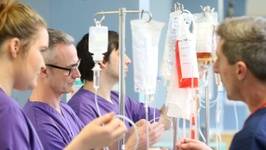
- April 18, 2022
- Number of pages
- 4
- Written in
- 2022/2023
- Type
- Exam (elaborations)
- Contains
- Questions & answers
Subjects
-
ati med surg remediation management of care 1 cancer disorders advocating for a client • encourage the patient to take frequent rest periods • make sure they get the right nutrition • help the