1
Patricia Doyle Care Plan
for Systemic Lupus
Erythematosus
, 2
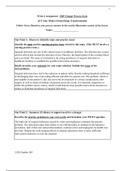
Care Plan for Systemic Lupus Erythematosus
1. Patient status- Patricia Doyle is clinically sick but does not require emergency department
management because she does not have severe thrombocytopenia or rapid progress of
glomerulonephritis (Yildirim-Toruner & Diamond, 2011). However, she requires prompt
treatment to avoid serious complications such as systemic vasculitis, severe neurological
impairment, diffuse alveolar hemorrhage, profound thrombocytopenia and a rapidly progressive
glomerulonephritis (Bartels, 2013).
2. Nursing Interventions
The treatment of systemic lupus erythematosus is highly dependent on disease severity
and the presenting signs and symptoms (Askanase, Shum, & Mitnick, 2012). Nonetheless, the
mainstay drug for managing SLE on a long-term basis is hydroxychloroquine although it gets
preserved for severe manifestations of the disease (Ahmadpoor, P.; Dalili, N.; Rostami, 2014).
Mild and moderate forms of SLE get managed by the use of low-potency immunosuppression
agents, NSAIDs or a short course of corticosteroids. Involvement of the vital organs such as the
central nervous system and kidney is considered severe forms of the SLE (Bertsias George et al.,
2012). Therefore, Patricia Doyle is suffering from severe SLE due to the presence of proteinuria,
Patricia Doyle Care Plan
for Systemic Lupus
Erythematosus
, 2
Care Plan for Systemic Lupus Erythematosus
1. Patient status- Patricia Doyle is clinically sick but does not require emergency department
management because she does not have severe thrombocytopenia or rapid progress of
glomerulonephritis (Yildirim-Toruner & Diamond, 2011). However, she requires prompt
treatment to avoid serious complications such as systemic vasculitis, severe neurological
impairment, diffuse alveolar hemorrhage, profound thrombocytopenia and a rapidly progressive
glomerulonephritis (Bartels, 2013).
2. Nursing Interventions
The treatment of systemic lupus erythematosus is highly dependent on disease severity
and the presenting signs and symptoms (Askanase, Shum, & Mitnick, 2012). Nonetheless, the
mainstay drug for managing SLE on a long-term basis is hydroxychloroquine although it gets
preserved for severe manifestations of the disease (Ahmadpoor, P.; Dalili, N.; Rostami, 2014).
Mild and moderate forms of SLE get managed by the use of low-potency immunosuppression
agents, NSAIDs or a short course of corticosteroids. Involvement of the vital organs such as the
central nervous system and kidney is considered severe forms of the SLE (Bertsias George et al.,
2012). Therefore, Patricia Doyle is suffering from severe SLE due to the presence of proteinuria,