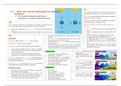
Tides
1.1 . How can coastal landscapes be viewed as Tide = periodic rise and fall of the sea surface and are produced by
systems? the gravitational pull of the moon and, to a lesser extent, the sun
1b. Coastal Landscape systems are Tidal range = the vertical difference in height between consecutive
influenced by a range of physical factors high and low waters over a tidal cycle
Spring tide = A tide that occurs when the difference between high
Winds and low tide is greatest – during lunar months
Fetch = the distance of open water in one direction from a coastline, over which the wind can Neap tide = A tide that occurs when the difference high and low
blow – travels 5000 miles across the North Atlantic = high wave energy levels tide is least
wave energy is generated by the frictional drag of winds moving across the ocean 1. The moon pulls the water towards it, creating a higher tidal
surface range
the higher the wind speed and the longer the fetch, the larger the waves and the more 2. There is a compensatory bulge on the opposite side of the
energy they possess earth
Waves 3. At locations between the 2 bulges there will be a low tide
Tidal range can be a significant factor in the development of coastal
4. As the moon orbits the earth, the high tides follow it
landscapes
Wave anatomy: 5. The highest tides will occur when the Moon, Sun and Earth
In enclosed seas e.g. Mediterranean, tidal ranges are low so wave
are all aligned and so the gravitational pull is at its strongest
action is restricted to a narrow area of land
Wavelength = distance between 2 successive crests or troughs 6. This happens twice each lunar month and results in spring
In places where the coast is funnelled e.g. Severn Estuary, tidal range
tides
Wave frequency = number of waves per minute can be as high as 14m
7. Twice a month, the Moon and Sun are 90° to each other and
Tidal range influences where wave action occurs, the weathering
the gravitational pull is therefore at its weakest, producing
Wave height/amplitude = distance between the trough and the crest processes that happen on land exposed between tides and the
neap tides with a low range
potential scouring effect of waves along high tidal range coasts
A wave possesses potential energy as a result of its position
above the wave trough and kinetic energy cause by the motion of
the water within the wave Constructive waves: Steep waves breaking onto gently
Moving waves don’t move the water forward, but rather the sloping beaches; water spills gently
low in height and long with elliptic profile forward as the wave breaks
waves impact a circular motion to the individual water molecules
low frequency 6-8 per minute Usually associated with constructive
Swell waves = waves formed in open oceans, with long wavelengths long wavelength (up to 100m) so backwash waves
and a wave period of up to 20 seconds, that can travel huge distances returns to sea before next wave breaks so
from where they are generated swash uninterrupted and retains energy
tend to break as spilling waves Moderately steep waves breaking
Storm waves = locally generated wave with a short wavelength, swash energy > backwash onto moderately steep beaches;
greater height and shorter wave period than a swell wave generated by distant winds in the summer water plunges vertically downwards
as the crest curls over
Breaking Waves (3 types): Destructive waves: Usually associated with destructive
waves
When waves move into shallow water (depth = ½ wavelength) greater height
their behaviour changes remarkably shorter wavelength
Waves slow down as they drag across the bottom; the higher frequency 12-14 per minute Low angle waves breaking onto
wavelength decreases and successive waves start to bunch up tend to break as plunging waves steep beaches; the wave slides
Deepest part of wave slows down more than top of waves so high and steep with circular profile forward and may not actually break
waves steepen and the crest advances ahead of the base swash energy < backwash
generated by local winds in the winter
1.1 . How can coastal landscapes be viewed as Tide = periodic rise and fall of the sea surface and are produced by
systems? the gravitational pull of the moon and, to a lesser extent, the sun
1b. Coastal Landscape systems are Tidal range = the vertical difference in height between consecutive
influenced by a range of physical factors high and low waters over a tidal cycle
Spring tide = A tide that occurs when the difference between high
Winds and low tide is greatest – during lunar months
Fetch = the distance of open water in one direction from a coastline, over which the wind can Neap tide = A tide that occurs when the difference high and low
blow – travels 5000 miles across the North Atlantic = high wave energy levels tide is least
wave energy is generated by the frictional drag of winds moving across the ocean 1. The moon pulls the water towards it, creating a higher tidal
surface range
the higher the wind speed and the longer the fetch, the larger the waves and the more 2. There is a compensatory bulge on the opposite side of the
energy they possess earth
Waves 3. At locations between the 2 bulges there will be a low tide
Tidal range can be a significant factor in the development of coastal
4. As the moon orbits the earth, the high tides follow it
landscapes
Wave anatomy: 5. The highest tides will occur when the Moon, Sun and Earth
In enclosed seas e.g. Mediterranean, tidal ranges are low so wave
are all aligned and so the gravitational pull is at its strongest
action is restricted to a narrow area of land
Wavelength = distance between 2 successive crests or troughs 6. This happens twice each lunar month and results in spring
In places where the coast is funnelled e.g. Severn Estuary, tidal range
tides
Wave frequency = number of waves per minute can be as high as 14m
7. Twice a month, the Moon and Sun are 90° to each other and
Tidal range influences where wave action occurs, the weathering
the gravitational pull is therefore at its weakest, producing
Wave height/amplitude = distance between the trough and the crest processes that happen on land exposed between tides and the
neap tides with a low range
potential scouring effect of waves along high tidal range coasts
A wave possesses potential energy as a result of its position
above the wave trough and kinetic energy cause by the motion of
the water within the wave Constructive waves: Steep waves breaking onto gently
Moving waves don’t move the water forward, but rather the sloping beaches; water spills gently
low in height and long with elliptic profile forward as the wave breaks
waves impact a circular motion to the individual water molecules
low frequency 6-8 per minute Usually associated with constructive
Swell waves = waves formed in open oceans, with long wavelengths long wavelength (up to 100m) so backwash waves
and a wave period of up to 20 seconds, that can travel huge distances returns to sea before next wave breaks so
from where they are generated swash uninterrupted and retains energy
tend to break as spilling waves Moderately steep waves breaking
Storm waves = locally generated wave with a short wavelength, swash energy > backwash onto moderately steep beaches;
greater height and shorter wave period than a swell wave generated by distant winds in the summer water plunges vertically downwards
as the crest curls over
Breaking Waves (3 types): Destructive waves: Usually associated with destructive
waves
When waves move into shallow water (depth = ½ wavelength) greater height
their behaviour changes remarkably shorter wavelength
Waves slow down as they drag across the bottom; the higher frequency 12-14 per minute Low angle waves breaking onto
wavelength decreases and successive waves start to bunch up tend to break as plunging waves steep beaches; the wave slides
Deepest part of wave slows down more than top of waves so high and steep with circular profile forward and may not actually break
waves steepen and the crest advances ahead of the base swash energy < backwash
generated by local winds in the winter