Business Operations and Processes
,Table of Contents
WEEK 1 – OPERATIONS MANAGEMENT, PERFORMANCE AND STRATEGY ................................................ 3
CHAPTER 1 OPERATIONS MANAGEMENT ............................................................................................................................................... 3
CHAPTER 2 OPERATIONS PERFORMANCE ............................................................................................................................................... 5
CHAPTER 3 OPERATIONS STRATEGY ........................................................................................................................................................ 8
WEEK 2 – STRUCTURE & SCOPE OF OPERATIONS, PROCESS DESIGN AND LAYOUT & FLOW .................. 10
CHAPTER 5 THE STRUCTURE AND SCOPE OF OPERATIONS................................................................................................................ 10
CHAPTER 6 PROCESS DESIGN ................................................................................................................................................................ 12
CHAPTER 7 LAYOUT AND FLOW ............................................................................................................................................................ 16
WEEK 3 – PLANNING & CONTROL AND CAPACITY MANAGEMENT .......................................................... 19
CHAPTER 10 PLANNING AND CONTROL............................................................................................................................................... 19
CHAPTER 11 CAPACITY MANAGEMENT ............................................................................................................................................... 25
WEEK 5 – INVENTORY MANAGEMENT AND PLANNING & CONTROL SYSTEMS ....................................... 32
CHAPTER 13 INVENTORY MANAGEMENT ............................................................................................................................................ 32
CHAPTER 14 PLANNING AND CONTROL SYSTEMS .............................................................................................................................. 39
WEEK 6 – LEAN OPERATIONS, OPERATIONS IMPROVEMENT................................................................... 43
CHAPTER 15 LEAN OPERATIONS........................................................................................................................................................... 43
CHAPTER 16 OPERATIONS IMPROVEMENT .......................................................................................................................................... 49
WEEK 7 – QUALITY MANAGEMENT, MANAGING RISK AND PROJECT MANAGEMENT............................ 54
CHAPTER 17 QUALITY MANAGEMENT................................................................................................................................................. 54
CHAPTER 18 MANAGING RISK AND RECOVERY.................................................................................................................................. 59
CHAPTER 19 PROJECT MANAGEMENT ................................................................................................................................................. 62
2
,Week 1 – Operations management, performance and
strategy.
Chapter 1 Operations Management
Operations management is the activity of managing the resources that create and deliver
services and products. The operation function is one of the three core functions of any
organization. Responsible for the creation and delivery of services and products based on
customer requests.
Operations are everywhere:
➢ The best way to start understanding the nature of “operations” is to look around you.
➢ Everything you can see around you (except the flesh and blood) has been produced by
an operation.
➢ Every service you consumed today (radio station, bus service, lecture, etc.) has also been
produced by an operation.
➢ Operations Managers create everything you buy, sit on, wear, eat, and throw away.
Operations management uses:
- Machines to efficiently assemble products.
- People to effectively create services that will address current and potential client needs.
- Knowledge to effectively diagnose conditions to treat real and perceived patient
concerns.
- Ours and our partners’ resources to speedily provide supplies and services that relieve
community suffering.
- Our staff’s knowledge and experience to creatively present ideas that delight clients and
address their real needs.
Input-Transformation-Output Process
All operations create and deliver service and products
by changing inputs into outputs.
Most operation produce products and services
Operations management is just as
important in small organizations as it is in
large ones. All companies need to create
and deliver their service and products
efficiently and effectively.
3
, Examples of analysis at three levels: A typology of operations and processes
• The implications of high and low VOLUME in operation and processes
o High volume implies low unit cost.
• The implications of high and low VARIETY in operations and processes
o High variety implies high unit cost
• The implications of high and low VARIATION in operations and processes
o High variation in demand implies high unit cost
• The implication of high and low VISIBILITY in operations and processes
o High visibility implies high unit cost
It is important to understand how different operation are positioned
on the four V’s
- Is their position where they want to be?
- Do they understand the strategic implications of their
position?
Volume and variety are related in inverse manner.
4
,Table of Contents
WEEK 1 – OPERATIONS MANAGEMENT, PERFORMANCE AND STRATEGY ................................................ 3
CHAPTER 1 OPERATIONS MANAGEMENT ............................................................................................................................................... 3
CHAPTER 2 OPERATIONS PERFORMANCE ............................................................................................................................................... 5
CHAPTER 3 OPERATIONS STRATEGY ........................................................................................................................................................ 8
WEEK 2 – STRUCTURE & SCOPE OF OPERATIONS, PROCESS DESIGN AND LAYOUT & FLOW .................. 10
CHAPTER 5 THE STRUCTURE AND SCOPE OF OPERATIONS................................................................................................................ 10
CHAPTER 6 PROCESS DESIGN ................................................................................................................................................................ 12
CHAPTER 7 LAYOUT AND FLOW ............................................................................................................................................................ 16
WEEK 3 – PLANNING & CONTROL AND CAPACITY MANAGEMENT .......................................................... 19
CHAPTER 10 PLANNING AND CONTROL............................................................................................................................................... 19
CHAPTER 11 CAPACITY MANAGEMENT ............................................................................................................................................... 25
WEEK 5 – INVENTORY MANAGEMENT AND PLANNING & CONTROL SYSTEMS ....................................... 32
CHAPTER 13 INVENTORY MANAGEMENT ............................................................................................................................................ 32
CHAPTER 14 PLANNING AND CONTROL SYSTEMS .............................................................................................................................. 39
WEEK 6 – LEAN OPERATIONS, OPERATIONS IMPROVEMENT................................................................... 43
CHAPTER 15 LEAN OPERATIONS........................................................................................................................................................... 43
CHAPTER 16 OPERATIONS IMPROVEMENT .......................................................................................................................................... 49
WEEK 7 – QUALITY MANAGEMENT, MANAGING RISK AND PROJECT MANAGEMENT............................ 54
CHAPTER 17 QUALITY MANAGEMENT................................................................................................................................................. 54
CHAPTER 18 MANAGING RISK AND RECOVERY.................................................................................................................................. 59
CHAPTER 19 PROJECT MANAGEMENT ................................................................................................................................................. 62
2
,Week 1 – Operations management, performance and
strategy.
Chapter 1 Operations Management
Operations management is the activity of managing the resources that create and deliver
services and products. The operation function is one of the three core functions of any
organization. Responsible for the creation and delivery of services and products based on
customer requests.
Operations are everywhere:
➢ The best way to start understanding the nature of “operations” is to look around you.
➢ Everything you can see around you (except the flesh and blood) has been produced by
an operation.
➢ Every service you consumed today (radio station, bus service, lecture, etc.) has also been
produced by an operation.
➢ Operations Managers create everything you buy, sit on, wear, eat, and throw away.
Operations management uses:
- Machines to efficiently assemble products.
- People to effectively create services that will address current and potential client needs.
- Knowledge to effectively diagnose conditions to treat real and perceived patient
concerns.
- Ours and our partners’ resources to speedily provide supplies and services that relieve
community suffering.
- Our staff’s knowledge and experience to creatively present ideas that delight clients and
address their real needs.
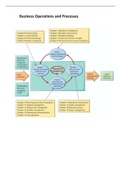
Input-Transformation-Output Process
All operations create and deliver service and products
by changing inputs into outputs.
Most operation produce products and services
Operations management is just as
important in small organizations as it is in
large ones. All companies need to create
and deliver their service and products
efficiently and effectively.
3
, Examples of analysis at three levels: A typology of operations and processes
• The implications of high and low VOLUME in operation and processes
o High volume implies low unit cost.
• The implications of high and low VARIETY in operations and processes
o High variety implies high unit cost
• The implications of high and low VARIATION in operations and processes
o High variation in demand implies high unit cost
• The implication of high and low VISIBILITY in operations and processes
o High visibility implies high unit cost
It is important to understand how different operation are positioned
on the four V’s
- Is their position where they want to be?
- Do they understand the strategic implications of their
position?
Volume and variety are related in inverse manner.
4