100% tevredenheidsgarantie Direct beschikbaar na je betaling Lees online óf als PDF Geen vaste maandelijkse kosten 4,6 TrustPilot
logo-home
Tentamen (uitwerkingen)

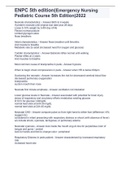
ENPC 5th edition(Emergency Nursing Pediatric Course 5th Edition)2022

Beoordeling
-
Verkocht
-
Pagina's
4
Cijfer
A+
Geüpload op
06-10-2022
Geschreven in
2022/2023

Neonate characteristics: Birth to 4 weeks If preterm neonate until original due date plus 28 days Loses 5-10% weight by 3-4th day of life Flexion normal posture Limited glycogen store Nose breathers Infant characteristics: Nose breather until 6months And muscle to breathe Metabolic rate 2x adult (increased need for oxygen and glucose) Toddler characteristics: Babinski réflex normal until walking Plantar réflex at 2 years And muscles to breathe Most common cause of bradycardia in peds hypoxia When to begin chest compressions in peds when HR is below 60bpm Suctioning the neonate increases the risk for decreased cerebral blood flow decreased pulmonary oxygenation bradycardia suction mouth then nose Neonate first minute emphasis ventilation not intubation Lower glucose levels in Neonate associated with potential for brain injury stress of respiratory and circulatory efforts metabolize existing glucose D10 IV for glucose 40mg/dL normal heel stick at birth 30 mg/dL normal heel stick at 24h 45 mg/dL Neonatal CHD compare pulse ox from right hand to either foot (difference 3% suggest dx) considered in infant presenting with respiratory distress or shock (with absence of fever) s/s include shock, cyanosis, tachypnea, or pulmonary edema Neonatal cyanosis look inside the mouth at gum line for purple/blue color of tongue and gums - central look for hands and feet to change color - peripheral Respiratory Distress in peds patient characterized by increased respiratory rate increased heart rate skin color changes increased WOB (grunting, nasal flaring, head bobbing, accessory muscle use) wheezing diaphoresis abnormal upper airway (sounds such as stridor) change in mentation (irritable or agitated) Laryngotracheobronchitis (Croup) viral illness that account 90% peds stridor inflammation, exudates and edema of larynx l/d narrowing of upper airway tx with dexamethasone and racemic epi (nebulized epinephrine) tx with antipyretics for fever Pertussis (whooping cough) acute bacterial infection of the respiratory tract that is highly contagious characterized by spasmodic, hacking cough followed by whooping noise upon breath intake tx with erythromycin, azithromycin, clarithromycin or trimethoprim-sulfamethoxazole cystic fibrosis (CF) genetic condition r/t exocrine dysfunction result in thick mucous production persistent productive cough, hyperinflated lungs, diminished pulmonary function and increased susceptibility to ch. bacterial resp infections tx with abx, steroids for asthma-like s/s, brochodilator followed by nebulized hypertonic saline and dornase alfa Pneumothorax simple - when air enters pleural space (monitor) large - s/s hypotension, distended neck veins, pale and diaphoretic skin, decreased or absence BS on affected side, hyper-resonance to percussion (Chest tube) spontaneous - no known trauma or injury (most cases is ruptured bleb) Heart Failure in peds inadequate CO r/t ventricle unable to either fill with blood or eject blood can be result of sepsis, renal dx, inflammatory conditions, dysrythmias, muscular dystrophy, chemotherapy or blunt chest traumas tx by position of comfort, record weight daily, BB, avoid vasodilators and caution of diuretics Cardiomyopathy in peds left ventricular hypertrophy (thickened muscle wall) dilated cardiomyopathy (left ventricular enlarged and weakened) cause include coronary artery dx, HTN, obesity, drug tox and kawasaki dx tx by position of comfort, record weight daily, BB, avoid vasodilators and caution of diuretics Myocarditis inflammation of the heart muscle that has significant mortality and morbidity in peds viral, bacterial, toxic and autoimmune etiologies s/s include fever, malaise (general unwell) and myalgia (soreness/achiness in muscles); SHOB at rest and crackles on auscultation; dysrhytmias; HF; elevated enxymes; syncope Percarditis inflammation of pericardial sac of heart infectious (viral/bacterial) or dug (PCN, phenytoin), post cardiac surg, metabolic or immune mediated tx NSAIDS and possible pericardiocentesis Marfan Syndrome inherited autosomal dominant dx connective tissue dx s/s - thin, tall with long extremities, flat feet, pectus excavatum (caved-in chest) or pectus carinatum (protruding "pigeon" chest) tx with BB or angiotensin-receptor blocker Kawaski Disease vasculitis of unknown cause may be r/t infection (viral/bacterial) L/T coronary artery aneurysms, progressive stenosis, ischemic heart disease, myocardial infarction, HG or sudden cardiac death Reversible causes of peds cardiac arrest Hypovolemia hypoxia hydrogen ion (acid-base illness) hypokalemia/hyperkalemia (glucose also) hypothermia tension pneumothorax tamponade (cardiac) toxins/tablets thrombosis (PE, MI) hypovolemic shock decreased intravascular volume fluid volume loss - n/v/d, UO, hemorrhage, burns, and fluid shift into third space most common shock in children distributive shock characterized by vasodilation and maldistribution of blood volume anaphylactic - allergen exposure and histamine release cause vasodilation septic - endotoxin release cause increased vascular permebility and vasodilation neurogenic - SCI, spinal anesthesia or nervous system damage cause loss of sympathetic tone and vasodilation obstructive shock obstruction that decreases the heart's ability to pump blood or venous return of the heart cause include pericardial tamponade, tension pneumothorax, CHD and PE cadiogenic shock characterized by decreased cardiac contractility and output secondary to abnormal pump function or pump failure cause by myocardial injury (myocarditis or trauma), CHD or dysrhythmias Compensated shock (Stage I) tachycardia, mild tachypnea, slightly delayed cap refil, and subtle changes ******

Meer zien Lees minder
Instelling
Vak

Voorbeeld van de inhoud

ENPC 5th edition(Emergency Nursing
Pediatric Course 5th Edition)2022
Neonate characteristics: - Answer Birth to 4 weeks
If preterm neonate until original due date plus 28 days
Loses 5-10% weight by 3-4th day of life
Flexion normal posture
Limited glycogen store
Nose breathers

Infant characteristics: - Answer Nose breather until 6months
And muscle to breathe
Metabolic rate 2x adult (increased need for oxygen and glucose)

Toddler characteristics: - Answer Babinski réflex normal until walking
Plantar réflex at 2 years
And muscles to breathe

Most common cause of bradycardia in peds - Answer hypoxia

When to begin chest compressions in peds - Answer when HR is below 60bpm

Suctioning the neonate - Answer increases the risk for decreased cerebral blood flow
decreased pulmonary oxygenation
bradycardia
suction mouth then nose

Neonate first minute emphasis - Answer ventilation not intubation

Lower glucose levels in Neonate - Answer associated with potential for brain injury
stress of respiratory and circulatory efforts metabolize existing glucose
D10 IV for glucose <40mg/dL
normal heel stick at birth 30 mg/dL
normal heel stick at 24h 45 mg/dL

Neonatal CHD - Answer compare pulse ox from right hand to either foot (difference >3%
suggest dx)
considered in infant presenting with respiratory distress or shock (with absence of fever)
s/s include shock, cyanosis, tachypnea, or pulmonary edema

Neonatal cyanosis - Answer look inside the mouth at gum line for purple/blue color of
tongue and gums - central
look for hands and feet to change color - peripheral

Respiratory Distress in peds patient - Answer characterized by increased respiratory
rate
increased heart rate

Geschreven voor

Vak

Documentinformatie

Geüpload op
6 oktober 2022
Aantal pagina's
4
Geschreven in
2022/2023
Type
Tentamen (uitwerkingen)
Bevat
Vragen en antwoorden

Onderwerpen

$10.49
Krijg toegang tot het volledige document:

100% tevredenheidsgarantie
Direct beschikbaar na je betaling
Lees online óf als PDF
Geen vaste maandelijkse kosten


Ook beschikbaar in voordeelbundel

Maak kennis met de verkoper

Seller avatar
De reputatie van een verkoper is gebaseerd op het aantal documenten dat iemand tegen betaling verkocht heeft en de beoordelingen die voor die items ontvangen zijn. Er zijn drie niveau’s te onderscheiden: brons, zilver en goud. Hoe beter de reputatie, hoe meer de kwaliteit van zijn of haar werk te vertrouwen is.
EvaTee Phoenix University
Volgen Je moet ingelogd zijn om studenten of vakken te kunnen volgen
Verkocht
5138
Lid sinds
4 jaar
Aantal volgers
3565
Documenten
54064
Laatst verkocht
20 uur geleden
TIGHT DEADLINE? I CAN HELP

Many students don\'t have the time to work on their academic papers due to balancing with other responsibilities, for example, part-time work. I can relate. kindly don\'t hesitate to contact me, my study guides, notes and exams or test banks, are 100% graded

3.8

938 beoordelingen

5
447
4
166
3
170
2
47
1
108

Populaire documenten

Recent door jou bekeken

Waarom studenten kiezen voor Stuvia

Gemaakt door medestudenten, geverifieerd door reviews

Kwaliteit die je kunt vertrouwen: geschreven door studenten die slaagden en beoordeeld door anderen die dit document gebruikten.

Niet tevreden? Kies een ander document

Geen zorgen! Je kunt voor hetzelfde geld direct een ander document kiezen dat beter past bij wat je zoekt.

Betaal zoals je wilt, start meteen met leren

Geen abonnement, geen verplichtingen. Betaal zoals je gewend bent via Bancontact, iDeal of creditcard en download je PDF-document meteen.

Student with book image

“Gekocht, gedownload en geslaagd. Zo eenvoudig kan het zijn.”

Alisha Student

Veelgestelde vragen