CHAMBERLAIN University NSG 526 EXAM 3 STUDY GUIDE 2022
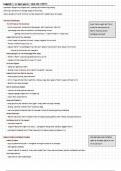
CHAMBERLAIN University NSG 526 EXAM 3 STUDY GUIDE 2022 Exam 3 Study Guide Module 9 - Perese Chapter 11 Crisis Intervention/phases (9 questions) Levels of prevention: o Primary – actually preventing the thing o Secondary – early identification and treatment o Tertiary – avoidance of complications Norms are considered the "right" patterns of behavior for a society. Crisis: o A crisis is generally regarded as time limited, lasting no more than 4 to 6 weeks o Internal or external demands that are perceived as threats to a person’s physical or emotional functioning can initiate a crisis. The precipitating event is not only stressful, but unusual or rare. o Maturational – Describes unfavorable person-environment relationships that relate to maturational events, such as leaving home for the first time, completing school, or accepting the responsibility of adulthood. o Situational - Occurs whenever a specific stressful event threatens a person’s biopsychosocial integrity and results in some degree of psychological disequilibrium. o Adventitious - Initiated by an unexpected unusual events that can affect an individual or a multitude of people. National and natural disasters. During an adventitious crisis (e.g., flood, hurricane, forest fire) that affects the well-being of many people, the interventions of the PMH-APRN will be a part of the community’s efforts to respond to the event. o The goal for people experiencing a crisis is to return to the pre-crisis level of functioning. o The role of the PMH-APRN is to provide a framework of support systems that guide the client through the crisis and facilitate the development and use of positive coping skills. Assess risk of homicide/suicide/self-injury Assess coping skills Assess perception of problem and support mechanisms Assess biologic items – sleep, eating, hygiene, etc Assess psychological – emotions and coping Asses social – individual, family, community. Social support o Disaster: A disaster is a sudden ecological or man-made phenomenon that is of sufficient magnitude to require external help to address the psychosocial needs as well as the physical needs of the victims. Mass Casualty Incident Triage categories: Expectant: Injuries are extensive and chances of survival are unlikely even with definitive care. Separate and provide comfort o Unresponsive patients with penetrating head wounds, high spinal cord injuries, wounds involving multiple anatomical sites and organs, 2nd/3rd degree burns in excess of 60% of body
Written for
- Institution
-
Chamberlain College Of Nursing
- Course
-
NSG 526
Document information
- Uploaded on
- October 10, 2022
- Number of pages
- 10
- Written in
- 2022/2023
- Type
- Exam (elaborations)
- Contains
- Questions & answers
Subjects
-
chamberlain university nsg 526 exam 3 study guide 2022

Also available in package deal