WGU C961 - Ethics in Technology
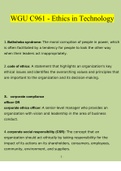
1. Bathsheba syndrome: The moral corruption of people in power, which
is often facilitated by a tendency for people to look the other way
when their leaders act inappropriately.
2. code of ethics: A statement that highlights an organization's key
ethical issues and identifies the overarching values and principles that
are important to the organization and its decision-making.
3. corporate compliance
officer OR
corporate ethics officer: A senior-level manager who provides an
organization with vision and leadership in the area of business
conduct.
4. corporate social responsibility (CSR): The concept that an
organization should act ethically by taking responsibility for the
impact of its actions on its shareholders, consumers, employees,
community, environment, and suppliers.
1/
, 5. ethics: A code of behavior that is defined by the group to which an
individual belongs.
6. integrity: Adherence to a personal code of principles.
7. law: A system of rules that govern what we can and cannot do.
8. morals: The personal principles upon which an individual bases
his or her decisions about what is right and what is wrong.
9. problem statement: A clear, concise description of the issue that
needs to be addressed.
10.social audit: A process whereby an organization reviews how well it
is meeting its ethical and social responsibility goals and communicates
its new goals for the upcoming year.
11.software piracy: A form of copyright infringement that involves
making copies of software or enabling others to access software to
2/
1. Bathsheba syndrome: The moral corruption of people in power, which
is often facilitated by a tendency for people to look the other way
when their leaders act inappropriately.
2. code of ethics: A statement that highlights an organization's key
ethical issues and identifies the overarching values and principles that
are important to the organization and its decision-making.
3. corporate compliance
officer OR
corporate ethics officer: A senior-level manager who provides an
organization with vision and leadership in the area of business
conduct.
4. corporate social responsibility (CSR): The concept that an
organization should act ethically by taking responsibility for the
impact of its actions on its shareholders, consumers, employees,
community, environment, and suppliers.
1/
, 5. ethics: A code of behavior that is defined by the group to which an
individual belongs.
6. integrity: Adherence to a personal code of principles.
7. law: A system of rules that govern what we can and cannot do.
8. morals: The personal principles upon which an individual bases
his or her decisions about what is right and what is wrong.
9. problem statement: A clear, concise description of the issue that
needs to be addressed.
10.social audit: A process whereby an organization reviews how well it
is meeting its ethical and social responsibility goals and communicates
its new goals for the upcoming year.
11.software piracy: A form of copyright infringement that involves
making copies of software or enabling others to access software to
2/