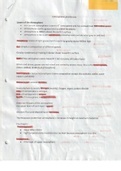
New Behaviour
perspectives on
of
studying physiology ·
adding in more real-world situations
cognition terms:
key
1.
Neuropsychology:studyofbehaviour of
people with brain
damage
2.
Electrophysiology:measuring electrical activityin the brain
·Analytic introspection ·
classical
conditioning savings
cognition · Javings Creevolution
·
brain imaging tec
Behaviourism
-
-
·
neuroimage cognitive map
·
PC
-
·Brain imagingseen
·
simple reaction time
cognitive revolution
·
time ·
structuralism
electrophysiology
·
neurospychology
·
Information
processing approach
·
operantconditioning
·
·
Reaction time
of
Types Long-term memor
Examples
whatyou did lastweekend
Long-term memory
.
Episodic
2. Semantic.What are the territories
are
Episodic Semantic Procedural
life physical
events facts
actions
7
~
studying Higher Mental processes
Introduction to
sensory, short-term, and long-term memory
Allsensorymemory:holdsincominginformationforasecondand theresity
RIshort-termmemory:holdsinmemoryfora shortperiodoftheend 7
long-term memory
13)
Long-term memory: high capacity, holds information for
long periods
oftime, sometimes information
called
in
long-term can
go
back to
cognitions:
short-term, this is
remembering 1. Perception 2. Attention
3.
Memory
the studyof mental
cognitive psychologyi s
Chapter #1: Introduction to
cognitive Psych
processes determining how the mind operates.
Wilhelm wundt
Earlywork in
cognitive Psychology
Tolman
experiments A. Donders Pioneering experiment:Decesion making
·
founded structuralism
Cognitive map:a map we create in our head reaction time (like IAT test
structuralism:o u r life
experience is determined
ratmazeneexpenmentededtostart atan or food poshalebutton whenthey sawa light orneglect or
by
sensations
combining basic elements ofexperience, called
skinner:
· wundtu sed analytic introspection
thatc hildren
·
argued learn
language through
operantconditioning thattrained
Analytic introspection;a tequnique
to describe in response
participants their
experiences
chomskyagreed with this and said
language is
biological
2
Includes 3
things to stimuli
and inate in human nature 1. StimulUS v
The studyofthe mind
2.mentalresponseresponse Ebbinghaus Memory
Experiment:how do we
forget?
1950-
Cognitive revolution
understanding the of the mind
Findings:
·
->
operation
scientific revolution:shift from another wanted to determine how fastinformation
one
paradigm to than lot because is
·
a
·
Decision more
making takes second
a of
↓
learned and then
the decision testtook forgotten
digitalcomputerrookings longer
time
The
making reaction
of the mind
(input -> - arithmetic
memoryunit unit-output Decision reaction time ·participants repeated is nonsense words
making slows down
·
the
computer introduced the "information
processing"approach to mind he found
recalling words you've
·
the already
learned
·
works besti n
memory
the informationprocessing approach:
the
operation the William James:Principles Psychology
of
savings (in memory):determine how much was forgotten
after time
and
a
particular
based offo f experiments operations he preformedthe On
histheories
were
Flow
diagrams of
the mind:
time
savings (original list)
timeto reteranone
to learn -
our mind codes for stimuli omputer paying attention observation: our unique experiences longer delays
·
less
:
savings
Artificial
intelligence and Information theory Behaviourism savings curve: memory
drops rapidlyin the firsta days
John Watson: after
All
making computers behave in the
way thathumans would learning something
·
he did notlike
used
logic theory
to solve
problems introspection
Behaviourism's
-
observable
goal:predictand
behaviour
control behaviour skinner:Operant
conditioning
classical
stimuli causes
conditioningpairing
the
one stimulus with
neutral stimulus
a
previouslyneutral operantconditioning:howbehaviourisstrengthenedsee
changes in
reinforcers.
·
Little Albert
Dogs, food, bell experiment The bell and food
dog experiment
·Watson used classical behaviour
conditioning to
argue that can be analyzed
withouta nyreference to the mind
perspectives on
of
studying physiology ·
adding in more real-world situations
cognition terms:
key
1.
Neuropsychology:studyofbehaviour of
people with brain
damage
2.
Electrophysiology:measuring electrical activityin the brain
·Analytic introspection ·
classical
conditioning savings
cognition · Javings Creevolution
·
brain imaging tec
Behaviourism
-
-
·
neuroimage cognitive map
·
PC
-
·Brain imagingseen
·
simple reaction time
cognitive revolution
·
time ·
structuralism
electrophysiology
·
neurospychology
·
Information
processing approach
·
operantconditioning
·
·
Reaction time
of
Types Long-term memor
Examples
whatyou did lastweekend
Long-term memory
.
Episodic
2. Semantic.What are the territories
are
Episodic Semantic Procedural
life physical
events facts
actions
7
~
studying Higher Mental processes
Introduction to
sensory, short-term, and long-term memory
Allsensorymemory:holdsincominginformationforasecondand theresity
RIshort-termmemory:holdsinmemoryfora shortperiodoftheend 7
long-term memory
13)
Long-term memory: high capacity, holds information for
long periods
oftime, sometimes information
called
in
long-term can
go
back to
cognitions:
short-term, this is
remembering 1. Perception 2. Attention
3.
Memory
the studyof mental
cognitive psychologyi s
Chapter #1: Introduction to
cognitive Psych
processes determining how the mind operates.
Wilhelm wundt
Earlywork in
cognitive Psychology
Tolman
experiments A. Donders Pioneering experiment:Decesion making
·
founded structuralism
Cognitive map:a map we create in our head reaction time (like IAT test
structuralism:o u r life
experience is determined
ratmazeneexpenmentededtostart atan or food poshalebutton whenthey sawa light orneglect or
by
sensations
combining basic elements ofexperience, called
skinner:
· wundtu sed analytic introspection
thatc hildren
·
argued learn
language through
operantconditioning thattrained
Analytic introspection;a tequnique
to describe in response
participants their
experiences
chomskyagreed with this and said
language is
biological
2
Includes 3
things to stimuli
and inate in human nature 1. StimulUS v
The studyofthe mind
2.mentalresponseresponse Ebbinghaus Memory
Experiment:how do we
forget?
1950-
Cognitive revolution
understanding the of the mind
Findings:
·
->
operation
scientific revolution:shift from another wanted to determine how fastinformation
one
paradigm to than lot because is
·
a
·
Decision more
making takes second
a of
↓
learned and then
the decision testtook forgotten
digitalcomputerrookings longer
time
The
making reaction
of the mind
(input -> - arithmetic
memoryunit unit-output Decision reaction time ·participants repeated is nonsense words
making slows down
·
the
computer introduced the "information
processing"approach to mind he found
recalling words you've
·
the already
learned
·
works besti n
memory
the informationprocessing approach:
the
operation the William James:Principles Psychology
of
savings (in memory):determine how much was forgotten
after time
and
a
particular
based offo f experiments operations he preformedthe On
histheories
were
Flow
diagrams of
the mind:
time
savings (original list)
timeto reteranone
to learn -
our mind codes for stimuli omputer paying attention observation: our unique experiences longer delays
·
less
:
savings
Artificial
intelligence and Information theory Behaviourism savings curve: memory
drops rapidlyin the firsta days
John Watson: after
All
making computers behave in the
way thathumans would learning something
·
he did notlike
used
logic theory
to solve
problems introspection
Behaviourism's
-
observable
goal:predictand
behaviour
control behaviour skinner:Operant
conditioning
classical
stimuli causes
conditioningpairing
the
one stimulus with
neutral stimulus
a
previouslyneutral operantconditioning:howbehaviourisstrengthenedsee
changes in
reinforcers.
·
Little Albert
Dogs, food, bell experiment The bell and food
dog experiment
·Watson used classical behaviour
conditioning to
argue that can be analyzed
withouta nyreference to the mind