ACLS-American Red Cross-ACLS-Final Exam Graded A+
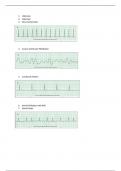
A patient is in cardiac arrest. The cardiac monitor shows asystole. In addition to providing continuous high-quality CPR, what is the other priority intervention for this patient? - ANSWER-Administering epinephrine as early as possible A patient has experienced return of spontaneous circulation (ROSC) after cardiac arrest. The healthcare team is conducting a secondary assessment to determine the possible cause of the patient's cardiac arrest. Before the arrest, the patient exhibited jugular venous distension, cyanosis, apnea and hyperresonance on percussion. The patient was also difficult to ventilate during the response. The team would most likely suspect which condition as the cause? - ANSWER-Tension Pneumothorax A patient with suspected stroke arrives at the emergency department. The patient is diagnosed with acute ischemic stroke and is a candidate for fibrinolytic therapy. To achieve the best outcomes, this therapy should be initiated within what time frame? - ANSWER-Within 1 hour of patient's arrival. A patient in the telemetry unit is receiving continuous cardiac monitoring. The patient has a history of myocardial infarction. The patient's ECG rhythm strip is shown in the following figure. The provider interprets this strip as indicating which arrhythmia? - ANSWER-Third-degree AV block A 28-year-old pregnant patient who resides in transitional housing presents to the emergency department with complaints of feeling feverish and very faint. The patient tells the emergency nurse that she does not know when she became pregnant. Upon palpation, the fundus is not at or above the umbilicus. The patient's condition quickly deteriorates and she goes into cardiac arrest. If available and able to be used without impeding or delaying the resuscitation effort, what diagnostic tool could be used to guide decision-making in the care of this patient? - ANSWER-Point-of-care ultrasound Cardiac monitoring indicates that a patient has a ventricular tachyarrhythmia. The patient has a pulse and is not showing any signs of hemodynamic compromise. A 12-lead ECG reveals an irregular rhythm with QRS complexes greater than 0.12 second in duration. Which action would be appropriate at this time? - ANSWER-Consider an antiarrhythmic medication A responsive patient is choking. What method should the provider use first to clear the obstructed airway? - ANSWER-Back blows What is the priority intervention for a patient with a narrow-complex tachycardia (160 bpm) and a blood pressure of 72/48 mmHg? - ANSWER-Perform immediate synchronized cardioversion A patient is admitted to the emergency department with signs and symptoms of stroke. The stroke team should complete a comprehensive neurologic assessment and obtain brain imaging results within what time frame? - ANSWER-Within 20 minutes Cardiac monitoring of a patient in cardiac arrest reveals ventricular fibrillation. In addition to high-quality CPR, what intervention should be a priority for the team? - ANSWER-Defibrillation. A patient with suspected acute coronary syndromes (ACS) has a pulse oximetry reading of 86% and is given supplemental oxygen. The provider determines that the supplemental oxygen dose is correct based on which SaO2 level? - ANSWER-93% After cardiac arrest and successful resuscitation, the patient has a return of spontaneous circulation. The patient is unable to follow verbal commands. Targeted temperature management is initiated. Which method(s) would be appropriate for the resuscitation team to use? - ANSWER--Applying cooling blankets to the patient's body -Using an endovascular catheter -Giving an ice-cold IV fluid bolus A patient comes to the emergency department complaining of palpitations and "some shortness of breath." Cardiac monitoring is initiated and reveals the following ECG rhythm strip. The provider interprets this strip as indicating which arrhythmia? - ANSWER-Atrial flutter A 35-year-old female patient's ECG is consistent with STEMI. The ECG reveals a new ST-segment elevation at the J point in leads V2 and V3 of at least which size? - ANSWER-0.15 mV The following capnogram is from a patient experiencing respiratory distress. At which point in the waveform would the patient's ETCO2 level be measured? - ANSWER-D For a patient with third-degree atrioventricular (AV) block and a blood pressure of 70/48 mmHg, what interventions should be considered? - ANSWER--Initiate a dopamine infusion -Administer atropine -Initiate transcutaneous pacing A patient arrives at the emergency department complaining of shortness of breath. The patient has a long history of chronic obstructive pulmonary disease. Assessment reveals respiratory failure. Which action would be the initial priority to address the respiratory failure? - ANSWER-Assisted ventilation with BVM resuscitator The ECG rhythm strip of a patient who arrived in the emergency department complaining of dizziness, syncope and shortness of breath reveals sinus bradycardia.
Written for
- Institution
- AHA ACLS
- Course
- AHA ACLS
Document information
- Uploaded on
- February 12, 2023
- Number of pages
- 6
- Written in
- 2022/2023
- Type
- Exam (elaborations)
- Contains
- Questions & answers
Subjects
- acls
- acls american red cros
-
acls american red cross acls final exam graded a
-
a patient is in cardiac arrest the cardiac monitor shows asystole in addition to providing continuous high quality cpr

Also available in package deal