NURS 6521 Week 7 Midterm Exam (Drugs)
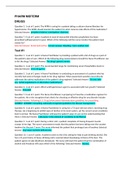
DRUGS 3. Question: The APRN is caring for a patient taking a calcium-channel blocker for hypertension. The APRN should monitor the patient for what common side effects of this medication? 7. Question: A patient in need of myocardial infarction prophylaxis has been prescribed sulfinpyrazone for gout. Which of the following will the nurse monitor the patient most closely for? Test #1 1. Question: A Nurse Practitioner is providing a patient with a list of drugs as a part of the patient's plan of care. Which of the following drug nomenclatures should the Nurse Practitioner use to list the drugs? 4. Question: The recommended range for maintaining serum theophylline levels is: 5. Question: A Nurse Practitioner is conducting an assessment of a patient who has recently had several changes made to her drug regimen. What assessment question most directly addresses the safety implications of the patient's drug regimen? 6. Question: Which antihypertensive agent is associated with hair growth? 7. Question: The Nurse Practitioner is preparing to Prescribe a medication regimen for her patient. He or she recognizes that criteria for choosing an effective drug for any disorder include: 8. Question: A Nurse Practitioner is caring for a 73-year-old man who is receiving drug therapy. He is beginning to exhibit signs of decline in his renal system, yet his current serum creatinine level is normal. The Nurse Practitioner will base the patient's plan of care on the understanding that there is: 9. Question: During a clinic visit, a patient complains of having frequent muscle cramps in her legs. The nurse's assessment reveals that the patient has been taking over-the-counter laxatives for the past 7 years. The nurse informed the patient that prolonged use of laxatives: 10. Question: A patient comes to the clinic asking for help to quit drinking alcohol. She has a 21-year history of heavy drinking and is worried about developing cirrhosis of the liver. The patient agrees to take disulfiram (Antabuse). The nurse will teach the patient that the combination of alcohol and Antabuse will cause which of the following? 11. Question: Which effect does the Nurse Practitioner expect may occur when using cholinergic agonists? 12. Question: Which of the following is a potential adverse side effect of autonomic-anticholinergic agents? 13. Question: Ms. Simpson has a known history of asthma. She is on Theophylline daily. The NP contemplates giving her an antibiotic for her respiratory infection. The NP knows that which choice below could elevate theophylline levels? 16. Question: Glargine (Lantus) is an insulin analog that essentially has no peak and is usually administered: 17. Question: The side effects of antihistamines are mostly due to their: 18. Question: Autonomic drugs have little effect when administered: 19. Question: The point in time on the drug concentration curve that indicates the first sign of a therapeutic effect is the: 21. Question: Which of the following statements best defines how a chemical becomes termed a drug? 22. Question: Glucocorticoids affect the metabolism of carbohydrates, protein, and fats. 24. Question: What drug class will decrease the facial flushing that occurs with niacin? 26. Question: Biguanides control hyperglycemia in type 2 diabetes primarily by acting at which organ? 28. Question: Which medication class is recognized for the treatment of moderate to severe dementia? 30. Question: A patient who is a, steroid-dependent asthmatic is started on a beclomethasone inhaler. Which should be part of patient education? 32. Question: A 65-year-old male presents with a history of worsening urinary urgency, frequency, and hesitancy. He also tells you that he has to "push really hard" to urinate and that his urine dribbles a little after he is done urinating. What medication should be avoided: 33. Question: Successful treatment for an adult patient with Helicobacter pylori (H. pylori)-induced peptic ulcer disease requires therapy with which regimen? 34. Question: Which can elevate theophylline levels? 36. Question: A patient has been started on a treatment regimen that includes levothyroxine. Select the dosage regimen that is most appropriate for a mean replacement dosage. The patient has been started on a treatment regimen that includes levothyroxine. Select the dosage regimen that is most appropriate for a mean replacement dosage. 37. Question: You decide to start your pt, Ms. Rodrigues, on spironolactone (Aldactone) 50 mg PO daily. As the NP, you will instruct the patient to call the clinic if which symptoms are experienced? 38. Question: What is a serious side effect of ibuprofen in the older adult patient? 39. Question: Drugs that use CYP 3A4 isoenzymes for metabolism may: 40. Question: A physician has ordered subcutaneous injections of morphine, a narcotic, every 4 hours as needed for pain for a motor vehicle accident victim. The nurse is aware that there is a high abuse potential for this drug and that it is categorized as a: 42. Question: A male patient who is hypertensive takes Hydrochlorothiazide for his blood pressure. He presents with red, painful swelling of the great toe. In addition to treating gout, you recognize that you may need to: 43. Question: Mr. Lastinger was prescribed warfarin sodium (Coumadin). You advise him to avoid eating large amounts of leafy green vegetables because: 44. Question: Acetazolamide is categorized as which of the following? 45. Question: The anticoagulant drug that acts as a vitamin K antagonist is: 46. Question: A patient in need of myocardial infarction prophylaxis has been prescribed sulfinpyrazone for gout. Which of the following will the nurse monitor the patient most closely for? 47. Question: Classes of medications typically used to treat hyperthyroid conditions include: 48. Question: Which mechanism of platelet inhibition is exhibited by aspirin? 52. Question: A patient is recovering from an acute episode of thrombophlebitis and is being treated with warfarin (Coumadin) 5 mg PO daily. In reviewing medication information, the Nurse Practitioner would include what information in their teaching? 53. Question: 60-year-old male presents to your office with a history of seizure disorder. The patient states that he has been taking valproic acid. Which of the following is a known potential adverse effect of valproic acid? 54. Question: Mr. Johnson is an 80-year-old male who is on Digoxin therapy. The Nurse Practitioner knows they should monitor the older adult patient for which of the most common adverse reactions of digoxin? 55. Question: Which of the following can block the action of heparin? 56. Question: A Nurse Practitioner is discussing with a patient the efficacy of a drug that his physician has suggested, and he begin taking. Efficacy of a drug means which of the following? 57. Question: To minimize the risk of adverse effects of glucagon when given to an unconscious diabetic patient, as the patient regains consciousness, the nurse should: 58. Question: An adult male comes to the clinic with complaints that he is experiencing increased difficulty breathing over the past few days. He has a history of asthma and coronary artery disease. He was recently diagnosed with hypertension. Examination reveals no jugular vein distention and no productive cough. Breath sounds are present, but expiratory wheezes are noted bilaterally, and he denies any chest pain. His vital signs are pulse of 74 beats/min, respirations of 32 breaths/min, and BP of 160/100 mm Hg. His current medications are albuterol (Proventil) inhaler 2 puffs every 4 hours prn for wheezing, nitroglycerin transdermal patch, and propranolol (Inderal) 60 mg PO bid. What is the best treatment for this patient? 60. Question: Which of the following conditions is a contraindication for pioglitazone (Actos)? 61. Question: The Family nurse practitioner prescribed losartan 50 mg PO daily for a hypertensive patient. This medication promotes vasodilation by: 62. Question: A patient has a history of tonic-clonic seizures that have been successfully treated with phenytoin (Dilantin) for several years. Phenytoin achieves a therapeutic effect by: 64. Question: Which of the following oral medications is the safest to use during pregnancy? 65. Question: A Nurse Practitioner is providing care for a patient who suffered extensive burnsto his extremities during a recent industrial accident. Topical lidocaine gel has been ordered to be applied to the surfaces of all his burns in order to achieve adequate pain control. When considering this order, the Nurse Practitioner should be aware that: 68. Question: Which of the following is a contraindication for antimuscarinic drugs? 69. Question: Which of the following statements accurately describes digoxin? 71. Question: A 34-year-old male patient is prescribed methimazole (MMI). The Nurse Practitioner will advise him to report which of the following immediately? 72. Question: Metformin (Glucophage) acts by: 73. Question: The NP is examining a 34-year-old obese man with a body mass index (BMI) of 35 who complains of almost daily indigestion and heartburn for the past year with a strong acid taste in the mouth about an hour after meals, and frequent belching and awakening at night with choking. The history is negative for chronic illnesses and alarm symptoms. A diagnosis of gastroesophageal reflux disease (GERD) is made. What is the best initial treatment for the patient? 74. Question: Which of the following is a side effect or precaution associated with ACE inhibitors? 75. Question: A patient on valproic acid may experience which of the following symptoms? 76. Question: The first drugs typically used to treat the symptoms of an allergic reaction or allergic rhinitis are: 79. Question: The NP knows that lithium levels should be measured while patients are on lithium therapy. The NP also recognizes that lithium has a: 80. Question: Mr. Penny, age 67, was diagnosed with chronic angina several months ago and has been unable to experience adequate relief of his symptoms. As a result, his physician has prescribed ranolazine (Ranexa). Which of the following statements is true regarding the use of ranolazine for the treatment of this patient's angina? 81. Question: Some first-generation antihistamines are used: Selected Answer: 82. Question: You are seeing a 65-year-old male with a long history of COPD who has recently developed hypertension. Which class of antihypertensive agents should the Nurse Practitioner avoid for this patient? 83 & 85. Question: Typical adverse reactions to oral calcium-channel blockers include: 84. Ms. Neely was placed on fluoxetine about 8 weeks ago and is doing well on the medication. When initially prescribed the medication, she asks you about the common side effects of this type of medication. Which choice below is correct? 87. Question: The Nurse Practitioner is following up on a patient who is experiencing acute asthma problems. Albuterol (Proventil) by metered-dose inhaler (MDI) has been ordered as treatment. Which patient response would indicate to the family nurse practitioner that the patient understands how to take the medication? 88. Question: A primary therapy for patients with mild ulcerative colitis is: 89. Question: A possible side effect from the use of nifedipine (Procardia XL) is: 91. Question: How does cholestyramine lower blood cholesterol? 92. Question: Susie is a 40-year-old female with Type 2 Diabetes. She reports that over the last several days, she has been having some hypoglycemic episodes and feels it is related to medication. Her medication list is as follows: Victoza (liraglutide) 1.8 mg SC daily Metformin 500mg p.o. Twice a Day Glyburide 5 mg p.o. Twice a day Lisinopril 10mg p.o. daily. Which medication most likely is contributing to her hypoglycemic episodes? 93. Question: All of the following agents are used to control the inflammatory changes seen in the lungs of asthmatics except: 94. Question: Which type of antihistamines are used to inhibit the secretion of gastric acid in patients with gastrointestinal disorders? 95. Question: A patient with a history of bronchial asthma is seen in the clinic for increased episodes of difficulty breathing. He has been taking theophylline 100 mg PO tid. He is 40 years old and obese with a 16-pack-year history of cigarette smoking and excessive intake of coffee daily. He eats a low-carbohydrate, high-protein diet. Which identified factors decrease the therapeutic effects of the theophylline? 98. Question: A 24-year-old factory worker has been prescribed guaifenesin for the first time. Which of the following will be a priority assessment by the nurse before the patient's first dose? 99. Question: A 39 y/o female is diagnosed with Grave’s disease. She also has a small goiter. Her symptoms are not deemed to be severe and propylthiouracil is prescribed. Where is the most serious potential adverse effect of this medication? 100. Question: What information would the Nurse Practitioner include in teaching a patient about the treatment of vitamin B12 deficiency following a total gastrectomy?
Written for
- Institution
- NURS 6521
- Course
- NURS 6521
Document information
- Uploaded on
- February 19, 2023
- Number of pages
- 8
- Written in
- 2022/2023
- Type
- Exam (elaborations)
- Contains
- Questions & answers
Subjects
-
nurs 6521 week 7 midterm exam drugs

Also available in package deal