100% de satisfacción garantizada Inmediatamente disponible después del pago Tanto en línea como en PDF No estas atado a nada 4.2 TrustPilot
logo-home
Examen

FCCS Post Test Review Questions Answered 100% Correct 2023

Puntuación
-
Vendido
11
Páginas
4
Grado
A+
Subido en
20-03-2023
Escrito en
2022/2023

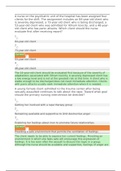
Most important indicator that a patient has a severe illness? - ANSWER-Tachypnea 3 respiratory types, and their criteria - ANSWER-Hypoxemic (PaO2 <50-60) Hypercapnic (PaCO2 >50, pH <7.36) Mixed Delta gap (formula, when and why it's used) - ANSWER-Difference in AG from normal - Difference in HCO3 from normal In AG metabolic acidosis it's used. It tells you if there's underlying metabolic alkalosis or respiratory acidosis with bicarb compensation IN ADDITION to the AG metabolic acidosis. Both of those would result in a high bicarb to begin with, and a smaller change in bicarb from normal. Winter's formula (equation, what it measures) - ANSWER-1.5[HCO3] + 8 +/- 2 If compensation is adequate in acid/base issues How AG changes with albumin changes - ANSWER-Decreases 2.5-3 for every 1 decrease in albumin Hemodynamic changes after intubation - ANSWER-Hypo/hypertension Arrhythmia Tachycardia Pressure support equation for BiPAP - ANSWER-IPAP - EPAP 3 types of vent cycles - ANSWER-Volume (preset tidal volume, relieves WOB the most) Time (constant pressure of time) Flow (constant pressure until inspiratory flow is below 25% of peak) Goal tidal volume - ANSWER-10 cc/kg Goal FiO2 on vent - ANSWER-Start at 1.0, then decrease as SpO2 tolerates (goal of 92-94 saturation) Ppeak - ANSWER-Peak inspiratory pressure Pplat (try to keep it below ?) - ANSWER-Inspiratory plateau pressure (shows alveolar distention) 30 AutoPEEP (what it is, what it causes, how to fix it) - ANSWER-Breath stacking Decreases preload to the heart with positive pressure on the lungs --> hypotension Decrease RR, decrease inspiration time (goal is to have more time for the lungs to exhale) Danger of increased PEEP - ANSWER-Increases autoPEEP, increases Pplat PaO2 we're usually happy with - ANSWER->60 When to consider NPPV vs invasive - ANSWER-When it's a quickly solved problem in 1-2 days (e.g. COPD exacerbation) When the patient can be compliant with working with NPPV When to consider switching from NPPV to invasive ventilation support - ANSWER-If things aren't really improving in a matter of hours If your therapeutic goals haven't been met in 4-6 hours Manual decompression (when you use it) - ANSWER-If patient is air trapping like crazy on the vent, and you disconnect it and push up on the patients diaphragm to get everything out What a high A-a gradient means - ANSWER-V/Q mismatch Volume assist-control breath (Volume cycled) - ANSWER-Vent delivers preset tidal volume Pressure assist-control breath (time cycled) - ANSWER-Vent delivers a constant pressure over a preset time Pressure support breath (flow cycled) - ANSWER-Same as pressure assist-control breaths, but the vent cuts out when the flow rate decreases to 25% of initial peak flow rate Assist-control ventilation - ANSWER-Either volume or time cycled breaths given Usually the go to when you just started someone on the vent Gives the pt a set tidal volume and preset flow rate respiratory rate. Very rigid. However, if the patient wants to take extra breaths if they trigger them. Pressure support ventilation - ANSWER-Waits for patient to start breath, and then helps out with a set amount of pressure Synchronized intermittent mandatory ventilation - ANSWER-SIMV Delivers volume or time cycled breaths at a mandatory rate Patient can breathe spontaneously between mandatory breaths Spontaneous breaths count - this allows the patient to contribute to the mandatory tidal volume the machine requires them to breathe When do you give tPA in ACS? - ANSWER-ONLY for a STEMI, and ONLY when PCI isn't readily available Tx of an inferior MI - ANSWER-NO nitroglycerin Give fluids instead ABG findings in PE - ANSWER-Decreased CO2 (hyperventilating) Decreased O2 (V/Q mismatch) When to give tPA in PE - ANSWER-Only for huge ones and heparin's not working Lovenox class - ANSWER-LMWH Airway in hematemesis pt - ANSWER-Electively intubate it Tx of HTN urgency vs emergency - ANSWER-No drip vs drip Intraabdominal HTN (criteria, effects) - ANSWER->12 mmHg End organ damage and decreased preload to heart causing hypotension CPP goal in TBI (and how to calculate it) - ANSWER-50-70 MAP - ICP SAH tx - ANSWER-nimodipine to stop vasospasm and control BP Sepsis vs severe sepsis vs septic shock - ANSWER-You know vs End organ damage vs Resistant to tx CAP tx - ANSWER-beta-lactam and macrolide OR fluoroquinolone HCAP tx - ANSWER-vanc/zosyn CAP immunocompromised pt (tx) - ANSWER-Bactrim Endocarditis bugs - ANSWER-Strep viridans and other streps, staph SBP abx - ANSWER-ceftriaxone flagyl

Mostrar más Leer menos
Institución
FCCS
Grado
FCCS


Ups! No podemos cargar tu documento ahora. Inténtalo de nuevo o contacta con soporte.

Escuela, estudio y materia

Institución
FCCS
Grado
FCCS

Información del documento

Subido en
20 de marzo de 2023
Número de páginas
4
Escrito en
2022/2023
Tipo
Examen
Contiene
Preguntas y respuestas

Temas

Vista previa del contenido

FCCS Post Test Review Questions
Answered 100% Correct 2023
Most important indicator that a patient has a severe illness? - ANSWER-Tachypnea

3 respiratory types, and their criteria - ANSWER-Hypoxemic (PaO2 <50-60)
Hypercapnic (PaCO2 >50, pH <7.36)
Mixed

Delta gap (formula, when and why it's used) - ANSWER-Difference in AG from normal -
Difference in HCO3 from normal

In AG metabolic acidosis it's used. It tells you if there's underlying metabolic alkalosis or
respiratory acidosis with bicarb compensation IN ADDITION to the AG metabolic
acidosis. Both of those would result in a high bicarb to begin with, and a smaller change
in bicarb from normal.

Winter's formula (equation, what it measures) - ANSWER-1.5[HCO3] + 8 +/- 2
If compensation is adequate in acid/base issues

How AG changes with albumin changes - ANSWER-Decreases 2.5-3 for every 1
decrease in albumin

Hemodynamic changes after intubation - ANSWER-Hypo/hypertension
Arrhythmia
Tachycardia

Pressure support equation for BiPAP - ANSWER-IPAP - EPAP

3 types of vent cycles - ANSWER-Volume (preset tidal volume, relieves WOB the most)
Time (constant pressure of time)
Flow (constant pressure until inspiratory flow is below 25% of peak)

Goal tidal volume - ANSWER-10 cc/kg

Goal FiO2 on vent - ANSWER-Start at 1.0, then decrease as SpO2 tolerates (goal of
92-94 saturation)

Ppeak - ANSWER-Peak inspiratory pressure

Pplat (try to keep it below ?) - ANSWER-Inspiratory plateau pressure (shows alveolar
distention)
30


Conoce al vendedor

Seller avatar
Los indicadores de reputación están sujetos a la cantidad de artículos vendidos por una tarifa y las reseñas que ha recibido por esos documentos. Hay tres niveles: Bronce, Plata y Oro. Cuanto mayor reputación, más podrás confiar en la calidad del trabajo del vendedor.
LUCKYSTAR2022 West Virginia University
Ver perfil
Seguir Necesitas iniciar sesión para seguir a otros usuarios o asignaturas
Vendido
903
Miembro desde
3 año
Número de seguidores
724
Documentos
9621
Última venta
3 semanas hace
LUCKYSTAR2022

Hi there well come to luckystar2022. Here you will find guaranteed quality solution for Nursing and any other Accademic related notes, exams, study guides, cases and many more. 100% value for your time and money. GOOD LUCK

3.4

154 reseñas

5
61
4
25
3
25
2
8
1
35

Recientemente visto por ti

Por qué los estudiantes eligen Stuvia

Creado por compañeros estudiantes, verificado por reseñas

Calidad en la que puedes confiar: escrito por estudiantes que aprobaron y evaluado por otros que han usado estos resúmenes.

¿No estás satisfecho? Elige otro documento

¡No te preocupes! Puedes elegir directamente otro documento que se ajuste mejor a lo que buscas.

Paga como quieras, empieza a estudiar al instante

Sin suscripción, sin compromisos. Paga como estés acostumbrado con tarjeta de crédito y descarga tu documento PDF inmediatamente.

Student with book image

“Comprado, descargado y aprobado. Así de fácil puede ser.”

Alisha Student

Preguntas frecuentes