CSET- Spanish Subtest 1 correctly answered 2023
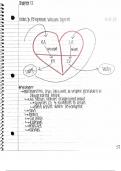
CSET- Spanish Subtest 1 correctly answered 2023Linguistic The scientific study of the language, how it is put together and how it functions. It looks at the interplay of sound (phonetic) and meaning (semantics and pragmatics). Phonetics The Study of human speech sounds Grammar Influenced by both sound and meaning (Morphology, syntax, and phonology). Pragmatics The Study of the use of language in context... deals with how listeners arrive at intended meaning of speaking. Phonology The Branch of linguistics which studies how sounds are organized, and used in natural language. Ex: time [t] & dime [d] Identical words, except beginning sounds. Allophone Phones which are phonetically similar but not the same and which are treated as the same in linguistic communication; or the sound which are phonetically different but do not make one word different from another in meaning. Ex: pat, spin, cup These are sounds that are perceptibly different but do not distinguish words. P^h - Pat (aspirated) P- Spin (not aspirated) P^o- Cup (your lips remain closed; /p/ is unreleased) Allophone Is a set of multiple spoken sounds (or phones) used to pronounce a single phoneme. For example, [p^h] (as in pin) and [p] (as in spin) are multiple spoken sounds for the phoneme /p/ in the English language. Although a phoneme's variation of spoken sounds are all alternative pronunciations for a phoneme, the specific alternative sound selected in a given situation is often predictable. Changing the alternative sounds used by native speakers for a given phoneme in a specific context usually will not change the meaning of a word but the results may sound non-native or unintelligible. Native speakers of a given language usually perceive one phoneme in their language as a single distinctive sound in that language and are "both unaware of and even shocked by "all the different variations used to pronounce single phonemes. Morphology The study of the structure of the words and how words are formed. Morphemes Minimal units of words that have a meaning and cannot be subdivided any further. There are two types. Bound Morphemes The smallest unit that has meaning but cannot stand alone. (A morpheme that must be attached to another morpheme and cannot stand alone.) Affix are often this type of morpheme. It also includes prefixes (added to the beginning of another morpheme), suffices (added to the end), infixes (inserted into other morphemes), and circumfixes (attached to another morpheme at the beginning and end) Ex: o, as, a, amos, an (the ending of any grammatical change in a verb. Free Morphemes The smallest unit that has meaning and can stand alone. (or A morphene that does not need to be attached to another morpheme and can stand alone) 1) open class/ lexical/content -verb, noun, adjective, and adverb. 2) closed class/function/grammatical Ex. el, las, los, nos,vos - Conjuctions, prepositons, articles, and pronouns Derivational These are added to morphemes to form entirely new words that may or may not be the same part of speech. Ex.: Cloud, cloudy, happiness, greenish, establishment) Inflectional These are added to the end of an existing word for purely grammatical reasons, there are 8 in English. They do not alter the syntactic behavior of the word. Ex. -ed past tense, -s plural, -ing progressive Root Morphemes ( and not affixes) that must be attached to another morpheme and do not have a meaning of their own. Ex. -ceive in perceive -mit in submit Syntax The study of sentence structure (grammar). How words are arranged to form sentences. Links sound patterns and meanings. Knowing the structure of a language entails knowing the rules of sentence formation in that language. Semantics The study of meaning and language. The analysis of the meaning of words, phrases, sentences. The way in which sounds and meanings are related. Studies the way in which language expressions have meaning. Descriptive grammar The structure of a language as it's actually used by speakers and writers. It represents the unconscious knowledge of a language. It does not teach the rules of a language, but rather describe rules that are already known. Ex. Me likes apples. (incorrect) I like apples. (correct)
Written for
- Institution
- CSET Spanish Subtest
- Module
- CSET Spanish Subtest
Document information
- Uploaded on
- March 23, 2023
- Number of pages
- 9
- Written in
- 2022/2023
- Type
- Exam (elaborations)
- Contains
- Questions & answers
Subjects
-
cset spanish subtest 1 correctly answered 2023
-
linguistic the scientific study of the language
-
how it is put together and how it functions it looks at the interplay of sound phonetic and meaning

Also available in package deal