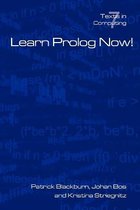
Learn Prolog now!
1 Facts, Rules and Queries
1.1 Some simple examples
De drie basic constructs in Prolog: facts, rules en queries
Knowledge base (KB): een verzameling van facts en rules
→ Een Prolog programma is simpelweg een knowledge base
→ Een Prolog programma kan gebruikt worden door het posten van queries
Knowledge Base 1: facts
woman(mia).
woman(jody).
woman(yolanda).
playsAirGuitar(jody).
party.
Mogelijke queries op deze KB, met de antwoorden van Prolog:
?- woman(mia).
yes
?- playsAirGuitar(mia).
no
Knowledge base 2: facts & rules
happy(yolanda).
listens2Music(mia).
listens2Music(yolanda) :- happy(yolanda).
playsAirGuitar(mia) :- listens2Music(mia).
playsAirGuitar(yolanda) :- listens2Music(yolanda).
Deze KB bevat naast facts (op de eerste twee regels) ook rules (laatste drie regels). Rules geven
informatie die conditionally true is in de situatie waarin we geïnteresseerd zijn.
Algemene vorm van een rule: head :- body
→ Als Prolog de informatie van de body uit de KB kan halen, kan hij head afleiden (modus ponens)
→ Omgeschreven staat hier eigenlijk: body → head (body impliceert head)
Mogelijke queries op deze KB, met antwoorden van Prolog:
?- playsAirGuitar(mia).
yes
?- playsAirGuitar(yolanda).
yes
Learn Prolog now! 1
, Knowledge base 3: conjunctions & disjunctions
happy(vincent).
listens2Music(butch).
playsAirGuitar(vincent) :-
listens2Music(vincent),
happy(vincent).
playsAirGuitar(butch) :-
happy(butch).
playsAirGuitar(butch) :-
listens2Music(butch).
In de eerste rule (regel 3 t/m 5) zien we de Prolog notatie voor een conjunctie; de komma is gelijk aan
∧
‘ ’. Vincent moet dus naar muziek luisteren EN blij zijn om playsAirGuitar waar te maken. De query ?-
playsAirGuitar(vincent) zal dus als antwoord ‘no’ hebben, want de KB bevat niet listens2Music(vincent).
De laatste twee rules hebben dezelfde head maar een andere body. Dit is de Prolog equivalent voor een
∨
disjunctie (’ ’). De query playsAirGuitar(butch) kan dus op twee manieren voldaan worden.
Een disjunctie kan ook in één regel geschreven worden op de volgende manier:
playsAirGuitar(butch) :-
happy(butch);
listens2Music(butch).
Knowledge base 4: substitutions & unification
woman(mia).
woman(jody).
woman(yolanda).
loves(vincent, mia).
loves(marcellus, mia).
loves(pumpkin, honey_bunny).
loves(honey_bunney, pumpkin).
In de query gaan we nu gebruik maken van een variabele:
?- woman(X)
X = mia ;
X = jody ;
X = yolanda
We vragen nu aan Prolog of er een X is waarvoor geldt dat X een vrouw is. Prolog reageert dan door ons
te vertellen dat mia, jody en yolanda ingevuld kunnen worden voor X om de query waar te maken.
Standaard geeft Prolog alleen de eerste waarde die hij tegenkomt, als je meer waardes wil, typ je ‘;’ na
het gegeven antwoord (zoals hierboven). Prolog heeft nu alle vrouwen gevonden, wanneer we het nog
een keer vragen zal Prolog reageren met ‘no’.
Op die zelfde manier kunnen we ook voor de andere facts queries posten:
?- loves(vincent, X).
X = mia
?- loves(X, Y).
X = vincent Y = mia ;
Learn Prolog now! 2
, X = marcellus Y = mia
...
Knowledge base 5: variables
loves(vincent, mia).
loves(marcellus, mia).
loves(pumpkin, honey_bunny).
loves(honey_bunney, pumpkin).
jealous(X, Y) :- loves(X, Z), loves (Y, Z).
De laatste rule geeft een definitie voor jaloers zijn; persoon X is jaloers op persoon Y als X van Z houdt,
maar Y ook van Z houdt. We kunnen nu een query posten om te onderzoeken of marcellus jaloers is op
iemand:
?- jealous(marcellus, W)
W = vincent
Je kunt hier doorgaan om te vinden dat Marcellus ook jaloers is op Marcellus, dit vinden wij onzin, maar
het volgt wel logisch uit de knowledge base.
1.2 Prolog Syntax
Prolog heeft vier verschillende soorten termen: atoms, getallen, variabelen & complexe termen
Atoms
Een atom is:
Een string van characters (lower & upper case, getallen en ‘_’) die begint met een lower case letter
butch, big_kahuna_burger, listens2Music, enz.
Een serie characters binnen aanhalingstekens
‘Vincent’, ‘The Gimp’, ‘Five_Dollar_Shake’, ‘&%$’, enz.
Een string van speciale tekens
@=, ==>, :, :-, enz.
Getallen
Prolog support zowel reeële integers als floats, maar floats zal je niet veel tegenkomen. De syntax voor
een getal is simpel: 1001, 23, 0, -234, enz.
Variabelen
Een variabele is een string van characters (lower & upper case, getallen en ‘_’) die begint met of een
upper case letter of een underscore
→ X, Y, Variable, _tag, X_345, enz.
Anonymous variable: de variabele die alleen een underscore is (’_’)
Learn Prolog now! 3
1 Facts, Rules and Queries
1.1 Some simple examples
De drie basic constructs in Prolog: facts, rules en queries
Knowledge base (KB): een verzameling van facts en rules
→ Een Prolog programma is simpelweg een knowledge base
→ Een Prolog programma kan gebruikt worden door het posten van queries
Knowledge Base 1: facts
woman(mia).
woman(jody).
woman(yolanda).
playsAirGuitar(jody).
party.
Mogelijke queries op deze KB, met de antwoorden van Prolog:
?- woman(mia).
yes
?- playsAirGuitar(mia).
no
Knowledge base 2: facts & rules
happy(yolanda).
listens2Music(mia).
listens2Music(yolanda) :- happy(yolanda).
playsAirGuitar(mia) :- listens2Music(mia).
playsAirGuitar(yolanda) :- listens2Music(yolanda).
Deze KB bevat naast facts (op de eerste twee regels) ook rules (laatste drie regels). Rules geven
informatie die conditionally true is in de situatie waarin we geïnteresseerd zijn.
Algemene vorm van een rule: head :- body
→ Als Prolog de informatie van de body uit de KB kan halen, kan hij head afleiden (modus ponens)
→ Omgeschreven staat hier eigenlijk: body → head (body impliceert head)
Mogelijke queries op deze KB, met antwoorden van Prolog:
?- playsAirGuitar(mia).
yes
?- playsAirGuitar(yolanda).
yes
Learn Prolog now! 1
, Knowledge base 3: conjunctions & disjunctions
happy(vincent).
listens2Music(butch).
playsAirGuitar(vincent) :-
listens2Music(vincent),
happy(vincent).
playsAirGuitar(butch) :-
happy(butch).
playsAirGuitar(butch) :-
listens2Music(butch).
In de eerste rule (regel 3 t/m 5) zien we de Prolog notatie voor een conjunctie; de komma is gelijk aan
∧
‘ ’. Vincent moet dus naar muziek luisteren EN blij zijn om playsAirGuitar waar te maken. De query ?-
playsAirGuitar(vincent) zal dus als antwoord ‘no’ hebben, want de KB bevat niet listens2Music(vincent).
De laatste twee rules hebben dezelfde head maar een andere body. Dit is de Prolog equivalent voor een
∨
disjunctie (’ ’). De query playsAirGuitar(butch) kan dus op twee manieren voldaan worden.
Een disjunctie kan ook in één regel geschreven worden op de volgende manier:
playsAirGuitar(butch) :-
happy(butch);
listens2Music(butch).
Knowledge base 4: substitutions & unification
woman(mia).
woman(jody).
woman(yolanda).
loves(vincent, mia).
loves(marcellus, mia).
loves(pumpkin, honey_bunny).
loves(honey_bunney, pumpkin).
In de query gaan we nu gebruik maken van een variabele:
?- woman(X)
X = mia ;
X = jody ;
X = yolanda
We vragen nu aan Prolog of er een X is waarvoor geldt dat X een vrouw is. Prolog reageert dan door ons
te vertellen dat mia, jody en yolanda ingevuld kunnen worden voor X om de query waar te maken.
Standaard geeft Prolog alleen de eerste waarde die hij tegenkomt, als je meer waardes wil, typ je ‘;’ na
het gegeven antwoord (zoals hierboven). Prolog heeft nu alle vrouwen gevonden, wanneer we het nog
een keer vragen zal Prolog reageren met ‘no’.
Op die zelfde manier kunnen we ook voor de andere facts queries posten:
?- loves(vincent, X).
X = mia
?- loves(X, Y).
X = vincent Y = mia ;
Learn Prolog now! 2
, X = marcellus Y = mia
...
Knowledge base 5: variables
loves(vincent, mia).
loves(marcellus, mia).
loves(pumpkin, honey_bunny).
loves(honey_bunney, pumpkin).
jealous(X, Y) :- loves(X, Z), loves (Y, Z).
De laatste rule geeft een definitie voor jaloers zijn; persoon X is jaloers op persoon Y als X van Z houdt,
maar Y ook van Z houdt. We kunnen nu een query posten om te onderzoeken of marcellus jaloers is op
iemand:
?- jealous(marcellus, W)
W = vincent
Je kunt hier doorgaan om te vinden dat Marcellus ook jaloers is op Marcellus, dit vinden wij onzin, maar
het volgt wel logisch uit de knowledge base.
1.2 Prolog Syntax
Prolog heeft vier verschillende soorten termen: atoms, getallen, variabelen & complexe termen
Atoms
Een atom is:
Een string van characters (lower & upper case, getallen en ‘_’) die begint met een lower case letter
butch, big_kahuna_burger, listens2Music, enz.
Een serie characters binnen aanhalingstekens
‘Vincent’, ‘The Gimp’, ‘Five_Dollar_Shake’, ‘&%$’, enz.
Een string van speciale tekens
@=, ==>, :, :-, enz.
Getallen
Prolog support zowel reeële integers als floats, maar floats zal je niet veel tegenkomen. De syntax voor
een getal is simpel: 1001, 23, 0, -234, enz.
Variabelen
Een variabele is een string van characters (lower & upper case, getallen en ‘_’) die begint met of een
upper case letter of een underscore
→ X, Y, Variable, _tag, X_345, enz.
Anonymous variable: de variabele die alleen een underscore is (’_’)
Learn Prolog now! 3