FAMILY NUR NSG5003 wk8 DB
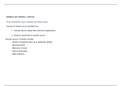
FAMILY NUR NSG5003 wk8 DB Overview of the Mechanisms of Kidney Function Ms. Cornwall is admitted with pyelonephritis. She has chills, and her temperature is 101°F. She is complaining of flank pain, frequency, and dysuria. Her urine has white blood cell casts and shows growth of Escherichia coli (E. coli). Based on the above scenario, answer the following questions: • Why does she have bacteria and white blood cell casts in her urine? Include the pathophysiological response of body for your analysis. McCance and Huether explain that pyelonephritis is an infection in the upper urinary tracts, which is the ureter, renal pelvis, and kidney interstitium (2014). Even though they are not always present in the urine, white blood cell casts indicate pyelonephritis. David Dugdale explains that when white blood cell casts are present in the urine analysis test, it means Ms. Cornwall has an acute kidney infection (2013). E. Coli is a type of an infection, so this supports what Dugdale explained in his article. • What are the differences when comparing prerenal acute renal injury, intrarenal acute renal injury, and postrenal acute renal injury? Give examples of each and pathological processes related to each disease process. Thanks for sharing your post Johnny. I would like to share the second part of the case
Written for
- Institution
- FAMILY NUR NSG5003
- Module
- FAMILY NUR NSG5003
Document information
- Uploaded on
- May 6, 2023
- Number of pages
- 3
- Written in
- 2022/2023
- Type
- Exam (elaborations)
- Contains
- Questions & answers
Subjects
-
family nur nsg5003 wk8 db overview of the mechanisms of kidney function ms cornwall is admitted with pyelonephritis she has chills
-
and her temperature is 101°f she is complaining of flank pain