Elementary Education Subtest 1, OAE Elementary Education Subtest 2 Social Studies
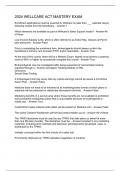
Elementary Education Subtest 1, OAE Elementary Education Subtest 2 Social Studies Popular Sovereignty - the people establish government and give power to it; the government can function only with the consent of people Limited Government - the constitution specifies limits on government authority, and no official or entity is above the law Separation of Powers - power is divided among three government branches: the legislative (congress), the executive (president), and the judicial (federal courts) Checks and Balances - this is a system that enforces the separation of powers and ensures that each branch as the authority and ability to restrain the powers of the other two branches, thus preventing tyranny Judicial Review - judges in the federal courts ensure that no act of government is in violation of the constitution. If an act is unconstitutional, the judicial branch has the power to nullify it Federalism - this is the division of power between the central government and local governments, which limits the power of the federal government and allows states to deal with local problems Feudalism - (forms of government) this is based on the rule of local lords who are loyal to the king and control the lives and production of those who work on their land Classical Republic - (forms of government) this form is a representative democracy. Small groups of eclectic leaders represent the interests of the electorate Absolute Monarchy - (forms of government) a king or queen has complete control of the military and government Authoritaranism - (forms of government) an individual or group has unlimited authority. There is no system in place to restrain the power of the government Dictatorship - (forms of government) those in power are not held responsible to the people Autocracy - (forms of government) this is rule by one person (despot), not necessarily a monarch, who uses power tyrannically Oligarchy - (forms of government) a small, usually self-appointed elite rules a region Liberal Democracy - (forms of government) this is a government based on the consent of the people that protects individual rights and freedoms from any intolerance by the majority Totalitarianism - (forms of government) all facets of the citizens' lives are controlled by the government National Powers - (division of powers) this level can coin money, regulate interstate and foreign trade, raise and maintain armed forces, declare war, govern US territories and admit new states, and conduct foreign relations concurrent powers - (division of powers) this level cna levy and collect taxes, borrow money, est courts, define crimes and set punishments, and claim private property for public use State Powers - (division of powers) this level can regulate trade and business within the state, est public schools, pass license requirements for professionals, regulate alcoholic beverages, conduct elections and est local governments. Expressed/Enumerated Powers - (powers granted by Constitution) these are specifically spelled out in the constitution implied powers - (powers granted by Constitution) these are not expressly stated but are reasonably suggested by the expressed powers inherent powers - (powers granted by Constitution) these are powers not expressed by the constitution but ones that national governments have historically possessed, such as granting diplomatic regulation Marbury V Madison (1803) - (Supreme Court cases) this ruling est judicial review as a power of the supreme court Dred Scott v Sandford (1857) - (Supreme Court cases) this decision upheld property right sover human rights in the case of slave who had been transported to a free state by his master but was still considered a slave Brown V Board of Ed (1954) - (Supreme Court cases) this court ruled that segregation was a violation of the equal protection clause that the "separate but equal" practice in education was unconstitutional. This decision overturned the 1896 Plessy V Ferguson ruling that permitted segregation if facilities were equal. Miranda V Arizona (1966) - (Supreme Court cases) this ruling made the reading of Miranda rights to those arrested for crimes the law. It ensured that confessions could not be illegally obtained and that citizen rights to fair trial and protection under the law would be upheld Continues...
Written for
- Institution
- Elementary Education Subtest 1, OAE Elementary Ed
- Course
- Elementary Education Subtest 1, OAE Elementary Ed
Document information
- Uploaded on
- May 22, 2023
- Number of pages
- 24
- Written in
- 2022/2023
- Type
- Exam (elaborations)
- Contains
- Questions & answers
Subjects
- popular sovereignty
- limited government
- separation of powers
- checks and balances
- judicial review
- federalism
- feudalism
-
elementary education subtest 1
-
oae elementary education subtest 2 social studies