Module 8 Psych 140 Portage Learning exam 2023 with complete solutions
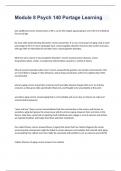
late aduldhood starts in 60's, can be the longest age grouping in one's life if an individual lives to old age Do most older adults develop dementia? No, It is not a normal part of aging. Only a small percentage of 65-to-75-year-old people have a neurocognitive disorder. However, this number increases with age (50% of individuals 85 and older have a neurocognitive disorder)_ What are some causes of neurocognitive disorders? various diseases, severe drug/alcohol abuse, stroke, or progressive deterioration caused by a variety of factors Why do women typically outlive men? Partly genetics, but mostly environmental. Men are more likely to engage in risky behaviors, abuse drugs and alcohol, and be less vigilant about their overall health. primary aging the universal and irreversible physical changes that occur to all living creatures as they grow older, genetically influenced, and thought to be unavoidable at this point secondary aging aging that is not inevitable and occurs due to choices we make and environmental exposures "wear and tear" theory States that time and exertion is the enemy, and focuses on secondary aging but ignores the actual cause which is primary aging. However there are holes in this theory: body does a great job at repairing itself, individuals who engage in a lot of exercise and activity are typically healthier and longer-lived than sedentary individuals, free radical theory theory of aging that states that free radicals triggered by certain environmental contaminants might be linked to various diseases and maladies that coincide with aging. Accumulating free radicals over time might be associated with problems such as cataracts and arthritis Cellular theories of aging -Free radicals -Hayflick Limit Hayflick Limit Theory states that human adult cells have a limited number of times that they can divide (approximately 20). After this limit is reached, the cells will begin to die.
Written for
- Institution
- Module 8 Psych 140 Portage Learning B
- Course
- Module 8 Psych 140 Portage Learning B
Document information
- Uploaded on
- May 31, 2023
- Number of pages
- 4
- Written in
- 2022/2023
- Type
- Exam (elaborations)
- Contains
- Questions & answers
Subjects
- late aduldhood
-
module 8 psych 140 portage learning exam 2023 with complete solutions
-
do most older adults develop dementia
-
what are some causes of neurocognitive disorders
-
why do women typically out

Also available in package deal