Lecture 1
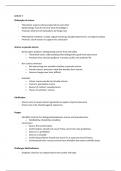
Philosophy of science
- Theoretical: aspects where people talk to each other
- Epistemology: how do we know what knowledge is
- Practical: what kind of implications do things have
- Philosophical methods: no data, logical reasoning, thought experiments, conceptual analysis
- Premises: set of reasons in support of a conclusion
Science vs pseudo-science
- Demarcation problem: distinguishing science from look alikes
o Theoretical value: understanding what distinguishes good from bad science
o Practical value: decision guidance in private, public and academic life
- Non science elements
o Not every thing non-scientific classifies as pseudo science
o Pseudo science: promote a view that deviates from science
o Science changes over time: difficult
- Examples
o Vulcan: seems pseudo but actually science
o Cryonics: speculative science
o Saviour of mothers: pseudoscience
o Theory of evolution: science
Falsification
- Science aims to reveal natural regularities to explain empirical phenoma
- Science has to be checked against experience
Popper
- Identified criterion for distinguishing between science and pseudoscience
o Falsifiability, refutability, testability
- Conclusions
o Easy to find conformation
o Conformations should only count if they come from risky predictions
o Science is a prohibition
o Science is refutable
o Conforming evidence should only count if it is a genuine test of theory
o Conventional twist: rescues science from refutation but lowers scientific status
Challenges falsificationism
- Simplistic: theories not rejected when they confict with data
, Lecture 2
Deduction
- Validity: Truth of premises guarantees the truth of the conclusion
- Soundness: truth of premises guarantees truth of conclusion and premises is true
- Trivial and demanding: have to find ant way the premises can be false
Induction
- Truth of the premises makes the conclusion likely: informed guess
- Uniformity of nature to predict every entity and the future, from observed to unobserved
- Hume: can not assume uniformity of nature, circular reasoning
Abduction
- Inferences to best explanation, no direct way from premise to conclusion, elimination of options
- Neither inductive and abductive inferences guarantee its conclusion
- Explanatory power: more things explained by the theory the better
- Parsimony: the less assumptions the better
Scientific method
- Used as criterion to demarcate good science captures activities of science that lead to discovery
or success
- Probabilistic inference: establishing probabilistic conclusion
- Rule of conditionalization: update our beliefs due to changes
- Causal inference: want to explain the world by identifying causal principle that causes the event
Philosophy of science
- Theoretical: aspects where people talk to each other
- Epistemology: how do we know what knowledge is
- Practical: what kind of implications do things have
- Philosophical methods: no data, logical reasoning, thought experiments, conceptual analysis
- Premises: set of reasons in support of a conclusion
Science vs pseudo-science
- Demarcation problem: distinguishing science from look alikes
o Theoretical value: understanding what distinguishes good from bad science
o Practical value: decision guidance in private, public and academic life
- Non science elements
o Not every thing non-scientific classifies as pseudo science
o Pseudo science: promote a view that deviates from science
o Science changes over time: difficult
- Examples
o Vulcan: seems pseudo but actually science
o Cryonics: speculative science
o Saviour of mothers: pseudoscience
o Theory of evolution: science
Falsification
- Science aims to reveal natural regularities to explain empirical phenoma
- Science has to be checked against experience
Popper
- Identified criterion for distinguishing between science and pseudoscience
o Falsifiability, refutability, testability
- Conclusions
o Easy to find conformation
o Conformations should only count if they come from risky predictions
o Science is a prohibition
o Science is refutable
o Conforming evidence should only count if it is a genuine test of theory
o Conventional twist: rescues science from refutation but lowers scientific status
Challenges falsificationism
- Simplistic: theories not rejected when they confict with data
, Lecture 2
Deduction
- Validity: Truth of premises guarantees the truth of the conclusion
- Soundness: truth of premises guarantees truth of conclusion and premises is true
- Trivial and demanding: have to find ant way the premises can be false
Induction
- Truth of the premises makes the conclusion likely: informed guess
- Uniformity of nature to predict every entity and the future, from observed to unobserved
- Hume: can not assume uniformity of nature, circular reasoning
Abduction
- Inferences to best explanation, no direct way from premise to conclusion, elimination of options
- Neither inductive and abductive inferences guarantee its conclusion
- Explanatory power: more things explained by the theory the better
- Parsimony: the less assumptions the better
Scientific method
- Used as criterion to demarcate good science captures activities of science that lead to discovery
or success
- Probabilistic inference: establishing probabilistic conclusion
- Rule of conditionalization: update our beliefs due to changes
- Causal inference: want to explain the world by identifying causal principle that causes the event