ANCC Questions and 100% Correct Answers
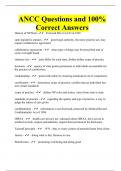
History of NP Role - Ford and SIlver in CO in 1965 state legislative statutes - grant legal authority, the nurse practice act, may require collaborative agreement collaborative agreement - what types of drugs may be prescribed and of some oversight board statutory law - rules differ for each state, further define scope of practice licensure - agency of state grants permission to individuals accountable for the practice of a profession credentialing - protect the pubic by ensuring minimum level of competence certification - determines scope of practice, certifies that an individual has met certain standards scope of practice - defines NP roles and action, varies from state to state standards of practice - regarding the quality and type of practice, a way to judge the nature of care given confidentiality - information is not disclosed, protected by Medical Record Confidentiality Act of 1996 HIPAA - health care privacy act: educated about HIPAA, have access to medical records, request amendments, require their permission for disclosure Tarasoff principle - 1976 - duty to warn victims of potential harm from client Justice - doing what is fair, fairness in care Beneficence - promoting well being and doing good nonmalfeasance - doing no harm fidelity - being true and loyal autonomy - doing for self veracity - telling the truth respect - treating everyone with equal respect deontological theory - action is judged based on the act itself teleological theory - action is judged based on the consequences virtue ethics - actions are chosen based on moral virtues of the person Four elements of malpractice - duty, breach of duty, proximate cause, damages competency - legal, not medical concept - determination that client can make reasonable judgments and decisions regarding treatment and health concerns primary prevention - decreasing the incidence of mental disorders ex. stress management classes, smoking prevention, DARE secondary prevention - aimed at decreasing prevalence ex. telephone hotlines, crisis intervention, disaster response tertiary prevention - aimed at decreasing the disability and severity of mental disorder ex. day programs, housing, social skills training biological risk factors - hx of mental illness, poor nutrition, poor health psychological risk factors - poor self concept, external locus of control, poor ego defenses social risk factors - stressful occupation, low socioeconomic status, poor level of social integration research utilization - synthesizing, disseminating, and using research generated knowledge to make a change in practice evidence based practice - integration of best research evidence with clinical expertise and patient values and needs evidence based practice model - P - patient, population, problem I - intervention C- comparison treatment or placebo O - outcome internal validity - the treatment caused a change in the outcome external validity - the outcome is generalizable to the population IRB - protects rights of participants in studies - the belmont report Trust v Mistrust - 0-1 year ability to form relationships, hope, trust in others Autonomy v Shame and doubt - 1-3 years self control, self esteem, will power Initiative v guilt - 3-6 years self directed behavior, goal formation, sense of purpose Industry v inferiority - 6-12 years ability to work, sense of competency and achievement Identity v role confusion - 12-20 years personal sense of identity Intimacy v isolation - 20-35 years committed relationships, capacity to love generativity v self absorption or stagnation - 35-65 years ability to give time and talent to others, ability to grow and change
École, étude et sujet
- Établissement
- ANCC
- Cours
- ANCC
Infos sur le Document
- Publié le
- 7 juillet 2023
- Nombre de pages
- 31
- Écrit en
- 2022/2023
- Type
- Examen
- Contient
- Questions et réponses
Sujets
-
ancc questions and 100 correct answers

Document également disponible en groupe