Maternal & Child Health Nursing
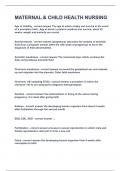
Age of viability The age at which a baby can survive in the event of a premature birth., Age at which a preterm newborn can survive, about 22 weeks, weight and maturity are crucial Amniocentesis (pregnancy) extraction by centesis of amniotic fluid from a pregnant woman (after the 15th week of pregnancy) to aid in the diagnosis of fetal abnormalities Amniotic membrane The innermost layer which encloses the fetus and produces amniotic fluid Chorionic membrane surround the gestational sac and extends up and migrates into the placenta. Outer fetal membrane Chorionic villi sampling (CVS) a procedure in which the chorionic villi to are analyzed to diagnose fetal genotypes Decidua the endometrium or lining of the uterus during pregnancy; it is shed after giving birth Embryo the developing human organism from about 2 weeks after fertilization through the second month EDB, EDC, EDD ... Fertilization process in sexual reproduction in which male and female reproductive cells join to form a new cell Fetus the developing human organism from 9 weeks after conception to birth Foramen ovale penetrates interatrial septum from fifth week of embryonic development until birth Hydramnios more than 2000 ml of amniotic fluid in the uterus. can cause maternal diabetes; esophageal atresia (diminishes or prevents fetal swallowing); and kidney disorders that affect kidney output. Implantation (embryology) the organic process whereby a fertilized egg becomes implanted in the lining of the uterus of placental mammals MdDonald' rule ... Meconium thick dark green mucoid material that is the first feces of a newborn child Nonstress test test to identify fetal compromise in conditions with poor placenta function, such as hypertension, diabetes mellitus, or postterm gestation (pregnancy last beyond 42 weeks), this test determines the fetal well-being, measured by the ability of the fetus to respond to its bodymovement by accelerations of the heart rate. Oligohydramnios decreased amniotic fluid. increased risk of fetus because the umbilical cord does not have enough fluid to float and may become compressed. Surfactant a substance capable of reducing the surface tension of a liquid in which it is dissolved, An amphipathic molecule secreted by cells in the alveoli (type 2 alveolar cells) tha reducs surface tension on the inside of the alveolar walls. This prevents the alveoli from collapsing upon exhale and sticking together, thus reducing the effort required for inspiration. Trophoblast The outer ring of cells of a blastocyst. The trophoblast takes part in the formation of the placenta. Umbilical cord a cord or funicle connecting the embryo or fetus with the placenta of the mother and transporting nourishment from the mother and wastes from the fetus Zygote the cell resulting from the union of an ovum and a spermatozoon (including the organism that develops from that cell)
Written for
- Institution
- Maternal & Child Health Nursing
- Course
- Maternal & Child Health Nursing
Document information
- Uploaded on
- July 10, 2023
- Number of pages
- 119
- Written in
- 2022/2023
- Type
- Exam (elaborations)
- Contains
- Questions & answers
Subjects
-
maternal amp child health nursing

Also available in package deal