Land Law - Fixtures and chattels
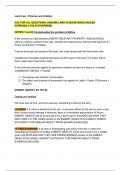
N.B. FOR ALL QUESTIONS, ASSUME LAND IS REGISTERED UNLESS
EXPRESSLY TOLD OTHERWISE
[STEPS 1 and 2] Contextualise the problem & Define
If the contract for sale between [INSERT RELEVANT PROPERTY AND BUYER] is
silent on what is included in the sale, whether the objects pass with the land depends on
if they are fixtures or chattels.
Fixtures form part and parcel of the land, and must remain with the land when sold.
Chattels are moveable property that does not form part of the land. The seller will be
free to take them if the land is sold.
A two limb test must be applied to determine whether an item is a fixture or a chattel
(established in Berkley v Poulett):
1) The degree and method of annexation
2) The object and purpose of annexation (as applied in Leigh v Taylor; D’Eyncourt v
Gregory)
[INSERT OBJECT AS TITLE]
Degree and method
We must look at how, and how securely, something is fixed to the land.
[IF FIXED] If an item is attached to the soil, or securely affixed to the land in such a way
that it would cause damage if removed, there is a rebuttable presumption of fixture.
[INSERT OBJECT] will be presumed to be a fixture given that [EXPLAIN HOW THEY
ARE FIXED TO THE LAND] (similar to the [INSERT OBJECTS IN CASE] in [INSERT
AUTHORITY FOR SIMILAR OBJECT FROM EXAMPLES BELOW]).
[IF FREESTANDING] If an item is freestanding and easily removed, it raises the
rebuttable presumption of chattel. [INSERT OBJECT] will be presumed to be a chattel
given that [EXPLAIN HOW THEY ARE FREESTANDING] (similar to the [INSERT
OBJECTS IN CASE] in [INSERT AUTHORITY FOR SIMILAR OBJECT FROM
EXAMPLES BELOW]).
N.B. FOR ALL QUESTIONS, ASSUME LAND IS REGISTERED UNLESS
EXPRESSLY TOLD OTHERWISE
[STEPS 1 and 2] Contextualise the problem & Define
If the contract for sale between [INSERT RELEVANT PROPERTY AND BUYER] is
silent on what is included in the sale, whether the objects pass with the land depends on
if they are fixtures or chattels.
Fixtures form part and parcel of the land, and must remain with the land when sold.
Chattels are moveable property that does not form part of the land. The seller will be
free to take them if the land is sold.
A two limb test must be applied to determine whether an item is a fixture or a chattel
(established in Berkley v Poulett):
1) The degree and method of annexation
2) The object and purpose of annexation (as applied in Leigh v Taylor; D’Eyncourt v
Gregory)
[INSERT OBJECT AS TITLE]
Degree and method
We must look at how, and how securely, something is fixed to the land.
[IF FIXED] If an item is attached to the soil, or securely affixed to the land in such a way
that it would cause damage if removed, there is a rebuttable presumption of fixture.
[INSERT OBJECT] will be presumed to be a fixture given that [EXPLAIN HOW THEY
ARE FIXED TO THE LAND] (similar to the [INSERT OBJECTS IN CASE] in [INSERT
AUTHORITY FOR SIMILAR OBJECT FROM EXAMPLES BELOW]).
[IF FREESTANDING] If an item is freestanding and easily removed, it raises the
rebuttable presumption of chattel. [INSERT OBJECT] will be presumed to be a chattel
given that [EXPLAIN HOW THEY ARE FREESTANDING] (similar to the [INSERT
OBJECTS IN CASE] in [INSERT AUTHORITY FOR SIMILAR OBJECT FROM
EXAMPLES BELOW]).