TFM 160 EXAM questions 2023 with complete solutions
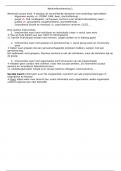
What is the difference between implicit and explicit meaning? (And how do these terms relate to onions, and ogres, and a movie such as Juno?) Onions have multiple layers. Ogres are like onions because they have something below the surface. In Juno the implicit meaning can be a "teenager faced with a difficult decision makes a bold leap toward adulthood but, in doing so, discover the world of adults is no less uncertain or overwhelming than adolescence." What is "formal analysis" and how does formal analysis differ from other types of analyses that explore the relationship between culture and movies? a. Formal analysis dissects the complex synthesis of cinematography, sound, compositions, design, movement, performance, and editing orchestrated by creative directors to understand how the story, mood and meaning was conveyed. (uses cinematic language, focuses on form) -alternate approaches to analyses: expose implicit and hidden meanings that inform inform our understanding of cinema's function within popular culture as well as the influence of popular culture on movies. (uses interpretation, focuses on content) -cultural analysis in Juno: could explore the movie's treatment of class. New parents for baby = white collar. Juno's parents= repairman and manicurist What do we mean when we describe cinematic language as "invisible"? What are some of the reasons why cinematic language is invisible? -Cinematic language is the visual and aural vocab of a film. How it becomes invisible: Early film-making created a film grammar (or cinematic language) that draws upon the way we automatically interpret visual information in our real lives, thus allowing the audiences to absorb movie meaning intuitively and instantly. Basically all the tricks that directors use the audience's brains pick up on it without even having to think about it. Like when the directors uses different angles like when Juno is riding the bike at the end our brain automatically sees her as triumphant just the way the camera is positioned but we didn't have to think about it super hard. -because our brains pick up messages and ideas automatically by just seeing things like when you see a sun you automatically think happy or a stormy cloud you think sad. The audience forgets they are watching a movie by engaging them which makes it invisible. . What do we mean by cultural invisibility? How is his different from cinematic invisibility? Film-makers favor stories and themes that reinforce viewers shared belief systems so culture becomes invisible bc the film-makers gives the audience what they want. Stories tap into reinforce viewers most fundamental desires and beliefs. The people making movies may just be as oblivious to their own cultural attitudes as the viewers are. implicit meaning below the surface of a movie's story and presentation, is closest to our everyday sense of the word meaning explicit meaning association, connection, or inference that a viewer makes on the basis of the explicit meanings available on the surface of the movie. shot one interrupted run of the camera. A shot can be as short or as long as the director wants, but it cannot exceed the length of the film stock in the camera. cut a direct change from one shot to another as a result of cutting; that is, the precise point at which shot A ends and shot B begins editing The process by which the editor combines and coordinates individual shots into a cinematic whole; the basic creative force of cinema close-up A shot that often shows a part of the body filling the frame traditionally a face, but possibly, a hand, eye, or mouth fade in/fade out Transitional devices in which a shot fades in from a black field on a black-and-white film or from a color field on a color film, or fades out to a black field (or a color field). low angle shot Is made with the camera made below the action and that typically places the observer in a position of inferiority. cutting on action A continuity editing technique that smooths the transition between shots portraying a single action from different camera angles. The editor ends the first shot in the middle of a continuing action and begins the subsequent shot at approximately the same point in the same matching action.
Written for
- Institution
- TFM 160
- Module
- TFM 160
Document information
- Uploaded on
- July 29, 2023
- Number of pages
- 8
- Written in
- 2022/2023
- Type
- Exam (elaborations)
- Contains
- Questions & answers