HW12 Excavations Questions with correct Answers
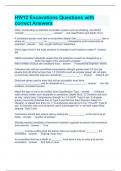
HW12 Excavations Questions with correct Answers When constructing a protective excavation system such as shielding, one MUST consider ____________________. soil classification and depth of cut A competent person must test an excavation deeper than __________________ feet or where an______________ or _______________ atmosphere could reasonably be expected. four, oxygen deficient, hazardous Which type of soil is the most sensitive to changes in soil moisture content? Silt OSHA excavation standards require that the protection system be designed by a _______________when the depth of the excavation exceeds ___________________ feet or where unusual site conditions exist. Professional Engineer, twenty Cohesive soils with an unconfined compressive strength greater than 0.5 tons per square foot (48 kPa) but less than 1.5 (144 kPa) such as angular gravel, silt, silt loam, or previously disturbed soils are considered ______________. Class B soil Structural ramps used to enter and exit an excavation must have ___________________ and be designed by a _______________. non-slip surfaces, competent person Match the type of soil to its Unified Soils Classification Type. 1) Natural solid mineral matter such as granite or sandstone: Stable Rock. 2) Cohesive soil such as clay, sandy loam, Compressive strength is 1.5 ton/ft²: Type A soil. 3) Angular gravel, previously disturbed soil, or Type A soil that has been fissured, subject to vibration, or sloped less than 4 to 1, Compressive strength is 0.5 to 1.5 ton/ft²: Type B soil. 4) Granular soils such as gravel, sand, submerged soil, or soil with water freely seeping: Type C soil. Contractors should also reduce risk by limiting the ____________ in the trench at all times. number of workers Shoring requires installation of aluminum hydraulic supports to prevent soil movement and cave-ins. True _______ involves cutting back the trench wall at an angle inclined _________ the excavation. Sloping, away from An excavation that has a depth of ________ must have a way to enter and exit the excavation. four feet or more One method of ensuring worker safety in an excavation is to slope the sides to an angle not steeper than __________________. This method is considered safe for any type of soil. 1.5 horizontal to 1 vertical Penetrometers have error rates in what range? 20-40 percent When the classification of soil can not be determined, it should be assumed as ___________. Class C What is the most common type of soil failure? Cave-in, Slides When a competent person finds any evidence of a situation that could result in a cavein the competent person should __________. immediately remove employees from the danger area The OSHA excavation regulation requires the excavation protection system be designed by a registered professional engineer when the depth of excavation exceeds _________. 20 feet To avoid possible failure of a protective system, you must make sure that ________________________________. materials and equipment aren't damaged or defective When does the OSHA standard NOT apply to house foundation/basement excavations? ??? *Not When the excavation is less than 4 feet deep. OSHA excavation standards require that an excavation protective system be designed by a registered professional engineer when the depth of the excavation exceeds ________ or unusual sight conditions exist. 20 feet
Written for
- Institution
- Excavation
- Course
- Excavation
Document information
- Uploaded on
- August 18, 2023
- Number of pages
- 2
- Written in
- 2023/2024
- Type
- Exam (elaborations)
- Contains
- Questions & answers
Subjects
-
hw12 excavations questions with correct answers
-
when constructing a protective excavation system s
-
a competent person must test an excavation deeper
-
osha excavation standards require that the protect

Also available in package deal