The World’s Legal Systems – Lecture 6
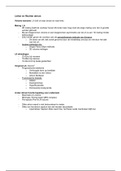
Common Law Reasoning & Precedent
binding precedent – stare decisis
o principle
o reasons
o hierarchy
o reporting
o statutes
the problem of ‘’characterization’’
o substantially the same
o the same relevant facts
strategies
This class is about how common law lawyers reason with the legal elements within their system. This
class exists of two main parts: the binding precedent & the problem of characterization. The problem
of characterization is related to how common lawyers decide which cases are to be used as precedent
and which cases are not to be used as precedents.
Principles
Binding precedent – stare decisis
principle
o legal system:
continuous, certain
flexible
legal interpretation: therefore strategy as well
o name: ‘’stare decisis et quieta non movere’’
o definition: cases with substantially the same relevant facts are decided in the same
way
o binding
Continuous vs flexible
Any legal system has two characteristics and these are contradicting. On the one hand, legal systems
have to be continuous. It has to provide solutions and people in society need to be respected in their
expectations with regard to the law. This means that the rules cannot change quickly and not too much.
If a law changes from one moment to the next, every time that there is new statute being imposed,
then this creates chaos. Then nobody knows what the law is. One of the basic ideas with regard to legal
systems is that it provides solutions and that one can expect what the law will be in the future. This
has to do with legal certainty. So law needs to be certain. This is linked to the concept of authority. Any
legal system has some basic characteristics that are linked to authority (the idea that there must be
one institution or a few institutions which decide at one point in time what the law is).
On the other hand, the legal systems also need to be flexible. It is impossible to provide in advance
rules for any situation that might arise. There are always new situations. The flexibility on the continent
Common Law Reasoning & Precedent
binding precedent – stare decisis
o principle
o reasons
o hierarchy
o reporting
o statutes
the problem of ‘’characterization’’
o substantially the same
o the same relevant facts
strategies
This class is about how common law lawyers reason with the legal elements within their system. This
class exists of two main parts: the binding precedent & the problem of characterization. The problem
of characterization is related to how common lawyers decide which cases are to be used as precedent
and which cases are not to be used as precedents.
Principles
Binding precedent – stare decisis
principle
o legal system:
continuous, certain
flexible
legal interpretation: therefore strategy as well
o name: ‘’stare decisis et quieta non movere’’
o definition: cases with substantially the same relevant facts are decided in the same
way
o binding
Continuous vs flexible
Any legal system has two characteristics and these are contradicting. On the one hand, legal systems
have to be continuous. It has to provide solutions and people in society need to be respected in their
expectations with regard to the law. This means that the rules cannot change quickly and not too much.
If a law changes from one moment to the next, every time that there is new statute being imposed,
then this creates chaos. Then nobody knows what the law is. One of the basic ideas with regard to legal
systems is that it provides solutions and that one can expect what the law will be in the future. This
has to do with legal certainty. So law needs to be certain. This is linked to the concept of authority. Any
legal system has some basic characteristics that are linked to authority (the idea that there must be
one institution or a few institutions which decide at one point in time what the law is).
On the other hand, the legal systems also need to be flexible. It is impossible to provide in advance
rules for any situation that might arise. There are always new situations. The flexibility on the continent