NATE Heat Pumps with correct answers
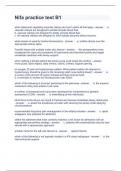
What is the purpose of the reversing valve on an air-to-air heat pump: It changes the flow of the refrigerant, making the indoor coil the condenser during the winter months On a reversing-valve solenoid, what is connected to the top tube: the compressor discharge line On a reversing-valve solenoid, what is connected to the bottom center tube: the compressor suction line What pressure difference must be between the low side and the high side of the heat pump system for the reversing valve to operate properly: 75 psig Where are the check valves located on an air-to-air heat pump: on the outdoor coil and indoor coil How are the check valves connected in a heat pump system: in parallel with both metering devices+in series with one metering device and parallel with the other A ball-type check valve must be installed: vertically, with the seat on the bottom of the valve When installing a ball-type check valve, what must be done to prevent warping: A heat sink must be used when brazing it into the line Where is the accumulator located on a heat pump system: between the bottom center tube of the reversing valve and the compressor When would you most likely find liquid in the vapor line on a heat pump: during the heating mode after a defrost What component must always be de-energized during the defrost cycle on a heat pump: the outdoor fan Why are the auxiliary strip heaters energized during the defrost cycle: to increase supply-air temperature for comfort What position must the reversing valve be in during the defrost cycle: the cooling mode When a heat pump switches into the defrost cycle, it must: remain in defrost until the outdoor coil has reached a predetermined temperature A defrost termination thermostat is commonly located: on the outdoor coil, and opens at 55° F What type of system uses a temperature and a pressure sensor to control the defrost cycle: a pressure-initiation-temperature-termination defrost system A pressure switch, used on the defrost cycle of a heat pump, commonly closes at a preset pressure difference of: .5" to .65" WC Temperature split refers to: the temperature difference between the air entering a coil and the temperature of the coil The outdoor ambient thermostat is commonly used to: energize the auxiliary strip heaters during the second stage of heating A hold-back thermostat is used to: keep the system energized during a defrost cycle, when the room thermostat is satisfied A discharge temperature thermostat is used: on air-to-air heat pump systems that use fossil fuel When sizing a heat pump, it must initially be sized for: the cooling load When sizing for the auxiliary heat for a heat pump system, the auxiliary heat must: be capable of handling the entire heat load of the structure Auxiliary strip heaters are: located at the indoor unit downstream from the indoor coil What controls the auxiliary strip heaters in a heat pump system: the second stage of a two-stage thermostat What is the purpose of the de-ice coil on an air-to-air heat pump: It prevents the formation of ice on the lower section of the outdoor coil The coefficient of performance (COP) is: a heat pump's rating in the heating cycle, comparing the heat output by the electrical input When installing a heat pump system, the unit should always be located as close to the indoor unit as possible because: during the heating cycle a longer vapor line will cause the system to operate less efficiently When installing an outdoor coil, it must: never be placed under the overhang of the building What are common supply-air static pressures for a heat pump duct system: .15" WC
Escuela, estudio y materia
- Institución
-
Columbia University
- Grado
-
NATE HEAT PUMP
Información del documento
- Subido en
- 15 de septiembre de 2023
- Número de páginas
- 5
- Escrito en
- 2023/2024
- Tipo
- Examen
- Contiene
- Preguntas y respuestas
Temas
- nate heat pumps
-
nate heat pumps with correct answers

Documento también disponible en un lote