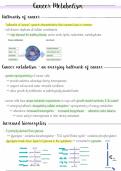
Cancer Metabolism
Hallmarks of cancer
- ‘hallmarks of cancer’: generic characteristics that cancers have in common
- cell division: duplicate all cellular constituents
=> high demand for building blocks: amino acids, lipids, nucleotides, carbohydrates
/ fat
(sugars)
Cancer metabolism - an emerging hallmark of cancer
- genetic reprogramming of cancer cells
=> provide selective advantage during tumorigenesis
=> support cell survival under stressful conditions
=> allow growth & proliferation at pathologically elevated levels
- cancer cells have unique metabolic requirements to cope with growth needs (nutrients, E & waste)
=> emerging hallmark: deregulating cellular energetics/ reprogramming of energy metabolism
=> alterations: increased bioenergetics - increased biosynthesis - alteration redox balance
=> occur early in tumorigenesis or later during metastasis
Increased bioenergetics
- E primarily derived from glucose
=> glycolysis - oxidative decarboxylation - TCA cycle (Krebs cycle) - oxidative phosphorylation
- glycolysis: break down (lysis) of glucose in the cytoplasm => converted to pyruvate
, - oxidative decarboxylation in mitochondrial matrix: from pyruvate to acetyl-CoA
2 carbon atoms = acetate ; CoA = coenzyme A
- TCA cycle: used to release stored E through oxidation of acetyl-CoA (acetate) into CO2 and H2O
Generate ATP &
reducing equivalents
CO2
H20
NADH & FADH2
(e- donors)
(inner membrane mitochondria)
oxidative phosphorylation of NADH & FADH2 generated
in the electron transport chain (requires oxygen)
=> E in the form of ATP by chemiosmosis (through
harnessing of chemosmotic gradient made by pumping H+)
Oxygen requirement in normal and cancer cells
- tumour cells can exist in a low nutrient & low oxygen (0-2% in the centre) environment
- O2 conc decreases the further tumour cells are from blood vessels: hypoxic & necrotic centre
= hyperoxia/ normoxia
- mechanisms to detect & monitor levels of O2
=> ex: hypoxia inducible factor (HIF-1a): oxygen sensing transcription factor
=> normoxic conditions: targeted for degradation
=> hypoxic conditions: degradation prevented => binds DNA & activate response genes
Hallmarks of cancer
- ‘hallmarks of cancer’: generic characteristics that cancers have in common
- cell division: duplicate all cellular constituents
=> high demand for building blocks: amino acids, lipids, nucleotides, carbohydrates
/ fat
(sugars)
Cancer metabolism - an emerging hallmark of cancer
- genetic reprogramming of cancer cells
=> provide selective advantage during tumorigenesis
=> support cell survival under stressful conditions
=> allow growth & proliferation at pathologically elevated levels
- cancer cells have unique metabolic requirements to cope with growth needs (nutrients, E & waste)
=> emerging hallmark: deregulating cellular energetics/ reprogramming of energy metabolism
=> alterations: increased bioenergetics - increased biosynthesis - alteration redox balance
=> occur early in tumorigenesis or later during metastasis
Increased bioenergetics
- E primarily derived from glucose
=> glycolysis - oxidative decarboxylation - TCA cycle (Krebs cycle) - oxidative phosphorylation
- glycolysis: break down (lysis) of glucose in the cytoplasm => converted to pyruvate
, - oxidative decarboxylation in mitochondrial matrix: from pyruvate to acetyl-CoA
2 carbon atoms = acetate ; CoA = coenzyme A
- TCA cycle: used to release stored E through oxidation of acetyl-CoA (acetate) into CO2 and H2O
Generate ATP &
reducing equivalents
CO2
H20
NADH & FADH2
(e- donors)
(inner membrane mitochondria)
oxidative phosphorylation of NADH & FADH2 generated
in the electron transport chain (requires oxygen)
=> E in the form of ATP by chemiosmosis (through
harnessing of chemosmotic gradient made by pumping H+)
Oxygen requirement in normal and cancer cells
- tumour cells can exist in a low nutrient & low oxygen (0-2% in the centre) environment
- O2 conc decreases the further tumour cells are from blood vessels: hypoxic & necrotic centre
= hyperoxia/ normoxia
- mechanisms to detect & monitor levels of O2
=> ex: hypoxia inducible factor (HIF-1a): oxygen sensing transcription factor
=> normoxic conditions: targeted for degradation
=> hypoxic conditions: degradation prevented => binds DNA & activate response genes