68W FC1 Q%A CORRECT 100%
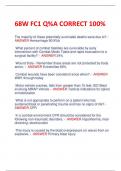
68W FC1 Q%A CORRECT 100% The majority of these potentially survivable deaths were due to? - ANSWER Hemorrhage 90.9%b What percent of combat fatalities are survivable by early intervention with Combat Medic Tasks and rapid evacuation to a surgical facility? - ANSWER 24% Wound Data - Remember these areas are not protected by body armor. - ANSWER Extremities 60% Combat wounds have been consistent since when? - ANSWER WW1 through today Motor vehicle crashes, falls from greater than 15 feet, IED Blast involving MRAP Vehicle - ANSWER Tactical indications for spinal immobilization What is not appropriate to perform on a patient who has sustained blast or penetrating trauma and has no signs of life? - ANSWER CPR In a combat environment CPR should be considered for the following non-traumatic disorders. - ANSWER Hypothermia, near drowning, electrocution This injury is caused by the blast overpressure (or wave) from an explosive. - ANSWER Primary blast injury Blast overpressure is more effective in this type of area. - ANSWER Enclosed area Inhalation burns occur with greater frequency in fires in these areas. - ANSWER Confined spaces Single most significant obstacle to the Combat medics ability to provide care. - ANSWER Enemy Fire Factors influencing care on the battlefield. - ANSWER Enemy fire, medical equipment limitations, widely variable evacuation time. Who is always in command and will decide if casualties will be evacuated? - ANSWER Tactical Leader Combat medics should use what before using their own supplies in their aid bag? - ANSWER Casualty's IFAK This contains a folding talon litter and a robust amount of first aid supplies suitable for hemorrhage control and treatment for shock. - ANSWER Warrior Aid and Litter Kit (WALK) Not every injured casualty will require what? - ANSWER Intravenous fluids Option 1 for mild to moderate pain, casualty is still able to fight - Medications on the battlefield. - ANSWER Pill Pack self administered Option 2 for moderate to severe pain, casualty is not in shock or respiratory distress. Casualty is not at significant risk of developing either condition. - ANSWER Oral Transmuccal Fentanyl Citrate (OTFC) 800 ug
Written for
- Institution
- 68W
- Course
- 68W
Document information
- Uploaded on
- October 20, 2023
- Number of pages
- 18
- Written in
- 2023/2024
- Type
- Exam (elaborations)
- Contains
- Questions & answers
Subjects

Also available in package deal