Sample C947 Curriculum Proposal 6/ High-Fidelity Simulation for Postpartum Hemorrhage.
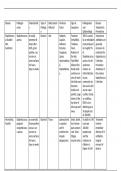
Sample C947 Curriculum Proposal 6/ High-Fidelity Simulation for Postpartum Hemorrhage. HIGH-FIDELITY SIMULATION FOR POSTPARTUM HEMORRHAGE 2 Executive Summary This proposal addresses a curriculum gap identified at Western University as the lack of utilization of high-fidelity simulation (HFS) in the prevention and management of postpartum hemorrhage module. A proposed curricular change from LFS to High-fidelity simulations (HFS) to improve the student’s confidence and clinical skills is recommended. The Analysis, Design, Development, Implementation, and Evaluation (ADDIE) model was utilized as a guide for the recommended curricular change proposal. During the analysis phase, a gap analysis was completed to identify the curriculum gap of their current practice. The analysis discovered that underutilization of HFS in preventing and managing postpartum hemorrhage module. A thorough literature review was completed that identified that when nursing students are exposed to simulations, they are more confident and competent in skills at the clinical facility. A force field analysis was completed to identify forces that support and oppose the change and to identify the organization's readiness to change. The force field analysis revealed an absence of the HFS technology utilization that allows educators to provide students with more real-life practice experience, stimulating decision-making skills, and more confidence in the workforce. During the design phase, the course syllabus consisting of the course description, course objectives, teaching, and instructional strategies, learning materials, student learning outcomes, course policies, and a grading policy was created. The masters of science nursing (MSN) student lined up the course syllabus with the module topic from the existing patient-centered care: childbearing family curriculum to promote the module integration. The nursing student's diversity at Western University helped increase the knowledge they gained from this course. HIGH-FIDELITY SIMULATION FOR POSTPARTUM HEMORRHAGE 3 During the development phase, lecture content, learning resources, and assessments were developed. A well-organized and informative slide presentation was collaboratively developed by the MSN student and designated preceptor to present content. Learning resources, simulations, and student learning activities were developed because they are useful learning tools to enhance students’ skills, improve communication, and provide care for a patient in a safe setting. A formative assessment quiz and summative objective assessment were developed to gather data if the module is meeting the intended goals. An authentic summative performance assessment of a presentation that focuses on the students learning process and critical thinking skills was developed. During the implementation phase, the pilot module implementation is planned. The MSN student improved, updated, and edited the course content, learning resources, and assessments to promote a successful presentation to students. Human, financial, and technology resources, like support from two faculty members, budgeting for labor hours, and simulation equipment needed to carry out the pilot test were determined. Faculty are trained on the new module and HFS to help close the curriculum gap. The pilot test is carried out with many points for students and faculty to provide feedback on the module's content and possible improvements. During the evaluation phase, the MSN student determined that the module goals were met by utilizing evaluation tools. The key performance indicators, benchmarks, and student surveys helped the MSN student improve the proposed module change to close the curriculum gap. A formative evaluation plan was developed to help analyze if hereafter, the module implementation within the curriculum will continue to meet the student's and faculty's needs. Undergraduate nursing students will significantly benefit from implementing this proposed curricular change by providing improved skills and knowledge about how to care for HIGH-FIDELITY SIMULATION FOR POSTPARTUM HEMORRHAGE 4 postpartum hemorrhage patients. Utilizing HFS can enhance students' real-life scenarios, which can help them understand better and handle similar clinical situations during their nursing careers. HIGH-FIDELITY SIMULATION FOR POSTPARTUM HEMORRHAGE 5 High-Fidelity Simulation for Postpartum Hemorrhage HFS are essential for nursing curriculums. The preventing and managing postpartum hemorrhage module is currently utilizing LFS to help students gather knowledge before entering the clinical setting. The problem identified is that LFS does not adequately prepare students for the clinical setting. The proposed curricular change is to utilize HFS in preventing and managing postpartum hemorrhage modules to improve students' confidence and skills. A literature review is completed to determine evidence-based research that supports the use of HFS in courses. The theoretical framework that will support this improvement proposal is the education theory constructivism. The five phases of the ADDIE model is utilized as the framework for designing the curricular change. The analysis phase consists of a needs assessment, a force field analysis, identifying key stakeholders, and assessing the organization's readiness for the curricular change. The design phase is when the course syllabus, objectives, and learning outcomes are outlined. In the development phase, course materials, learning resources, and assessment activities are designed. The implementation phase is when the proposed curricular content change is put in the curriculum for students. The evaluation phase is when the proposed curricular change is evaluated to see if the set goals for the proposed change were met. A curriculum proposal document is a way to present ideas of improvement or change to a current curriculum to better the program. Literature Review A literature review is a vital step to find credible sources to support the change proposal. Ten excellent sources that support the proposal are seen in the Literature Review Summary Table, Table 1. that is provided at the end of the document. HIGH-FIDELITY SIMULATION FOR POSTPARTUM HEMORRHAGE 6 Curriculum gap The MSN student completed a thorough investigation to identify the curriculum gap of inadequate use of HFS for preventing and managing postpartum hemorrhage module. There are several reasons why this gap emerged. This gap occurred due to veteran faculty not interested in learning how to utilize HFS equipment. This gap has also happened due to faculty feeling uncomfortable setting up simulations because postpartum hemorrhages are episodic events. The constructivist theory is when a student builds on existing knowledge through experiences (Billings & Halstead, 2016). This theory helped to identify the need for utilization of HFS in postpartum hemorrhage because many students do not get to experience this crisis in the clinical setting, allowing them to build their knowledge. Summary of Sources .
Written for
- Institution
- MSN ED C947
- Course
- MSN ED C947
Document information
- Uploaded on
- November 23, 2023
- Number of pages
- 74
- Written in
- 2023/2024
- Type
- Exam (elaborations)
- Contains
- Questions & answers
Subjects
-
sample c947 curriculum proposal 6 high fidelity
-
sample c947 curriculum proposal 6
-
sample c947 postpartum hemorrhage
-
high fidelity simulation for postpartum hemorrhage