Fascist economic policy
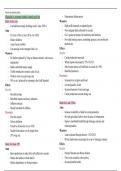
Mussolini’s economic battles/Autarky policies - Demonstrate Italian power
Battle for the Lira Measures
- Lira had been steeply declining in int’l value 1925-6 - High tariffs imposed on imported grain
Aims - New marginal land cultivated for cereals
- Fix Lira at 90 to £ (was 150 to £ in 1926) - Gov’t grants to farmers for machinery and fertilisers
- Reduce inflation - Provided training courses, marketing agencies, new production
- Assert fascist stability methods etc.
- Link prestige to the strength of the Lira Effects
Measures Benefits
- De Stefani replaced by Volpi as finance minister, who was an - Cereal production increased
industrialist - Wheat imports decreased by 75% 1925-35
- Banks controlled money supply - Italy became almost self-sufficient in cereals by 1940
- Tariffs introduced to protect value of Lira - Benefited producers
- Workers were to accept wage cuts Drawbacks
- 90 Lira to £ achieved by returning to the Gold Standard - Increased cost of grain and bread
Effects - Lowered quality of diet
Benefits - Increased imports of meat and eggs
- Boosted prestige - Cereal production lowered during war
- Benefited imports and heavy industries
- Inflation reduced Battle for Land 1928zz
- Mostly benefited the affluent Aims
Drawbacks - Increase availability of land for cereal production
- Poor for exports - Provide agricultural jobs to slow the pace of urbanisation
- Serious deflation - Improve marshland health through drainage schemes and
- Forced to devalue the Lira in 1930 reducing malaria
- Smaller firms taken over by larger firms Measures
- 20% wage cut - Land reclaimed through decrees - 1923,28,33
- Private landowners encouraged to co-op w/ drainage schemes
Battle for Grain 1925 Effects
Aims Benefits
- Boost production to make Italy self-sufficient in cereals - Pontine Marshes near Rome drained
- Reduce the balance of trade deficit - New towns created as show pieces
- Reduce dependency on foreign imports - Increased public health
, Fascist economic policy
- Produced more jobs - Banned strikes and lockouts
Drawbacks July 1926
- Only reclaimed 1/20 of land stated by propaganda - Ministry of Corporations created
- South neglected - deepened divide - Organised conciliation of disputes
- Urban population > rural population, despite attempts to - Mussolini appointed himself as minister
increase agriculture industry 1927 Labour Charter
- Couldn’t be fully carried through due to private landowners in - Claimed as the Magna Carta of the Fascist revolution
the S - Affirmed the rights of private o/ship and allowed the state to
interfere where the private sector was deemed to be inadequate
The Corporate State - Work became a social duty
Purpose - Workers’ rights declared through weekly rest periods, limits on
- Find a balance between the benefits of socialist and capitalist night shifts, annual paid holidays, insurance
economies → only proclaimed, not enacted
- Reorganise the basis of economic activity Nov 1928
- Eliminate labour problems - Fascist syndical confederation broken up into 6 smaller
- Produce and efficiently functioning economy federations
- Corporation - represented all that were engaged in a particular - Political weight of syndicates destroyed
area of activity March 1930
→ employers were represented by federations - Nat’l Council of Corporations - 7 large sections w/ 22 embryo
→ employees were represented by syndicates corporations
- Council had a consultative role
Supposed benefits → was only a facade, did not actually make decisions
- National interest advanced
- Economy regulated Effects
- Class conflict ended - Unfair representation of workers - dominated by state-
- Protects everyone's interests appointed officials
- Problems solved through conciliation - Mussolini dominated the system - couldn’t be an autonomous
structure as it intended
Measures - Became an elaborate facade that allowed the state to exploit
Rocco Law April 1926 workers
- Fascist unions became members of the state - Labour Charter wasn’t legally binding → never
- Est. compulsory system of arbitration implemented workers’ rights
Mussolini’s economic battles/Autarky policies - Demonstrate Italian power
Battle for the Lira Measures
- Lira had been steeply declining in int’l value 1925-6 - High tariffs imposed on imported grain
Aims - New marginal land cultivated for cereals
- Fix Lira at 90 to £ (was 150 to £ in 1926) - Gov’t grants to farmers for machinery and fertilisers
- Reduce inflation - Provided training courses, marketing agencies, new production
- Assert fascist stability methods etc.
- Link prestige to the strength of the Lira Effects
Measures Benefits
- De Stefani replaced by Volpi as finance minister, who was an - Cereal production increased
industrialist - Wheat imports decreased by 75% 1925-35
- Banks controlled money supply - Italy became almost self-sufficient in cereals by 1940
- Tariffs introduced to protect value of Lira - Benefited producers
- Workers were to accept wage cuts Drawbacks
- 90 Lira to £ achieved by returning to the Gold Standard - Increased cost of grain and bread
Effects - Lowered quality of diet
Benefits - Increased imports of meat and eggs
- Boosted prestige - Cereal production lowered during war
- Benefited imports and heavy industries
- Inflation reduced Battle for Land 1928zz
- Mostly benefited the affluent Aims
Drawbacks - Increase availability of land for cereal production
- Poor for exports - Provide agricultural jobs to slow the pace of urbanisation
- Serious deflation - Improve marshland health through drainage schemes and
- Forced to devalue the Lira in 1930 reducing malaria
- Smaller firms taken over by larger firms Measures
- 20% wage cut - Land reclaimed through decrees - 1923,28,33
- Private landowners encouraged to co-op w/ drainage schemes
Battle for Grain 1925 Effects
Aims Benefits
- Boost production to make Italy self-sufficient in cereals - Pontine Marshes near Rome drained
- Reduce the balance of trade deficit - New towns created as show pieces
- Reduce dependency on foreign imports - Increased public health
, Fascist economic policy
- Produced more jobs - Banned strikes and lockouts
Drawbacks July 1926
- Only reclaimed 1/20 of land stated by propaganda - Ministry of Corporations created
- South neglected - deepened divide - Organised conciliation of disputes
- Urban population > rural population, despite attempts to - Mussolini appointed himself as minister
increase agriculture industry 1927 Labour Charter
- Couldn’t be fully carried through due to private landowners in - Claimed as the Magna Carta of the Fascist revolution
the S - Affirmed the rights of private o/ship and allowed the state to
interfere where the private sector was deemed to be inadequate
The Corporate State - Work became a social duty
Purpose - Workers’ rights declared through weekly rest periods, limits on
- Find a balance between the benefits of socialist and capitalist night shifts, annual paid holidays, insurance
economies → only proclaimed, not enacted
- Reorganise the basis of economic activity Nov 1928
- Eliminate labour problems - Fascist syndical confederation broken up into 6 smaller
- Produce and efficiently functioning economy federations
- Corporation - represented all that were engaged in a particular - Political weight of syndicates destroyed
area of activity March 1930
→ employers were represented by federations - Nat’l Council of Corporations - 7 large sections w/ 22 embryo
→ employees were represented by syndicates corporations
- Council had a consultative role
Supposed benefits → was only a facade, did not actually make decisions
- National interest advanced
- Economy regulated Effects
- Class conflict ended - Unfair representation of workers - dominated by state-
- Protects everyone's interests appointed officials
- Problems solved through conciliation - Mussolini dominated the system - couldn’t be an autonomous
structure as it intended
Measures - Became an elaborate facade that allowed the state to exploit
Rocco Law April 1926 workers
- Fascist unions became members of the state - Labour Charter wasn’t legally binding → never
- Est. compulsory system of arbitration implemented workers’ rights