MNG3702 – STRATEGY IMPLEMENTATION & CONTROL
STUDY UNIT 1 – INTRODUCTION TO STRATEGY IMPLEMENTATION
1.3 INTRODUCTION
In strategy implementation we consider the entire organisation – not only divisional or functional segments. The approach to
strategy implementation considers the impact of strategy implementation decisions for the entire organisation, at all
managerial levels and across all functional areas. The organisation’s strategic plans therefore can succeed only if properly
supported, coordinated and implemented by middle and lower management.
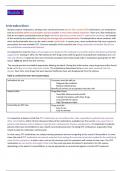
Effective strategy implementation, therefore, requires consideration of all the essential components of the strategy
implementation process as illustrated in Figure and discussed below.
• Change Management (Unit 2) - Strategy is not about conducting business as usual, it is about managing change, and
change initiatives.
• Organisational Learning (Unit 3) - Organisations cannot change if they are unable to learn and adapt
• Culture in strategy implementation (Unit 4) - Change is often about changing the culture of an organisation and for
that reason the role of leadership.
• Adapt to the selected Strategy (Unit 5) - The organisational structure of the organisation has to adapt to the selected
strategy.
• Strategy deployment (Unit 6) - Strategy deployment is the process of managing the strategy implementation process
and the strategic initiatives that form a vital part of it through programmes and projects.
• Strategic control and performance management frameworks (Unit 7) - Managers need to ensure that appropriate
strategy review, evaluation and control mechanisms.
The four broad approaches to or perspectives on
strategy implementation are:
1. Organisational architecture. This perspective
views the organisation as an interrelated set of
sub-systems, which must all be aligned, in
balance and consistent if a strategy is to be
implemented successfully.
2. Organisational Change - there is a perspective
that strategy implementation is about
managing planned change.
3. Strategy deployment - Strategy
implementation can be viewed as a process of
that collectively contribute towards the
achievement of strategic objectives.
4. The learning organisation - Strategy
implementation as organisational adaptation
suggests that organisations learn and adapt
organically rather than as part of a formal
process.
H.Crassas – 2015 – MNG3702 – Strategy Implementation & Control Page 1
,1.4 TRANSLATING LONG-TERM OBJECTIVES INTO ANNUAL OBJECTIVES
Strategy has both long-term and short-term implications.
• Long-term objectives are attained by achieving successive, year-on-year short-term objectives.
• Annual objectives are derived from long-term objectives and cascaded down to middle or functional management
levels, where action plans are implemented in order to achieve such objectives in the respective divisions or functional
departments (finance, R&D, marketing, operations, human resources and purchasing).
Short-term objectives are defined as “measurable outcomes achievable or intended to be achieved in one year or less”
Formulating short-term objectives aid strategy implementation in at least three ways:
1. Operationalises long-term objectives, i.e. makes strategy part of the day-to-day jobs of everyone.
2. Motivational force and a means of avoiding conflict and disagreement.
3. Standards for measuring progress and outcomes, providing opportunity for timeous corrective action where needed
and to ensure that strategy implementation stays on track.
Short-term objectives in particular should comply with the SMART requirements, i.e. specific, measurable, achievable, realistic
and timely.
1.5 FUNCTIONAL STRATEGIES AND TACTICS IN STRATEGY IMPLEMENTATION
Functional strategies or tactics are key routine activities that need to be executed in each of an organisation’s functional
Areas, defined as follows: “Detailed statements of the ‘means’ or activities that will be used by an organisation to achieve
short-term objectives and establish competitive advantage”
We must draw a clear distinction between business strategies and functional strategies or tactics to appreciate the importance
for effective strategy implementation.
Functional strategies or tactics differ from business strategies with regard to the following three dimensions:
1. Time horizon - strategies are based on a vision and mission, strategic intent and long-term objectives that extend a
number of years. Functional strategies have to achieve objectives in the immediate future through short-term action
plans because they:
a. focus the attention of functional managers on what is critical and needs to be accomplished to ensure
successful strategy implementation, and
b. allow functional managers to adjust to changing conditions.
2. Specificity - Specific strategies or tactics and the related action plans for each functional area identify how managers in
each of these areas can accomplish their tasks in the short term
3. Participants – Business strategies are developed by top management in conjunction with managers at all the
organisational levels, but remain the ultimate responsibility and accountability of top management. Functional
strategies are generally delegated by top management to managers at the functional levels.
1.6 ORGANISATIONAL CULTURE AND LEADERSHIP IN STRATEGY IMPLEMENTATION
1.6.2 ORGANISATIONAL CULTURE
Every organisation has its own unique culture that influences the behavior of individuals. Strategic leaders need to accept that
they act as primary transmitters of and shape organisational culture. It is defined as:
“a pattern of shared basic assumptions learned by a group as it solved its problems of external adaptation and
internal integration, which has worked well enough to be considered as valid and, therefore, to be taught to new
members as the correct way to perceive, think and feel in relation to those problems”.
High satisfaction levels make a significant contribution to exceptional employee performance and increased profitability.
Conflict in terms of beliefs, values and assumptions between individuals and the organisation has a negative impact which in
turn has an adverse effect on organizational performance and profitability.
Organisational culture serves important functions in an organisation that include serving
1. The vision and strategy of the organisation
2. The means through which to attain strategic objectives
3. An individual’s role orientation
4. Quality assurance
5. Common language and effective communication
6. The means for corrective actions and interventions.
H.Crassas – 2015 – MNG3702 – Strategy Implementation & Control Page 2
,1.6.3 STRATEGIC LEADERSHIP
Strategic leadership and organisational culture are closely aligned and could significantly enhance factors that accommodate
change and therefore strategy implementation. Leaders play a critical role in ensuring that their organisations pre-emptively
and successfully adapt to dynamic and changing environments. It is top-level executives who are responsible for the success
and sustainability of the organisation. Ultimately leadership is about influencing the behaviour of other people.
To be successful, top-level executives need to demonstrate strategic leadership, they must
• Be able to think strategically
• They need to be emotionally intelligent
• Have a range of behaviours at their disposal
• Have the wisdom to apply the right combination of behaviours at the right time
• Possess the ability to apply both transactional and transformational leadership.
These competencies are prerequisites for executives to perform their strategic leadership roles effectively by, among others;
• Setting organisational direction
• Driving the strategy
• Staffing the organisation
• Building and using organisational competencies
• Creating a supportive organisational culture
• Ensuring alignment between structure and strategy
• Leading and managing change
1.7 ORGANISATIONAL STRUCTURE AND STRATEGY IMPLEMENTATION
Strategy implementation involves the use of organisational design, which is the process of deciding how an organisation should
create, use and combine organisational structure, control systems and organisational culture to pursue its business model and
long-term objectives. It can be defined as
“the means through which a company assigns employees to specific tasks and roles and specifies how these tasks
and roles are linked together to increase efficiency, quality, innovation and responsiveness to customers − the
distinctive competencies that build competitive advantage”.
The purpose of organisational structure is to coordinate and integrate the efforts of employees at all levels − corporate,
business and functional – and across an organisation’s functions and business units so that all levels will work together in a way
that allows the organisation to achieve its long-term objectives.
According to conventional wisdom, the choice of strategy plays a critical role in informing the nature of organisational
structure, which basically reflects the “structure follows strategy” approach. Many modern strategists contend that strategy
and structure are interlinked; and it may not be desirable for an organisation to develop its structure after it has developed its
strategy, since the relationship is much more complex.
Here we briefly outline the following structures traditionally adopted by organisations, depending on their specific
requirements:
• The simple organisational structure - usually includes an owner and a few employees, in which management tasks,
responsibilities and communication are highly informal.
• Functional organisation structure - In slightly larger organisations it becomes necessary to have different people
handling different tasks. Functional groups which are more formal and require formal planning, organisation,
coordination and control.
• Divisional structures − occur when an organisation diversifies its product or service lines, and serves a number of
geographic areas and heterogeneous customer groups, resulting in functional structures becoming inadequate. It is
clear that planning, organisation, coordination and control for divisional structures pose greater managerial challenges.
Where divisions become more autonomous, they are often referred to as strategic business units (SBUs).
• Matrix organisational structures - These are characterised by dual channels of authority, performance responsibility,
evaluation and control, and are largely adopted by large, project-oriented organisations. Functional and staff personnel
are assigned to both a functional area and a project manager. While easy to design, matrix organizational structures are
difficult to implement and manage owing to the potential for conflict.
H.Crassas – 2015 – MNG3702 – Strategy Implementation & Control Page 3
, 1.8 POLICIES, SYSTEMS AND PROCEDURES IN STRATEGY IMPLEMENTATION
Policies are broadly defined as
“specific guidelines, methods, procedures, rules, forms and administrative practices established to support and
encourage work toward stated goals”
Policies are directives designed to guide the thinking, decisions and actions of managers and their subordinates in
implementing an organisation’s strategy.
Policies are characterised by setting boundaries, constraints and limits on all kinds of administrative actions. They clarify what
can and cannot be done in pursuit of an organisation’s objectives, simplify decision-making, and promote delegation of decision
making to appropriate managerial levels.
An organisation’s policies can either assist or block good strategy implementation. New strategies imply change, and for
effective implementation, managers should review existing policies and procedures and, where necessary, formulate new
policies and procedures that will unambiguously guide the behaviour of employees in the direction of effective implementation
and operational excellence.
1.9 RESOURCES AND CAPABILITIES IN STRATEGY IMPLEMENTATION
An organisation’s strategy will require either to exploit existing capabilities, or to explore and develop new capabilities, or to do
both. A new strategy, and even a change in an existing strategy, will require additional resources and capabilities.
Planning and budgeting for additional resources and capabilities must occur early in or concurrently with the strategy
formulation process.
1.10 THE IMPORTANCE OF STRATEGIC CONTROL
Strategic control allows management to monitor and evaluate whether their strategy is performing as intended, whether it
needs to be improved and, if so, how it can be improved. Strategic control is defined as
“management efforts to track a strategy as it is being implemented, detect problems or changes in its underlying
premises, and make necessary adjustments”
Owing to the long-term implications of strategy, its timely and on-going monitoring, evaluation and control are of critical
importance in alerting management to actual or potential problems and ensuring that stated objectives are achieved. However,
strategy evaluation and control must have both a long-term and a short-term focus.
An effective strategic control process involves the following four steps:
1. Establishing standards and targets
2. Creating measuring and monitoring systems
3. Comparing actual performance against targets
4. Evaluating results and taking corrective action where necessary.
For effective strategic control, all aspects of the strategic management process need to be evaluated. These include
assumptions regarding mission; long-term objectives; the outcomes of internal and external analyses that may call for review;
changing environmental conditions as well as changing internal conditions regarding the organisation’s strengths and
weaknesses.
1.11 THE REASONS FOR IMPLEMENTATION FAILURE
Successful strategy implementation can be defined as implementation that;
1. Achieves the desired outcomes (strategic objectives)
2. Completes all strategic initiatives successfully
3. Is acceptable to all stakeholders
Implementation failure accordingly means that
• A new strategy was formulated but was not implemented
• Or the implementation was incomplete
• Strategic objectives were not attained
• The implementation was unacceptable.
H.Crassas – 2015 – MNG3702 – Strategy Implementation & Control Page 4
STUDY UNIT 1 – INTRODUCTION TO STRATEGY IMPLEMENTATION
1.3 INTRODUCTION
In strategy implementation we consider the entire organisation – not only divisional or functional segments. The approach to
strategy implementation considers the impact of strategy implementation decisions for the entire organisation, at all
managerial levels and across all functional areas. The organisation’s strategic plans therefore can succeed only if properly
supported, coordinated and implemented by middle and lower management.
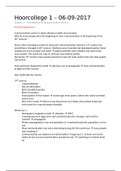
Effective strategy implementation, therefore, requires consideration of all the essential components of the strategy
implementation process as illustrated in Figure and discussed below.
• Change Management (Unit 2) - Strategy is not about conducting business as usual, it is about managing change, and
change initiatives.
• Organisational Learning (Unit 3) - Organisations cannot change if they are unable to learn and adapt
• Culture in strategy implementation (Unit 4) - Change is often about changing the culture of an organisation and for
that reason the role of leadership.
• Adapt to the selected Strategy (Unit 5) - The organisational structure of the organisation has to adapt to the selected
strategy.
• Strategy deployment (Unit 6) - Strategy deployment is the process of managing the strategy implementation process
and the strategic initiatives that form a vital part of it through programmes and projects.
• Strategic control and performance management frameworks (Unit 7) - Managers need to ensure that appropriate
strategy review, evaluation and control mechanisms.
The four broad approaches to or perspectives on
strategy implementation are:
1. Organisational architecture. This perspective
views the organisation as an interrelated set of
sub-systems, which must all be aligned, in
balance and consistent if a strategy is to be
implemented successfully.
2. Organisational Change - there is a perspective
that strategy implementation is about
managing planned change.
3. Strategy deployment - Strategy
implementation can be viewed as a process of
that collectively contribute towards the
achievement of strategic objectives.
4. The learning organisation - Strategy
implementation as organisational adaptation
suggests that organisations learn and adapt
organically rather than as part of a formal
process.
H.Crassas – 2015 – MNG3702 – Strategy Implementation & Control Page 1
,1.4 TRANSLATING LONG-TERM OBJECTIVES INTO ANNUAL OBJECTIVES
Strategy has both long-term and short-term implications.
• Long-term objectives are attained by achieving successive, year-on-year short-term objectives.
• Annual objectives are derived from long-term objectives and cascaded down to middle or functional management
levels, where action plans are implemented in order to achieve such objectives in the respective divisions or functional
departments (finance, R&D, marketing, operations, human resources and purchasing).
Short-term objectives are defined as “measurable outcomes achievable or intended to be achieved in one year or less”
Formulating short-term objectives aid strategy implementation in at least three ways:
1. Operationalises long-term objectives, i.e. makes strategy part of the day-to-day jobs of everyone.
2. Motivational force and a means of avoiding conflict and disagreement.
3. Standards for measuring progress and outcomes, providing opportunity for timeous corrective action where needed
and to ensure that strategy implementation stays on track.
Short-term objectives in particular should comply with the SMART requirements, i.e. specific, measurable, achievable, realistic
and timely.
1.5 FUNCTIONAL STRATEGIES AND TACTICS IN STRATEGY IMPLEMENTATION
Functional strategies or tactics are key routine activities that need to be executed in each of an organisation’s functional
Areas, defined as follows: “Detailed statements of the ‘means’ or activities that will be used by an organisation to achieve
short-term objectives and establish competitive advantage”
We must draw a clear distinction between business strategies and functional strategies or tactics to appreciate the importance
for effective strategy implementation.
Functional strategies or tactics differ from business strategies with regard to the following three dimensions:
1. Time horizon - strategies are based on a vision and mission, strategic intent and long-term objectives that extend a
number of years. Functional strategies have to achieve objectives in the immediate future through short-term action
plans because they:
a. focus the attention of functional managers on what is critical and needs to be accomplished to ensure
successful strategy implementation, and
b. allow functional managers to adjust to changing conditions.
2. Specificity - Specific strategies or tactics and the related action plans for each functional area identify how managers in
each of these areas can accomplish their tasks in the short term
3. Participants – Business strategies are developed by top management in conjunction with managers at all the
organisational levels, but remain the ultimate responsibility and accountability of top management. Functional
strategies are generally delegated by top management to managers at the functional levels.
1.6 ORGANISATIONAL CULTURE AND LEADERSHIP IN STRATEGY IMPLEMENTATION
1.6.2 ORGANISATIONAL CULTURE
Every organisation has its own unique culture that influences the behavior of individuals. Strategic leaders need to accept that
they act as primary transmitters of and shape organisational culture. It is defined as:
“a pattern of shared basic assumptions learned by a group as it solved its problems of external adaptation and
internal integration, which has worked well enough to be considered as valid and, therefore, to be taught to new
members as the correct way to perceive, think and feel in relation to those problems”.
High satisfaction levels make a significant contribution to exceptional employee performance and increased profitability.
Conflict in terms of beliefs, values and assumptions between individuals and the organisation has a negative impact which in
turn has an adverse effect on organizational performance and profitability.
Organisational culture serves important functions in an organisation that include serving
1. The vision and strategy of the organisation
2. The means through which to attain strategic objectives
3. An individual’s role orientation
4. Quality assurance
5. Common language and effective communication
6. The means for corrective actions and interventions.
H.Crassas – 2015 – MNG3702 – Strategy Implementation & Control Page 2
,1.6.3 STRATEGIC LEADERSHIP
Strategic leadership and organisational culture are closely aligned and could significantly enhance factors that accommodate
change and therefore strategy implementation. Leaders play a critical role in ensuring that their organisations pre-emptively
and successfully adapt to dynamic and changing environments. It is top-level executives who are responsible for the success
and sustainability of the organisation. Ultimately leadership is about influencing the behaviour of other people.
To be successful, top-level executives need to demonstrate strategic leadership, they must
• Be able to think strategically
• They need to be emotionally intelligent
• Have a range of behaviours at their disposal
• Have the wisdom to apply the right combination of behaviours at the right time
• Possess the ability to apply both transactional and transformational leadership.
These competencies are prerequisites for executives to perform their strategic leadership roles effectively by, among others;
• Setting organisational direction
• Driving the strategy
• Staffing the organisation
• Building and using organisational competencies
• Creating a supportive organisational culture
• Ensuring alignment between structure and strategy
• Leading and managing change
1.7 ORGANISATIONAL STRUCTURE AND STRATEGY IMPLEMENTATION
Strategy implementation involves the use of organisational design, which is the process of deciding how an organisation should
create, use and combine organisational structure, control systems and organisational culture to pursue its business model and
long-term objectives. It can be defined as
“the means through which a company assigns employees to specific tasks and roles and specifies how these tasks
and roles are linked together to increase efficiency, quality, innovation and responsiveness to customers − the
distinctive competencies that build competitive advantage”.
The purpose of organisational structure is to coordinate and integrate the efforts of employees at all levels − corporate,
business and functional – and across an organisation’s functions and business units so that all levels will work together in a way
that allows the organisation to achieve its long-term objectives.
According to conventional wisdom, the choice of strategy plays a critical role in informing the nature of organisational
structure, which basically reflects the “structure follows strategy” approach. Many modern strategists contend that strategy
and structure are interlinked; and it may not be desirable for an organisation to develop its structure after it has developed its
strategy, since the relationship is much more complex.
Here we briefly outline the following structures traditionally adopted by organisations, depending on their specific
requirements:
• The simple organisational structure - usually includes an owner and a few employees, in which management tasks,
responsibilities and communication are highly informal.
• Functional organisation structure - In slightly larger organisations it becomes necessary to have different people
handling different tasks. Functional groups which are more formal and require formal planning, organisation,
coordination and control.
• Divisional structures − occur when an organisation diversifies its product or service lines, and serves a number of
geographic areas and heterogeneous customer groups, resulting in functional structures becoming inadequate. It is
clear that planning, organisation, coordination and control for divisional structures pose greater managerial challenges.
Where divisions become more autonomous, they are often referred to as strategic business units (SBUs).
• Matrix organisational structures - These are characterised by dual channels of authority, performance responsibility,
evaluation and control, and are largely adopted by large, project-oriented organisations. Functional and staff personnel
are assigned to both a functional area and a project manager. While easy to design, matrix organizational structures are
difficult to implement and manage owing to the potential for conflict.
H.Crassas – 2015 – MNG3702 – Strategy Implementation & Control Page 3
, 1.8 POLICIES, SYSTEMS AND PROCEDURES IN STRATEGY IMPLEMENTATION
Policies are broadly defined as
“specific guidelines, methods, procedures, rules, forms and administrative practices established to support and
encourage work toward stated goals”
Policies are directives designed to guide the thinking, decisions and actions of managers and their subordinates in
implementing an organisation’s strategy.
Policies are characterised by setting boundaries, constraints and limits on all kinds of administrative actions. They clarify what
can and cannot be done in pursuit of an organisation’s objectives, simplify decision-making, and promote delegation of decision
making to appropriate managerial levels.
An organisation’s policies can either assist or block good strategy implementation. New strategies imply change, and for
effective implementation, managers should review existing policies and procedures and, where necessary, formulate new
policies and procedures that will unambiguously guide the behaviour of employees in the direction of effective implementation
and operational excellence.
1.9 RESOURCES AND CAPABILITIES IN STRATEGY IMPLEMENTATION
An organisation’s strategy will require either to exploit existing capabilities, or to explore and develop new capabilities, or to do
both. A new strategy, and even a change in an existing strategy, will require additional resources and capabilities.
Planning and budgeting for additional resources and capabilities must occur early in or concurrently with the strategy
formulation process.
1.10 THE IMPORTANCE OF STRATEGIC CONTROL
Strategic control allows management to monitor and evaluate whether their strategy is performing as intended, whether it
needs to be improved and, if so, how it can be improved. Strategic control is defined as
“management efforts to track a strategy as it is being implemented, detect problems or changes in its underlying
premises, and make necessary adjustments”
Owing to the long-term implications of strategy, its timely and on-going monitoring, evaluation and control are of critical
importance in alerting management to actual or potential problems and ensuring that stated objectives are achieved. However,
strategy evaluation and control must have both a long-term and a short-term focus.
An effective strategic control process involves the following four steps:
1. Establishing standards and targets
2. Creating measuring and monitoring systems
3. Comparing actual performance against targets
4. Evaluating results and taking corrective action where necessary.
For effective strategic control, all aspects of the strategic management process need to be evaluated. These include
assumptions regarding mission; long-term objectives; the outcomes of internal and external analyses that may call for review;
changing environmental conditions as well as changing internal conditions regarding the organisation’s strengths and
weaknesses.
1.11 THE REASONS FOR IMPLEMENTATION FAILURE
Successful strategy implementation can be defined as implementation that;
1. Achieves the desired outcomes (strategic objectives)
2. Completes all strategic initiatives successfully
3. Is acceptable to all stakeholders
Implementation failure accordingly means that
• A new strategy was formulated but was not implemented
• Or the implementation was incomplete
• Strategic objectives were not attained
• The implementation was unacceptable.
H.Crassas – 2015 – MNG3702 – Strategy Implementation & Control Page 4