Traumatic Brain Injury (Answered) A+ Guarantee
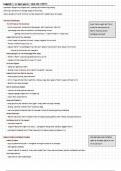
Traumatic Brain Injury (Answered) A+ Guarantee Define traumatic brain injury Disruption of normal brain function caused by external force to the head or body List the causes of traumatic brain injury 1. Motor vehicle accidents 2. Unintentional falls 3. Striking or struck by an object 4. Suicide 5. Assault Describe the characteristics of an open brain injury 1. Caused from penetration into the brain (e.g.; knife; bullet) 2. Damage more limited to area that comes in contact with penetrating object 3. Higher risk of infection Define closed brain injury 1. Injury to head in which brain is damaged, but the skull and meninges remain intact 2. Rapid acceleration/deceleration Define coup lesion Contusion on same side of brain as an impact Define countercoup Contusion on opposite side of brain as an impact Describe diffuse axonal injury 1. Shearing or twisting of axons in white matter areas of brain 2. May cause widespread damage resulting in moderate to severe TBI 3. Often not seen on initial MRI or CT scan Define epidural hematoma Blood collects between dura mater and skull Define subdural hematoma Blood collects between dura mater and arachnoid mater Describe blast injury 1. Blast pressure damages the brain - Direct pressure wave goes through brain tissue - Oscillation of pressure within brain blood vessels - Elevation in CSF pressure 2. Head may be struck by (or penetrated by) flying objects 3. Individual may strike head when propelled by blast force List secondary injury results from biochemical, cellular, and molecular events after TBI 1. Neuronal injury causes inflammatory response and free-radical release 2. Hypoxia 3. cerebral edema 4. Elevated intracranial pressure State normal and abnormal intracranial pressure values 1. More than 20 mmHg 2. Normal is 5-10 mmHg List symptoms of elevated intracranial pressure 1. Decreased responsiveness 2. Severe headache 3. Vomiting 4. Irritability 5. Swelling of optic nerve 6. Increased BP/decreased HR Define heterotopic ossification Abnormal bone formation in soft tissues surrounding joints List symptoms of heterotopic ossification 1. Loss of motion 2. Pain with joint motion 3. Localize swelling 4. Redness List common joints effected by heterotopic ossification 1. Hips (most common after TBI) 2. Knees 3. Shoulder 4. Elbows Define Paroxysmal Sympathetic Hyperactivity (PSH) Disconnection between parasympathetic and sympathetic systems that results in excessive sympathetic system activation List the symptoms of Paroxysmal Sympathetic Hyperactivity 1. Tachycardia 2. Hypertension 3. Tachypnea 4. Hyperthermia 5. Diaphoresis 6. Agitation 7. Decerebrate posturing Describe cerebral spinal fluid leak 1. Clear drainage from nose or ear 2. Severe headache 3. Changes in vision or hearing 4. Decline in function List triggers of seizures 1. Stress 2. Poor nutrition 3. Electrolyte imbalance 4. Missed medications 5. Flickering lights 6. Infection 7. Lack of sleep Interventions with patients at risk for seizure 1. Avoid fast spinning or sudden acceleration/deceleration activities 2. Response to seizure - Transfer to bed or floor - Monitory vital signs - Notify medical staff - Patients often drowsy or sleep after seizure Glasgow coma scale (GSC) Classifies severity of injury based on individual's level of responsiveness Post-traumatic amnesia (PTA) Length of time between the injury and when patient is able to consistently remember ongoing events Characteristics of mild TBI/concussion 1. Loss of consciousness less than 30 minutes 2. Alteration of consciousness (less awake, alert, or able to understand or react than normal) is brief 2. PTA less than 1 day GCS: 13-15 List the symptoms of mild TBI/concussion 1. Dizziness 2. Disorientation 3. Blurred vision 4. Difficulty concentrating 5. Alterations in sleep patterns 6. Nausea
Written for
- Institution
- Traumatic Brain Injury\\
- Course
- Traumatic Brain Injury\\
Document information
- Uploaded on
- February 15, 2024
- Number of pages
- 11
- Written in
- 2023/2024
- Type
- Exam (elaborations)
- Contains
- Questions & answers
Subjects
-
traumatic brain injury answered a guarantee d