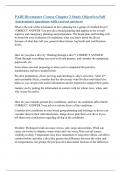
High-Risk Neonatal Nursing Care Chapter 17 with Verified Solutions
High-Risk Neonatal Nursing Care Chapter 17 with Verified Solutions 1. A neonate is born at 33 weeks' gestation with a birth weight of 2400 grams. This neonate would be classified as: a. Low birth weight b. Very low birth weight c. Extremely low birth weight d. Very premature ANS: a a. Neonates with a birth weight of less than 2500 grams but greater than 1500 grams are classified as low birth weight. b. Neonates with birth weight less than 1500 grams but greater than 1000 grams are classified as very low birth weight. c. Neonates with birth weight less than 1000 grams are classified as extremely low birth weight. d. Neonates born less than 32 weeks' gestation are classified as very premature. 2. A nurse assesses that a 3-day-old neonate who was born at 34 weeks' gestation has abdominal distention and vomiting. These assessment findings are most likely related to: a. Respiratory Distress Syndrome (RDS) b. Bronchopulmonary Dysplasia (BPD) c. Periventricular Hemorrhage (PVH) d. Necrotizing Enterocolitis (NEC) ANS: d a. Assessment findings for RDS include tachypnea, intercostal retractions, respiratory grunting, and nasal flaring. b. Assessment findings for BPD include chest retractions; audible wheezing, rales, and rhonchi; hypoxia; and bronchospasm. c. Assessment findings for PVH include bradycardia, hypotonia, full and/or tense anterior fontanel, and hyperglycemia. d. Assessment findings related to NEC include abdominal distention, bloody stools, abdominal distention, vomiting, and increased gastric residual. These signs and symptoms are related to the premature neonate's inability to fully digest stomach contents and limitation in absorptive function. 3. A full-term neonate who is 30 hours old has a bilirubin level of 10 mg/dL. The neonate has a yellowish tint to the skin of the face. The mother is breastfeeding her newborn. The nurse caring for this neonate would anticipate which of the following interventions? a. Phototherapy b. Feeding neonate every 2 to 3 hours c. Switch from breastfeeding to bottle feeding d. Assess red blood cell count ANS: b
Written for
- Institution
- High-Risk Neonatal Nursing
- Module
- High-Risk Neonatal Nursing
Document information
- Uploaded on
- February 29, 2024
- Number of pages
- 24
- Written in
- 2023/2024
- Type
- Exam (elaborations)
- Contains
- Questions & answers
Subjects
-
high risk neonatal nursing care chapter 17 with ve

Also available in package deal