NURS 611 / NURS611 Exam 3 (Latest 2024 / 2025): Advanced Pathophysiology Quiz Bank | Questions and Verified Answers with Rationales | 100% Correct | Grade A - Maryville
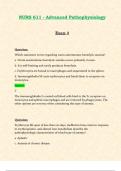
Exam 3: NURS611 / NURS 611 (Latest 2024 / 2025) Advanced Pathophysiology Quiz Bank | Questions and Verified Answers with Rationales | 100% Correct | Grade A - Maryville Q: Which statement is true regarding warm autoimmune hemolytic anemia? a. Warm autoimmune hemolytic anemia occurs primarily in men. b. It is self-limiting and rarely produces hemolysis. c. Erythrocytes are bound to macrophages and sequestered in the spleen. d. Immunoglobulin M coats erythrocytes and binds them to receptors on monocytes. Answer: C The immunoglobulin G-coated red blood cells bind to the Fc receptors on monocytes and splenic macrophages and are removed by phagocytosis. The other options are not true when considering this type of anemia. Q: When considering hemolytic anemia, which statement is true regarding the occurrence of jaundice? a. Erythrocytes are destroyed in the spleen. b. Heme destruction exceeds the liver's ability to conjugate and excrete bilirubin. c. The patient has elevations in aspartate transaminase (AST) and alanine transaminase (ALT). d. The erythrocytes are coated with an immunoglobulin. Answer: B Jaundice (icterus) is present when heme destruction exceeds the liver's ability to conjugate and excrete bilirubin. This selection is the only option that accurately describes the process that affects the occurrence of hemolytic anemia-related jaundice. Q: Erythrocyte life span of less than 120 days, ineffective bone marrow response to erythropoietin, and altered iron metabolism describe the pathophysiologic characteristics of which type of anemia? a. Aplastic c. Anemia of chronic disease b. Sideroblastic d. Iron deficiency Answer: C Anemia of chronic disease results from a combination of (1) decreased erythrocyte life span, (2) suppressed production of erythropoietin, (3) ineffective bone marrow erythroid progenitor response to erythropoietin, and (4) altered iron metabolism and iron sequestration in macrophages. This result is not true of the other options. Q: What is the primary cause of the symptoms of polycythemia vera? a. Decreased erythrocyte count c. Increased blood viscosity b. Destruction of erythrocytes d. Neurologic involvement Answer: C As polycythemia vera progresses, many of the symptoms are related to the increased blood cellularity and viscosity. No other option is the primary cause of the symptoms of polycythemia vera. Q: Treatment for polycythemia vera involves which of the following? a. Therapeutic phlebotomy and radioactive phosphorus b. Restoration of blood volume by plasma expanders c. Administration of cyanocobalamin d. Blood transfusions Answer: A In low-risk individuals, the recommended therapy is phlebotomy and low-dose aspirin, whereas radioactive phosphorus has been used to suppress erythropoiesis. The other options are not considered in the treatment of polycythemia vera. Q: Considering iron replacement therapy prescribed for iron deficiency anemia, who is likely to require long-term daily maintenance dosage? a. A woman who has not yet experienced menopause b. A teenager who is involved in strenuous athletics c. A middle-aged man who smokes two packs of cigarettes a day d. An older person demonstrating signs of dementia Answer: A Menstruating women may need daily oral iron replacement therapy (325 mg/day) until menopause as a result of their menstrual blood loss. None of the other options are a chronic source of blood loss. Q: Which statement is true regarding the physical manifestations of vitamin B12 deficiency anemia? a. Vitamin B12 deficiency anemia seldom results in neurologic symptoms. b. The chances of a cure are good with appropriate treatment. c. The condition is reversible in 75% of the cases. d. Symptoms are a result of demyelination. Answer: D The neurologic manifestations characteristic of vitamin B12 deficiency anemia result from nerve demyelination that may produce neuronal death. These complications pose a serious threat because they are not reversible, even with appropriate treatment. Q: A 2000 ml blood loss will produce which assessment finding? (Select all that apply. ) a. Air hunger b. Normal blood pressure in the supine position c. Rapid thready pulse d. Cold clammy skin e. lactic acidosis Answer: A, C, D With a 2000 ml loss of blood, central venous pressure, cardiac output, and arterial blood pressure are below normal, even when at rest and in the supine position. The person commonly has air hunger; a rapid, thready pulse; and cold, clammy skin. With a 1500 ml loss of blood, supine
Written for
Document information
- Uploaded on
- March 11, 2024
- Number of pages
- 196
- Written in
- 2023/2024
- Type
- Exam (elaborations)
- Contains
- Questions & answers
Subjects
- nurs611
- exam 3
- maryville university
- advanced pathophysiology
- latest version 2024
- nurs 611 exam 3
- actual exam
-
test manual
-
test success
-
study aid
-
revision notes
-
exam prep
-
correct questions and answers
-
s

Also available in package deal