NURS 230 Exam 2 Respiratory Summary for Nursing students.
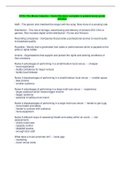
Physiology of the respiratory system - pulmonary ventilation - respiration - perfusion - problem with any of these processes -- hypoxia (inadequate O2 available to cells) pulmonary ventilation movement of air in and out of lungs respiration gas exchange between air in alveoli and blood in capillaries perfusion process of oxygenated capillary blood passing through body tissues oxygenation requirements - patent airway - adequate breathing - effective gas exchange - adequate tissue perfusion - sufficient level of hemoglobin assessing oxygenation: subjective - usual breathing pattern - medications - heart or lung problems - recent changes - lifestyle - cough, sputum - pain, fever - shortness of breath - fatigue assessing oxygenation: objective - vital signs - SpO2 or ABG - color - LOC - lung sounds - heart sounds - extremities hypoxia: early signs - dyspnea - tachypnea - tachycardia - elevated BP - restlessness, anxiety, confusion - pale skin, mucous membranes hypoxia: late signs - bradypnea - bradycardia, cardia dysrhythmias - hypotension - stupor - cyanosis diagnostic test: pulse oximetry - noninvasive - measures the oxyhemoglobin saturation of arterial blood - need to know hbg level: low hgb can have normal oxygen saturation but may not have enough O2 for body's needs - monitors respiratory functioning, response to O2 therapy - normal range = 95-100%; 90% indicates inadequate tissue oxygenation - low values: first check for technical error diagnostic test: arterial blood gas - determines adequacy of oxygenation, ventilation and perfusion - measures arterial pH, PCO2, PO2, HCO3 - most commonly drawn from radial artery - must be placed on ice and immediately sent to lab - apply pressure for 5-10 minutes and watch for bleeding - most accurate way to assess oxygenation diagnostic test: sputum sample - if possible, collect before breakfast - take a deep breath and expel air with deep cough - expectorate into sterile container - for any kind of specimen, label and send to lab in biohazard bag diagnostic test: nasal and throat cultures - wear gloves - use sterile swab: * throat: depress tongue and swab back of throat * nose: insert swab straight back diagnostic test: bronchoscopy examines larynx, trachea and bronchi diagnostic test: laryngoscopy examines larynx and throat - requires informed consent - NPO for 6-8 hours prior to test - local anesthetic is used - NPO until gag reflex returns - VS per protocol; monitor respiratory functioning - saline gargles/lozenges for throat irritation diagnostic test: chest X-ray - radiographic exam of the lungs - helps diagnose pulmonary diseases, monitor disease change - pt should hold deep breath for x-ray diagnostic test: computed tomography (CT/CAT scan) multiple x-rays produce 3D image
Written for
- Institution
- NURS 230
- Course
- NURS 230
Document information
- Uploaded on
- April 15, 2024
- Number of pages
- 8
- Written in
- 2023/2024
- Type
- SUMMARY
Subjects
-
nurs 230 exam 2 respiratory summary for nursing s

Document also available in package deal