Michigan Mechanic Certification- HVAC Latest Update Graded A+
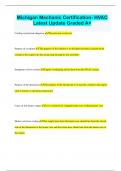
Michigan Mechanic Certification- HVAC Latest Update Graded A+ Cooling system leak diagnosis Pressure test or dye test Purpose of a radiator The purpose of the radiator is to dissipate heat that is picked up by coolant in the engine into the air passing through its fins and tubes Symptoms of low coolant Engine overheating and no heat from the HVAC system Purpose of the thermostat The purpose of the thermostat is to trap the coolant in the engine until it reaches it operating temperature Cause of low heater output Low coolant level, clogged heater core, leaking heater core Heater core hose routing The supply hose from the heater core should run from the closed side of the thermostat to the heater core and the return hose should run from the heater core to the engine Heater core operation The blower motor blows air through the heater core fins and is warmed through the principle of conduction Heater control valve purpose This valve controls the flow of the coolant to the heater core to control the temperature of the air desired by the operator Radiator cap testing To test pressure test it using an adapter and a coolant pressure tester and the value marked on the pressure cap Reciever drier purpose May contain a filter or strainer to catch and trap foreign particles and dirt Reciever drier location Located on the high side of the system between the condenser and the evaporator Ambient temperature switch purpose Monitors temperature by increasing or decreasing with resistance as temperature changes Symptoms of a failing ambient temperature switch A bad temperature switch could cause an inoperative clutch or input problems Orifice expansion tube operation Has a valve that can vary the size of the opening to allow more or less liquid refrigerant through to the evaporator Orifice expansion tube purpose High pressure liquid enters, low pressure liquid leaves Purpose of a compressor Low pressure
Written for
- Institution
- Michigan Mechanic Certification- HVAC
- Course
- Michigan Mechanic Certification- HVAC
Document information
- Uploaded on
- April 24, 2024
- Number of pages
- 7
- Written in
- 2023/2024
- Type
- Exam (elaborations)
- Contains
- Questions & answers
Subjects
-
michigan mechanic certification hvac latest upda

Also available in package deal