The Insolvency Process
Tuesday, 19 March 2024 4:25 am
Corporate Insolvency
- If the Certificate of Incorporation is the birth certificate of the company, then
winding up (liquidation) is the death;
- The ending of a company can be at the hands of others (compulsory winding up, via
the courts) or by its' own hand (voluntary by passing a resolution)
- The company may be solvent or insolvent at time of death
- Main legislation is the Insolvency Act 1986 (IA89)
- The only way a company comes to an end is when it is wound up/liquidated
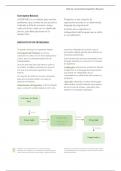
Is the company in financial distress? (inability
to pay debts and/or liabilities >assets)
Administration
or CVA
No Yes
Is underlying Yes
Members
business
voluntary Failure
winding up potentially
viable?
No Creditors Voluntary
Liquidation or
Quick Action is necessary. If directors trade while Compulsory
company is insolvent then fines and penalties may Liquidation
result
- Cash flow test (can the company pay its bills) and Balance Sheet test (are liabilities >
assets) indicate insolvency
- Directors must not take any further credit
- Directors must be careful when paying bills -could be seen as preferential treatment
- Assets must be safeguarded and not take out of the business
- Failure to comply may make directors personally liable
Members' Voluntary Winding Up - S84 IA86
- Occurs when a company is solvent by:
○ Expiration of time/ happening of prescribed event
, - Assets must be safeguarded and not take out of the business
- Failure to comply may make directors personally liable
Members' Voluntary Winding Up - S84 IA86
- Occurs when a company is solvent by:
○ Expiration of time/ happening of prescribed event
- Procedure
○ Members pass a special resolution (>75%) that the company be wound up
○ There must be a declaration of solvency by the directors
○ Statement of assets and liabilities must be prepared by directors
○ Declaration and statement must be filed with registrar within 15 days
○ The members appoint a liquidator to wind up the company and dispute the
assets
- Why?
○ No longer a purpose
§ Regulatory changes (law changes)
§ Set up for specific event/time
○ Tax advantages vs taking income (capital vs income; entrepreneur relief)
○ Shareholders wish to split assets (distribute in specie)
○ Directors retiring or moving overseas
○ Reorganization of subsidiary or group
Summary
1. Commences on passing of appropriate resolution (75%)
2. Directors make declaration of solvency stating company is able to repay debts
within 12 months
3. Shareholders appoint a liquidator
4. Liquidator realizes the assets and distributes proceeds
5. Liquidator presents report to a final meeting of shareholders
6. Liquidator informs registrar and company dissolved 3 months later
Alternatives to Liquidation
- Where companies have run into financial difficulties, liquidation should be a final
resort
○ A creditor's voluntary winding up is likely to result in some creditors being
repaid, but not all
- There are two alternatives to a liquidation; their purpose is to help a company
recover from its difficulties, and thus result in:
1. Administration
2. Corporate Voluntary Arrangement
Administration
- A process by which an attempt is made to rescue an insolvent company as a going
concern
- The person in charge of this process is called an administrator
- An administrator must be a qualified, Licenses Insolvency Practitioner
Tuesday, 19 March 2024 4:25 am
Corporate Insolvency
- If the Certificate of Incorporation is the birth certificate of the company, then
winding up (liquidation) is the death;
- The ending of a company can be at the hands of others (compulsory winding up, via
the courts) or by its' own hand (voluntary by passing a resolution)
- The company may be solvent or insolvent at time of death
- Main legislation is the Insolvency Act 1986 (IA89)
- The only way a company comes to an end is when it is wound up/liquidated
Is the company in financial distress? (inability
to pay debts and/or liabilities >assets)
Administration
or CVA
No Yes
Is underlying Yes
Members
business
voluntary Failure
winding up potentially
viable?
No Creditors Voluntary
Liquidation or
Quick Action is necessary. If directors trade while Compulsory
company is insolvent then fines and penalties may Liquidation
result
- Cash flow test (can the company pay its bills) and Balance Sheet test (are liabilities >
assets) indicate insolvency
- Directors must not take any further credit
- Directors must be careful when paying bills -could be seen as preferential treatment
- Assets must be safeguarded and not take out of the business
- Failure to comply may make directors personally liable
Members' Voluntary Winding Up - S84 IA86
- Occurs when a company is solvent by:
○ Expiration of time/ happening of prescribed event
, - Assets must be safeguarded and not take out of the business
- Failure to comply may make directors personally liable
Members' Voluntary Winding Up - S84 IA86
- Occurs when a company is solvent by:
○ Expiration of time/ happening of prescribed event
- Procedure
○ Members pass a special resolution (>75%) that the company be wound up
○ There must be a declaration of solvency by the directors
○ Statement of assets and liabilities must be prepared by directors
○ Declaration and statement must be filed with registrar within 15 days
○ The members appoint a liquidator to wind up the company and dispute the
assets
- Why?
○ No longer a purpose
§ Regulatory changes (law changes)
§ Set up for specific event/time
○ Tax advantages vs taking income (capital vs income; entrepreneur relief)
○ Shareholders wish to split assets (distribute in specie)
○ Directors retiring or moving overseas
○ Reorganization of subsidiary or group
Summary
1. Commences on passing of appropriate resolution (75%)
2. Directors make declaration of solvency stating company is able to repay debts
within 12 months
3. Shareholders appoint a liquidator
4. Liquidator realizes the assets and distributes proceeds
5. Liquidator presents report to a final meeting of shareholders
6. Liquidator informs registrar and company dissolved 3 months later
Alternatives to Liquidation
- Where companies have run into financial difficulties, liquidation should be a final
resort
○ A creditor's voluntary winding up is likely to result in some creditors being
repaid, but not all
- There are two alternatives to a liquidation; their purpose is to help a company
recover from its difficulties, and thus result in:
1. Administration
2. Corporate Voluntary Arrangement
Administration
- A process by which an attempt is made to rescue an insolvent company as a going
concern
- The person in charge of this process is called an administrator
- An administrator must be a qualified, Licenses Insolvency Practitioner