-
-
item 10f33 zyxwvutsrqponmlkjihgfedcbaZYXWVUTSRQPONMLKJIHGFEDCBA
Merk
< g% $3 D
zyxwvutsrqponmlkjihgfedcbaZYX
p zyxwvutsrqponmlkjihgfedcbaZYXWVUTSRQPONMLKJIHGFEDCBA
r
uJ i] E3 tu e
zyxwvutsrqponmlkjihgfedcbaZYXW
k l" -7 •••
- Question Id: 16052 ar Previous Next Full Screen Tutorial Lab Values Notes Calculator Reverse Color Text Zoom Settings
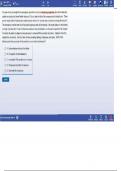
A 5-year-old boy is brought to the emergency department due to accidental Free VersionHis mother states the
drug ingestion.
PDF Compressor
patient was playing by himself earlier today and 2 hours later she found him unresponsive in the bathroom. There
was an empty bottle of hydrocodone-acetaminophen next to him, but she does not know how many pills were in it.
The emergency medical team found the patient stuporous and with bradypnea. His mental status and respirations
promptly improved after 1 dose of intravenous naloxone was administered, and he was transported to the hospital.
On arrival, the patient is sleepy but arouses easily to voice and follows simple instructions. Vital signs, including
respirations, are normal. One hour later, he has worsening lethargy, bradypnea, and miosis. Which of the
following most likely accounts for this patient's current clinical deterioration?
O A. Acetaminophen-induced liver failure
O B. Coingestion of benzodiazepine
0 C. Incomplete CNS penetrance of naloxone
0 D. Partial agonistic effect of naloxone
O E. Short half-life of naloxone
IE
a mm·er»coos 5 • •
[
My Notebook
9%
Flashcards
[
Feedback
@
Suspend
O
End Block
,-
-
10f33 p Merk D
item zyxwvutsrqponmlkjihgfedcbaZYXWVUTSRQPONMLKJIHGFEDCBA
zyxwvutsrqponmlkjihgfedcbaZYXWVUTSRQPONMLKJIHGFEDCBA
r
=
i] E3 tu g% zyxwvu
$3
u zyxwvutsrqponmlkjihgfedcbaZYXWVUTSRQPONMLKJIHGFEDCBA
k "I C2
e
-
VY
Question Id: 16052 ar Previous
7
Next
•••
Full Screen Tutorial Lab Values Notes Calculator Reverse Color Text Zoom Settings
A 5-year-old boy is brought to the emergency department due to accidental Free VersionHis mother states the
drug ingestion.
PDF Compressor
patient was playing by himself earlier today and 2 hours later she found him unresponsive in the bathroom. There
was an empty bottle of hydrocodone-acetaminophen next to him, but she does not know how many pills were in it.
The emergency medical team found the patient stuporous and with bradypnea. His mental status and respirations
promptly improved after 1 dose of intravenous naloxone was administered, and he was transported to the hospital.
On arrival, the patient is sleepy but arouses easily to voice and follows simple instructions. Vital signs, including
respirations, are normal. One hour later, he has worsening lethargy, bradypnea, and miosis. Which of the
following most likely accounts for this patient's current clinical deterioration?
O A. Acetaminophen-induced liver failure (9%)
x @ B. Coingestion of benzodiazepine (1%)
0 C. Incomplete CNS penetrance of naloxone (3%)
0 D. Partial agonistic effect of naloxone (6%)
vO E. Short half-life of naloxone (78%)
Incorrect
Correct answer I 1,1 78% (,24 secs zyxwvutsrqponmlkjihgfedcbaZYXWVUTSRQPONMLKJIHGFEDCBA
2023
L' Answered correctly U/ nme spent ii] version
E
Explanation
Clinical features of acute opioid intoxication
• Substance abuse
••••
Block Time Elapsed: 00:00:24 E
My Notebook
9
Flashcards
0
Feedback
@
Suspend
O
End Block
,-
-
10f33 p Merk D
item zyxwvutsrqponmlkjihgfedcbaZYXWVUTSRQPONMLKJIHGFEDCBA
zyxwvutsrqponmlkjihgfedcbaZYXWVUTSRQPONMLKJIHGFEDCBA
r i] = E3 tu g% zyxwvu
$3
u zyxwvutsrqponmlkjihgfedcbaZYXWVUTSRQPONMLKJIHGFEDCBA
k "I C2
e
-
VY
Question Id: 16052 ar
7
Previous
•••
Next Full Screen Tutorial Lab Values Notes Calculator Reverse Color Text Zoom Settings
PDF Compressor Free Version
Clinical features of acute opioid intoxication
• Substance abuse
• Chronic opioid use
Risk factors • Hospitalized patients (especially
postoperative)
• Hepatic or renal insufficiency
• Somnolence, AMS
• Pinpoint pupils (miosis)
Clinical • Shallow breathing & ! respiratory rate
findings • Bradycardia, hypothermia, [ bowel
sounds
• Respiratory acidosis on ABG
• Naloxone (may need repeated dosings)
• Airway management & ventilation
Management
• Exclude other AMS causes (eg,
hypoglycemia)
ABG = arterial blood gas; AMS = altered mental status.
This young boy, who was found with an empty bottle of hydrocodone-acetaminophen, has evidence of an acute
opioid overdose. Opioids (eg, hydrocodone, methadone) exert their analgesic effect via multiple opioid receptors
(eg, delta, kappa, mu) in the central and peripheral nervous systems. Typical features of overdose include
decreased level of consciousness, reduced respiratory rate, decreased bowel sounds, and miosis.
Naloxone, a short-acting opioid antagonist, is the primary treatment for acute opioid toxicity and rapidly reverses
a mm·er»coo.oa 5 https://t.me/USMLEWorldStep1
• •
[
My Notebook
9%
Flashcards
[
Feedback
@
Suspend
O
End Block
,-
-
10f33 p Merk D
item zyxwvutsrqponmlkjihgfedcbaZYXWVUTSRQPONMLKJIHGFEDCBA r
=
zyxwvutsrqponmlkjihgfedcbaZYXWVUTSRQPONMLKJIHGFEDCBA i] E3 tu g% zyxwvu
$3
u zyxwvutsrqponmlkjihgfedcbaZYXWVUTSRQPONMLKJIHGFEDCBA
k "I C2
e
-
VY
Question Id: 16052 ar Previous Next
7 •••
Full Screen Tutorial Lab Values Notes Calculator Reverse Color Text Zoom Settings
This young boy, who was found with an empty bottle of hydrocodone-acetaminophen, has evidence of an acute
PDF Compressor Free Version
opioid overdose. Opioids (eg, hydrocodone, methadone) exert their analgesic effect via multiple opioid receptors
(eg, delta, kappa, mu) in the central and peripheral nervous systems. Typical features of overdose include
decreased level of consciousness, reduced respiratory rate, decreased bowel sounds, and miosis.
Naloxone, a short-acting opioid antagonist, is the primary treatment for acute opioid toxicity and rapidly reverses
respiratory depression. However, it has a short half-life (<1 hr), and most opioids take significantly longer to
metabolize (eg, half-life of hydrocodone is 4-8 hrs). Therefore, patients may develop recurrent symptoms of
opioid toxicity after naloxone is metabolized, and frequent redosing may be necessary.
(Choice A) Acetaminophen poisoning typically causes nausea, vomiting, and malaise in the first 24 hours after
ingestion. Liver failure occurs later, and patients typically have jaundice, tachypnea, and confusion (ie, hepatic
encephalopathy) that may progress to coma. Bradypnea and miosis are more consistent with opioid toxicity.
(Choice B) Although benzodiazepines cause sedation and respiratory depression, miosis does not occur. In
addition, benzodiazepine toxicity is treated with flumazenil, and symptoms would not be expected to improve with
naloxone.
(Choice C) Naloxone has excellent CNS penetrance, and this patient's temporary improvement in respiratory rate
and somnolence suggests adequate CNS effect. Opioid medications that do not cross the CNS (eg, loperamide)
have effects mainly on the gastrointestinal tract and are used to treat diarrhea.
(Choice D) Naloxone is a pure opioid antagonist; it does not have partial agonist activity. Buprenorphine is a
partial opioid agonist used to prevent opioid withdrawal while reducing the risk of opioid intoxication (eg, euphoria,
respiratory depression).
Educational objective:
Naloxone is a short-acting opioid antagonist used for the treatment of opioid overdose (eg, respiratory depression,
decreased level of consciousness, miosis, decreased bowel sounds). Naloxone frequently requires redosing to
.. .%.. ...... ...
a mm·er»coo.oa 5 • •
[
My Notebook
9%
Flashcards
[
Feedback
@
Suspend
O
End Block
-
item 10f33 zyxwvutsrqponmlkjihgfedcbaZYXWVUTSRQPONMLKJIHGFEDCBA
Merk
< g% $3 D
zyxwvutsrqponmlkjihgfedcbaZYX
p zyxwvutsrqponmlkjihgfedcbaZYXWVUTSRQPONMLKJIHGFEDCBA
r
uJ i] E3 tu e
zyxwvutsrqponmlkjihgfedcbaZYXW
k l" -7 •••
- Question Id: 16052 ar Previous Next Full Screen Tutorial Lab Values Notes Calculator Reverse Color Text Zoom Settings
A 5-year-old boy is brought to the emergency department due to accidental Free VersionHis mother states the
drug ingestion.
PDF Compressor
patient was playing by himself earlier today and 2 hours later she found him unresponsive in the bathroom. There
was an empty bottle of hydrocodone-acetaminophen next to him, but she does not know how many pills were in it.
The emergency medical team found the patient stuporous and with bradypnea. His mental status and respirations
promptly improved after 1 dose of intravenous naloxone was administered, and he was transported to the hospital.
On arrival, the patient is sleepy but arouses easily to voice and follows simple instructions. Vital signs, including
respirations, are normal. One hour later, he has worsening lethargy, bradypnea, and miosis. Which of the
following most likely accounts for this patient's current clinical deterioration?
O A. Acetaminophen-induced liver failure
O B. Coingestion of benzodiazepine
0 C. Incomplete CNS penetrance of naloxone
0 D. Partial agonistic effect of naloxone
O E. Short half-life of naloxone
IE
a mm·er»coos 5 • •
[
My Notebook
9%
Flashcards
[
Feedback
@
Suspend
O
End Block
,-
-
10f33 p Merk D
item zyxwvutsrqponmlkjihgfedcbaZYXWVUTSRQPONMLKJIHGFEDCBA
zyxwvutsrqponmlkjihgfedcbaZYXWVUTSRQPONMLKJIHGFEDCBA
r
=
i] E3 tu g% zyxwvu
$3
u zyxwvutsrqponmlkjihgfedcbaZYXWVUTSRQPONMLKJIHGFEDCBA
k "I C2
e
-
VY
Question Id: 16052 ar Previous
7
Next
•••
Full Screen Tutorial Lab Values Notes Calculator Reverse Color Text Zoom Settings
A 5-year-old boy is brought to the emergency department due to accidental Free VersionHis mother states the
drug ingestion.
PDF Compressor
patient was playing by himself earlier today and 2 hours later she found him unresponsive in the bathroom. There
was an empty bottle of hydrocodone-acetaminophen next to him, but she does not know how many pills were in it.
The emergency medical team found the patient stuporous and with bradypnea. His mental status and respirations
promptly improved after 1 dose of intravenous naloxone was administered, and he was transported to the hospital.
On arrival, the patient is sleepy but arouses easily to voice and follows simple instructions. Vital signs, including
respirations, are normal. One hour later, he has worsening lethargy, bradypnea, and miosis. Which of the
following most likely accounts for this patient's current clinical deterioration?
O A. Acetaminophen-induced liver failure (9%)
x @ B. Coingestion of benzodiazepine (1%)
0 C. Incomplete CNS penetrance of naloxone (3%)
0 D. Partial agonistic effect of naloxone (6%)
vO E. Short half-life of naloxone (78%)
Incorrect
Correct answer I 1,1 78% (,24 secs zyxwvutsrqponmlkjihgfedcbaZYXWVUTSRQPONMLKJIHGFEDCBA
2023
L' Answered correctly U/ nme spent ii] version
E
Explanation
Clinical features of acute opioid intoxication
• Substance abuse
••••
Block Time Elapsed: 00:00:24 E
My Notebook
9
Flashcards
0
Feedback
@
Suspend
O
End Block
,-
-
10f33 p Merk D
item zyxwvutsrqponmlkjihgfedcbaZYXWVUTSRQPONMLKJIHGFEDCBA
zyxwvutsrqponmlkjihgfedcbaZYXWVUTSRQPONMLKJIHGFEDCBA
r i] = E3 tu g% zyxwvu
$3
u zyxwvutsrqponmlkjihgfedcbaZYXWVUTSRQPONMLKJIHGFEDCBA
k "I C2
e
-
VY
Question Id: 16052 ar
7
Previous
•••
Next Full Screen Tutorial Lab Values Notes Calculator Reverse Color Text Zoom Settings
PDF Compressor Free Version
Clinical features of acute opioid intoxication
• Substance abuse
• Chronic opioid use
Risk factors • Hospitalized patients (especially
postoperative)
• Hepatic or renal insufficiency
• Somnolence, AMS
• Pinpoint pupils (miosis)
Clinical • Shallow breathing & ! respiratory rate
findings • Bradycardia, hypothermia, [ bowel
sounds
• Respiratory acidosis on ABG
• Naloxone (may need repeated dosings)
• Airway management & ventilation
Management
• Exclude other AMS causes (eg,
hypoglycemia)
ABG = arterial blood gas; AMS = altered mental status.
This young boy, who was found with an empty bottle of hydrocodone-acetaminophen, has evidence of an acute
opioid overdose. Opioids (eg, hydrocodone, methadone) exert their analgesic effect via multiple opioid receptors
(eg, delta, kappa, mu) in the central and peripheral nervous systems. Typical features of overdose include
decreased level of consciousness, reduced respiratory rate, decreased bowel sounds, and miosis.
Naloxone, a short-acting opioid antagonist, is the primary treatment for acute opioid toxicity and rapidly reverses
a mm·er»coo.oa 5 https://t.me/USMLEWorldStep1
• •
[
My Notebook
9%
Flashcards
[
Feedback
@
Suspend
O
End Block
,-
-
10f33 p Merk D
item zyxwvutsrqponmlkjihgfedcbaZYXWVUTSRQPONMLKJIHGFEDCBA r
=
zyxwvutsrqponmlkjihgfedcbaZYXWVUTSRQPONMLKJIHGFEDCBA i] E3 tu g% zyxwvu
$3
u zyxwvutsrqponmlkjihgfedcbaZYXWVUTSRQPONMLKJIHGFEDCBA
k "I C2
e
-
VY
Question Id: 16052 ar Previous Next
7 •••
Full Screen Tutorial Lab Values Notes Calculator Reverse Color Text Zoom Settings
This young boy, who was found with an empty bottle of hydrocodone-acetaminophen, has evidence of an acute
PDF Compressor Free Version
opioid overdose. Opioids (eg, hydrocodone, methadone) exert their analgesic effect via multiple opioid receptors
(eg, delta, kappa, mu) in the central and peripheral nervous systems. Typical features of overdose include
decreased level of consciousness, reduced respiratory rate, decreased bowel sounds, and miosis.
Naloxone, a short-acting opioid antagonist, is the primary treatment for acute opioid toxicity and rapidly reverses
respiratory depression. However, it has a short half-life (<1 hr), and most opioids take significantly longer to
metabolize (eg, half-life of hydrocodone is 4-8 hrs). Therefore, patients may develop recurrent symptoms of
opioid toxicity after naloxone is metabolized, and frequent redosing may be necessary.
(Choice A) Acetaminophen poisoning typically causes nausea, vomiting, and malaise in the first 24 hours after
ingestion. Liver failure occurs later, and patients typically have jaundice, tachypnea, and confusion (ie, hepatic
encephalopathy) that may progress to coma. Bradypnea and miosis are more consistent with opioid toxicity.
(Choice B) Although benzodiazepines cause sedation and respiratory depression, miosis does not occur. In
addition, benzodiazepine toxicity is treated with flumazenil, and symptoms would not be expected to improve with
naloxone.
(Choice C) Naloxone has excellent CNS penetrance, and this patient's temporary improvement in respiratory rate
and somnolence suggests adequate CNS effect. Opioid medications that do not cross the CNS (eg, loperamide)
have effects mainly on the gastrointestinal tract and are used to treat diarrhea.
(Choice D) Naloxone is a pure opioid antagonist; it does not have partial agonist activity. Buprenorphine is a
partial opioid agonist used to prevent opioid withdrawal while reducing the risk of opioid intoxication (eg, euphoria,
respiratory depression).
Educational objective:
Naloxone is a short-acting opioid antagonist used for the treatment of opioid overdose (eg, respiratory depression,
decreased level of consciousness, miosis, decreased bowel sounds). Naloxone frequently requires redosing to
.. .%.. ...... ...
a mm·er»coo.oa 5 • •
[
My Notebook
9%
Flashcards
[
Feedback
@
Suspend
O
End Block