AAMI Microbiology for Embalmers Unit 2 Questions with Complete Solutions
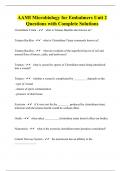
Clostridium Tetani - what is Tetanus Bacillus also known as? Tetanus Bacillus - what is Clostridium Tetani commonly known as? Tetanus Bacillus - what are residents of the superficial layers of soil and normal flora of horses, cattle, and herbivores? Tetanus - what is caused by spores of Clostridium tetani being introduced into a wound? Tetanus - whether a wound is complicated by _________ depends on the: - type of wound - chance of spore contamination - presence of dead tissue Exotoxin - if it were not for the ________ produced by clostridium tetani, infection with the tetanus bacilli would be without affect. Orally - when taken _________, clostridium tetani doesn't affect our bodies. Neurotoxin - what is the exotoxin clostridium tetani produces considered? Central Nervous System - the neurotoxin has an affinity to the _______________. Lockjaw - spasms caused by a neurotoxin near the face and neck cause? Muscles - when the neurotoxin attacks the central nervous system, it is transferred to ___________ by motor nerves and causes muscular spasms. Motor Nerves - when the neurotoxin attacks the central nervous system, it is transferred to muscles by ___________ and causes muscular spasms. Muscular Spasms - when the neurotoxin attacks the central nervous system, it is transferred to muscles by motor nerves and causes ___________. Second - the exotoxin produced by clostridium tetani is _______ in potency to the toxin produced by the organism that causes botulism. True - clostridium tetani itself doesn't invade the body. T/F Lethal - what type of disease is clostridium tetani? True - the toxin that is produced by clostridium tetani is released into and travels throughout the body affecting muscles and eventually causing respiratory paralysis and death. T/F False - there is a lesion with clostridium tetani. T/F Head, Face - in clostridium tetani wounds around the ______ and ______ result in rapid fatality. Noncommunicable - what is the mode of transmission for Clostridium Tetani No - is there immunity for clostridium tetani? Clostridium Tetani - prevention for ____________: - puncture wounds should be widely opened, thoroughly cleaned, and dead tissue removed. - this organism is sensitive to penicillin, but no antibiotic has any effect on the toxin released into the body. - artificially acquired active immunization is accomplished by way of the tetanus toxoid vaccine. Penicillin - what is clostridium tetani sensitive too? Tetanus Toxoid - artificially acquired active immunization from clostridium tetani is accomplished by way of the ___________ vaccine. Clostridium Perfringens - this organism exists as saprophytes in the soil and in the intestinal canal of many animals. Clostridium Perfringens - this organism exists in the spore state in soil. Gas Gangrene - this is a highly fatal disease caused by the contamination of wounds with soil containing the spores of clostridium perfringens. Clostridium Perfringens - an infection happens when soil contaminate with feces gets into a wound. Clostridium Perfringens - aerobes in the wound facilitate the germination of clostridial spores and their vegetative growth by reducing the oxygen in the wound. Exotoxin - in clostridium perfringens the new vegetative organisms in the tissues of the wound especially in the muscles, release an __________ causing the fermentation of the muscle sugar with such vigor that the presence of accumulated gas tears the tissue apart.
Written for
- Institution
- AAMI Microbiology for Embalmers
- Course
- AAMI Microbiology for Embalmers
Document information
- Uploaded on
- June 2, 2024
- Number of pages
- 15
- Written in
- 2023/2024
- Type
- Exam (elaborations)
- Contains
- Questions & answers
Subjects
-
aami microbiology for embalmers unit 2

Also available in package deal