Rossetti – May
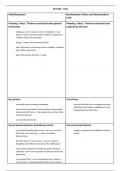
Initial Responses Development of ideas and interpretations
(red)
Meaning / Ideas / Themes constructed and explored Meaning / Ideas / Themes constructed and
by the poet explored by the poet
- ambiguous- on the surface- sense of simplicity → love -
affair not come to fruition (James Collinson), experiences
of fallen women, life and death
- spring → winter- the transcience of life?
- May- links both to the swanson and to modality- tentative
lang, futility, ephemeral
- idea of the journey from life → death
Use of form Use of form
- truncated sonnet, dramatic monologue - the loss of the last line to complete the form-
reflection of the theme= unfufillment or the
- sonnet seems incomplete- rhyme scheme using couplets, fading promise for the future
triplets and half rhyme → ‘like spring, the verse form fails
to keep its promise’
- use of iambic tetrameter
Use of structural devices (include key terms) Use of structural devices
- use of both masculine rhyme ‘born’ and ‘corn’ and also - imagery of promise and fufillment in the first
half rhyme ‘was’ and ‘pass’ → seems somewhat stanza
disconcerting
- ‘But this I know: it came to pass’- caesura- creates a
thoughtful and reflective tone due to the visible pause
- octet- spring, happiness, fruitfulness, gentle, feminine,
optimistic - seems to encapsulate the pleasure of life and
being loved
- ‘ah, pleasant May!’- use of exclamative here- creates a
sense of voice- a stereotypically feminine voice- focus on
Initial Responses Development of ideas and interpretations
(red)
Meaning / Ideas / Themes constructed and explored Meaning / Ideas / Themes constructed and
by the poet explored by the poet
- ambiguous- on the surface- sense of simplicity → love -
affair not come to fruition (James Collinson), experiences
of fallen women, life and death
- spring → winter- the transcience of life?
- May- links both to the swanson and to modality- tentative
lang, futility, ephemeral
- idea of the journey from life → death
Use of form Use of form
- truncated sonnet, dramatic monologue - the loss of the last line to complete the form-
reflection of the theme= unfufillment or the
- sonnet seems incomplete- rhyme scheme using couplets, fading promise for the future
triplets and half rhyme → ‘like spring, the verse form fails
to keep its promise’
- use of iambic tetrameter
Use of structural devices (include key terms) Use of structural devices
- use of both masculine rhyme ‘born’ and ‘corn’ and also - imagery of promise and fufillment in the first
half rhyme ‘was’ and ‘pass’ → seems somewhat stanza
disconcerting
- ‘But this I know: it came to pass’- caesura- creates a
thoughtful and reflective tone due to the visible pause
- octet- spring, happiness, fruitfulness, gentle, feminine,
optimistic - seems to encapsulate the pleasure of life and
being loved
- ‘ah, pleasant May!’- use of exclamative here- creates a
sense of voice- a stereotypically feminine voice- focus on