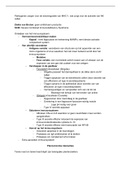
PADI RESCUE FINAL EXAM GRADED A 2024
The most common cause of diver emergencies is - poor judgment Before attempting an in water rescue, which options should you assess? - —Do you need to enter the water at all? —Are properly trained and equipped to ensure both your safety and the victim's? —Can you accomplish the rescue without putting yourself in danger? Stress can cause: - —Temporary strength increase —Faster thinking —Pain Tolerance —Perceptual Narrowing —Panic —Reduced thinking The only benefit of a pocket mask is that it decrease disease transmission risk - False Characteristics of a Non resuscitator demand valve oxygen systems - —Oxygen flows only when patient inhales —Can delivers nearly 100% oxygen —Used only on a breathing patient Characteristic of a continuous flow oxygen systemS - —Wastes more oxygen —May be used with non-breathing patient —May be used with patient that has difficulty breathing. Enumerate the basic steps for emergency management in their proper order - 1. Asses situation 2. Act on plan 3. Delegate 4. Attend to injuries 5. Control scene 6. Arrange evac to medical care Which skills increase your self-rescue abilities? - —Good buoyancy control —Airway Control —Cramp control —Handling air depletion —Responding to vertigo Your first response during any emergency situation should always be: - Stop, think, and act Characteristics of a tired diver - —Signal for help —Respond to directions —Usually assist with rescuer's efforts Characteristics of a panicked diver - —Rejecting equipment —High tread and excessive kicking
Written for
- Institution
- PADI
- Module
- PADI
Document information
- Uploaded on
- June 14, 2024
- Number of pages
- 12
- Written in
- 2023/2024
- Type
- Exam (elaborations)
- Contains
- Questions & answers
Subjects
- padi rescue final exam
-
padi rescue final exam graded a 2024