BUL 5810 Business Law Chapter 3
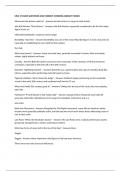
Commerce clause - ANS-Congressional power to regulate commerce with foreign nations, and
among the several states, and with the Indian tribes.
Commercial speech - ANS-Communication that involves only the commercial interests of the
speaker and audience; afforded less protection under the First Amendment than the protection
for religious, political, or social speech
Due process - ANS-Prohibits the government from unfairly or arbitrarily depriving a person of
life, liberty, or property.
Equal protection - ANS-14th Amendment; persons under like circumstances must be given the
same rights.
Federal supremecy - ANS-Foundation of government's power over the states; 'acts of the
Federal Government are operative as supreme law throughout the union'; federal law preempts
state law
Full faith and credit - ANS-Requires states to recognize legislative acts and judicial decisions of
other states.
Incorporation - ANS-Applying some of the Bill or Rights to the states by interpreting the 14th
Amendment, due process clause, as encompassing those provisions.
Interstate commerce - ANS-Dealings and traffic between citizens and inhabitants of different
states.
Judicial review - ANS-A court's power to review the actions of other branches of government,
i.e. declaring executive and judicial decisions unconstitutional.
Privileges and immunitites - ANS-Constitutional provision that a state cannot discriminate
against non-residents SIMPLY because they are non-residents.
Procedural due process - ANS-Procedural fairness is required when the government seeks to
deprive one of life, liberty, or property. Requires notice and a hearing.
Separation of powers - ANS-Doctrine prohibiting one branch of government, either state or
local, from infringing or encroaching upon exercising the powers belonging to another branch.
State action - ANS-An intrusion on a person's rights either by the government or by a private
requirement that can be enforced only by government action.
Commerce clause - ANS-Congressional power to regulate commerce with foreign nations, and
among the several states, and with the Indian tribes.
Commercial speech - ANS-Communication that involves only the commercial interests of the
speaker and audience; afforded less protection under the First Amendment than the protection
for religious, political, or social speech
Due process - ANS-Prohibits the government from unfairly or arbitrarily depriving a person of
life, liberty, or property.
Equal protection - ANS-14th Amendment; persons under like circumstances must be given the
same rights.
Federal supremecy - ANS-Foundation of government's power over the states; 'acts of the
Federal Government are operative as supreme law throughout the union'; federal law preempts
state law
Full faith and credit - ANS-Requires states to recognize legislative acts and judicial decisions of
other states.
Incorporation - ANS-Applying some of the Bill or Rights to the states by interpreting the 14th
Amendment, due process clause, as encompassing those provisions.
Interstate commerce - ANS-Dealings and traffic between citizens and inhabitants of different
states.
Judicial review - ANS-A court's power to review the actions of other branches of government,
i.e. declaring executive and judicial decisions unconstitutional.
Privileges and immunitites - ANS-Constitutional provision that a state cannot discriminate
against non-residents SIMPLY because they are non-residents.
Procedural due process - ANS-Procedural fairness is required when the government seeks to
deprive one of life, liberty, or property. Requires notice and a hearing.
Separation of powers - ANS-Doctrine prohibiting one branch of government, either state or
local, from infringing or encroaching upon exercising the powers belonging to another branch.
State action - ANS-An intrusion on a person's rights either by the government or by a private
requirement that can be enforced only by government action.