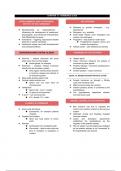
CHAPTER 13 - HORMONES & SEX
DEVELOPMENTAL AND ACTIVATIONAL SEX STEROIDS
EFFECTS OF SEX HORMONES
➔ Released by gonads Androgens - e.g.,
➔ Developmental (or “organizational”) - testosterone
influencing the development of anatomical, ➔ Estrogens - e.g., estradiol
physiological, and behavioral characteristics ➔ Adult testes release more androgens and
that differentiate the sexes ovaries more estrogens
➔ Activational - triggering reproduction-related ➔ Progestins – also present in both sexes
behavior in mature individuals ◆ Progesterone prepares uterus and
➔ Adolescent surges have both developmental breasts for pregnancy
and activational effects ➔ Adrenal cortex – also releases sex steroids
NEUROENDOCRINE SYSTEM: GLANDS HORMONES OF THE PITUITARY
➔ Exocrine – release chemicals into ducts ➔ “Master gland”
which carry them to their targets ➔ Tropic hormones influence the release of
◆ Sweat glands, for example hormones by other glands
➔ Endocrine – ductless; release hormones ➔ Posterior pituitary – hormones synthesized in
directly into the circulatory system the hypothalamus
◆ Only organs whose primary function ➔ Anterior pituitary – tropic hormones
is hormone release are referred to
as endocrine glands Cyclic vs. Steady Gonadal Hormone Levels
➔ Male testes produce sperm cells
➔ Female ovaries produce ova ➔ Female hormones go through a 28-day
◆ Sperm and ova each have 23 cycle, the menstrual cycle
chromosomes ➔ Male hormone levels are constant
➔ Fertilization ➔ Anterior pituitary activity is controlled by the
◆ Sperm cell + ovum = zygote hypothalamus
◆ 23 pairs of chromosomes ➔ The hypothalamus determines whether
➔ X and Y – sex chromosomes hormone levels cycle
◆ XX = female, XY = male
NEURAL CONTROL OF THE PITUITARY
CLASSES OF HORMONES
➔ Bird research was first to implicate the
➔ Amino acid derivatives control over pituitary function by the nervous
◆ Epinephrine, for example (adrenal system
medulla) ➔ Light/dark cycling and breeding changed
➔ Peptides and proteins hormone release
◆ Short and long chains of amino ➔ Lesion and stimulation experiments
acids established the hypothalamus as the
➔ Steroids regulator of the anterior pituitary
◆ Synthesized from cholesterol (fat) ➔ Did not explain how the signal was mediated
◆ Fat-soluble – able to enter cells and as the anterior pituitary is not “connected” to
bind to receptors in cytoplasm or the hypothalamus by neurons
nucleus
, HORMONES AND SEXUAL DEVELOPMENT OF
Control of the Pituitary by the Hypothalamus
THE BODY
➔ Posterior – neural input from hypothalamus
◆ Vasopressin – antidiuretic hormone ➔ Humans are dimorphic – exist in two forms
◆ Oxytocin – labor and lactation ➔ Genetic information on the sex
◆ Synthesized in hypothalamic chromosomes normally determines male or
paraventricular and supraoptic female development
nuclei
◆ These nuclei have terminals in the FETAL HORMONES AND DEVELOPMENT OF
posterior pituitary REPRODUCTIVE ORGANS: GONADS
➔ Anterior pituitary – hypothalamopituitary
portal system carries hormones from the
hypothalamus to the anterior pituitary ➔ Initially there is a primordial gonad
◆ Cortex – potential to be an ovary
◆ Medulla – potential to be a testis
DISCOVERY OF HYPOTHALAMIC RELEASING ➔ If XY, The Sry gene on the Y chromosome
HORMONES triggers the synthesis of Sry protein
➔ If no Sry protein present, cortex develops
➔ Thyrotropin-releasing hormone first isolated into ovary
from the hypothalamus of sheep and then
pigs FETAL HORMONES AND DEVELOPMENT OF
➔ Triggers the release of thyrotropin from the REPRODUCTIVE ORGANS: INTERNAL
anterior pituitary REPRODUCTIVE DUCTS
➔ Thyrotropin then stimulates release of
hormones from the thyroid gland
➔ Both sexes begin with two sets of
reproductive ducts
REGULATION OF HORMONE LEVELS ◆ Wolffian system – male – seminal
vesicles, vas deferens
➔ Neural ◆ Müllerian system – female – uterus,
◆ All endocrine glands (except the vagina, fallopian tubes
anterior pituitary) receive neural ➔ Third prenatal month: differentiation of ducts
signals ◆ Testes produce testosterone and
◆ From cerebral or autonomic Müllerian-inhibiting substance
neurons ● Wolffian system develops,
➔ Hormonal Müllerian degenerates,
◆ Tropic hormones, negative testes descend
feedback ➔ No testes – no testicular hormones
➔ Nonhormonal chemicals ◆ Müllerian system develops, Wolffian
◆ Glucose, Ca2+, Na+ degenerates
PULSATILE HORMONE RELEASE EXTERNAL REPRODUCTIVE ORGANS
➔ Hormones tend to be released in pulses ➔ External reproductive structures – genitalia –
➔ Leads to often large minute-to-minute develop from one bipotential precursor
fluctuations in levels of hormones ➔ Differentiation occurs in second month
◆ Testosterone produces male
structures
◆ Without testosterone, female
structures develop
DEVELOPMENTAL AND ACTIVATIONAL SEX STEROIDS
EFFECTS OF SEX HORMONES
➔ Released by gonads Androgens - e.g.,
➔ Developmental (or “organizational”) - testosterone
influencing the development of anatomical, ➔ Estrogens - e.g., estradiol
physiological, and behavioral characteristics ➔ Adult testes release more androgens and
that differentiate the sexes ovaries more estrogens
➔ Activational - triggering reproduction-related ➔ Progestins – also present in both sexes
behavior in mature individuals ◆ Progesterone prepares uterus and
➔ Adolescent surges have both developmental breasts for pregnancy
and activational effects ➔ Adrenal cortex – also releases sex steroids
NEUROENDOCRINE SYSTEM: GLANDS HORMONES OF THE PITUITARY
➔ Exocrine – release chemicals into ducts ➔ “Master gland”
which carry them to their targets ➔ Tropic hormones influence the release of
◆ Sweat glands, for example hormones by other glands
➔ Endocrine – ductless; release hormones ➔ Posterior pituitary – hormones synthesized in
directly into the circulatory system the hypothalamus
◆ Only organs whose primary function ➔ Anterior pituitary – tropic hormones
is hormone release are referred to
as endocrine glands Cyclic vs. Steady Gonadal Hormone Levels
➔ Male testes produce sperm cells
➔ Female ovaries produce ova ➔ Female hormones go through a 28-day
◆ Sperm and ova each have 23 cycle, the menstrual cycle
chromosomes ➔ Male hormone levels are constant
➔ Fertilization ➔ Anterior pituitary activity is controlled by the
◆ Sperm cell + ovum = zygote hypothalamus
◆ 23 pairs of chromosomes ➔ The hypothalamus determines whether
➔ X and Y – sex chromosomes hormone levels cycle
◆ XX = female, XY = male
NEURAL CONTROL OF THE PITUITARY
CLASSES OF HORMONES
➔ Bird research was first to implicate the
➔ Amino acid derivatives control over pituitary function by the nervous
◆ Epinephrine, for example (adrenal system
medulla) ➔ Light/dark cycling and breeding changed
➔ Peptides and proteins hormone release
◆ Short and long chains of amino ➔ Lesion and stimulation experiments
acids established the hypothalamus as the
➔ Steroids regulator of the anterior pituitary
◆ Synthesized from cholesterol (fat) ➔ Did not explain how the signal was mediated
◆ Fat-soluble – able to enter cells and as the anterior pituitary is not “connected” to
bind to receptors in cytoplasm or the hypothalamus by neurons
nucleus
, HORMONES AND SEXUAL DEVELOPMENT OF
Control of the Pituitary by the Hypothalamus
THE BODY
➔ Posterior – neural input from hypothalamus
◆ Vasopressin – antidiuretic hormone ➔ Humans are dimorphic – exist in two forms
◆ Oxytocin – labor and lactation ➔ Genetic information on the sex
◆ Synthesized in hypothalamic chromosomes normally determines male or
paraventricular and supraoptic female development
nuclei
◆ These nuclei have terminals in the FETAL HORMONES AND DEVELOPMENT OF
posterior pituitary REPRODUCTIVE ORGANS: GONADS
➔ Anterior pituitary – hypothalamopituitary
portal system carries hormones from the
hypothalamus to the anterior pituitary ➔ Initially there is a primordial gonad
◆ Cortex – potential to be an ovary
◆ Medulla – potential to be a testis
DISCOVERY OF HYPOTHALAMIC RELEASING ➔ If XY, The Sry gene on the Y chromosome
HORMONES triggers the synthesis of Sry protein
➔ If no Sry protein present, cortex develops
➔ Thyrotropin-releasing hormone first isolated into ovary
from the hypothalamus of sheep and then
pigs FETAL HORMONES AND DEVELOPMENT OF
➔ Triggers the release of thyrotropin from the REPRODUCTIVE ORGANS: INTERNAL
anterior pituitary REPRODUCTIVE DUCTS
➔ Thyrotropin then stimulates release of
hormones from the thyroid gland
➔ Both sexes begin with two sets of
reproductive ducts
REGULATION OF HORMONE LEVELS ◆ Wolffian system – male – seminal
vesicles, vas deferens
➔ Neural ◆ Müllerian system – female – uterus,
◆ All endocrine glands (except the vagina, fallopian tubes
anterior pituitary) receive neural ➔ Third prenatal month: differentiation of ducts
signals ◆ Testes produce testosterone and
◆ From cerebral or autonomic Müllerian-inhibiting substance
neurons ● Wolffian system develops,
➔ Hormonal Müllerian degenerates,
◆ Tropic hormones, negative testes descend
feedback ➔ No testes – no testicular hormones
➔ Nonhormonal chemicals ◆ Müllerian system develops, Wolffian
◆ Glucose, Ca2+, Na+ degenerates
PULSATILE HORMONE RELEASE EXTERNAL REPRODUCTIVE ORGANS
➔ Hormones tend to be released in pulses ➔ External reproductive structures – genitalia –
➔ Leads to often large minute-to-minute develop from one bipotential precursor
fluctuations in levels of hormones ➔ Differentiation occurs in second month
◆ Testosterone produces male
structures
◆ Without testosterone, female
structures develop