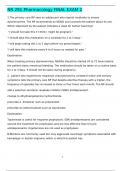
12/4/23, c4:44 2 c2023-2024 cNURS c5334 cPharm cStudy cGuide cQuiz c1 cLatest
cPM cUpdate cBest cE…
2023/2024
NURS 5334 c
Pharm Study c
cGuide Quiz 1 c c
c Latest Update c
Best Exam
c c
Solution
c
Graded A+
c c
about:blan 1/84
k
,12/4/23, c4:44 2 c2023-2024 cNURS c5334 cPharm cStudy cGuide cQuiz c1 cLatest
cPM cUpdate cBest cE…
NURS 5334 PHARM c c
MODULE c 1
• What care cthe cBON crules cand cregulations cfor cprescriptive cauthority
for c the cadvance cpractice cnurse?
c
• Texas cis cvery c restricted
• Describe cthe cpharmacokinetic cprocesses cof cabsorption, cdistribution,
c metabolism cand celimination cand chow cdifferences cin cthese careas
affect c drug caction.
c
• Absorption
• Drug’s cmovement cfrom cthe csite cof cadministration cinto
the c blood.
c
• Distribution
• Drug’s cmovement cfrom cthe cblood cinto cthe cinterstitial
space c of ctissues cand cfrom cthere cinto ccells.
c
• Metabolism
• Biotransformation cis cthe cenzymatically cmediated calteration
of c drug cstructure.
c
• Elimination
• Combination c of c metabolism c and c excretion
• Discuss cthe cimpact cof cfood con cdrug cabsorption, cdrug cmetabolism cand
on c drug ctoxicity cand caction—as cwell cas cthe ctiming cof cdrug
c
administration.
c
LIFESPAN
• Hepatic cmetabolism cand cGFR cincrease cduring cpregnancy, cdosages
of c some cdrugs cmay cneed cto cbe cincreased.
c
• Rate c of c albumin c to c water c decreases
• Third ctrimester: cRenal cblood cflow cis cdoubled cand
renal c excretion cis caccelerated c(drugs cexcreted
c
rapidly)
c
• Tone c and c mobility c of c bowel c decrease
• Prolongation c of c drug c effects c Total c (½ c life c increases)
Understand c stages c of c development c in c pregnancy
about:blan 2/84
k
,12/4/23, c4:44 2 c2023-2024 cNURS c5334 cPharm cStudy cGuide cQuiz c1 cLatest
cPM cUpdate cBest cE…
• Conception: c through c week c 2
• Embryonic c period: c week c 3-week c 8
a) c Gross c malformations c can c be c produced c by c teratogens
• Fetal c period: c week c 9-delivery
• Understand c pregnancy c labeling
• 3 c categories c now
a) c Pregnancy, clactation, cmale c& cfemale creproductive
c potential
• How c do c you c decrease c risk c in c the c infant c during c breastfeeding?
• Take cmeds cimmediately cafter cbreastfeeding, cavoid cdrugs
that c have clong chalf-lives, cchoose cdrugs cthat ctend cto cbe
c
excluded c from cmilk, cavoid cdrugs cthat care cknown cto cbe
c
hazardous.
c
• How c do c pediatric c patients c differ c in c their c response c to c medications?
• Absorption
a) Oral?
• Neonates: cdrug cremain cin cthe cstomach clonger
c which cincreases cthe clevels, clow cacidity ccan
affect c the cabsorption cof cacid clabile cdrugs
c
b) Parenteral?
• Reponses c are c slow c and c erratic.
• Infancy: cabsorption cis cmore crapid cthan cin
neonates c & cadults
c
• Best c avoided c in c infants
c) Transdermal?
• Greater cskin cpermeability cwhich cincreases
c topical cdrug cabsorption cand cincreases cthe
risk c for ctoxicity
c
• Distribution
a) Protein c binding
about:blan 3/84
k
, 12/4/23, c4:44 2 c2023-2024 cNURS c5334 cPharm cStudy cGuide cQuiz c1 cLatest
cPM cUpdate cBest cE…
1. c Neonates: cless cprotein-binding—increased
c availability cof chighly cprotein cbound cdrugs csuch
c as c phenytoin, cdiazepam, cand cphenobarbital.
c Reduced c dosages cneeded cin cthese chighly
c bound cdrugs.
b) Blood c Brain c Barrier
1. c Not cfully cdeveloped cat cbirth, cdrugs chave ceasy
c access cto cthe cCNS, cdoses cshould cbe creduced.
• Metabolism
a) Hepatic c function?
1. c Liver chasn’t reached
c full
c maturation—
c
sensitive c to drugs
c eliminated
c by
c the
c
c CYP450. cLiver’s c ability cto cmetabolize cdrugs
c increases cabout cone c month cafter cbirth.
b) T chalf clife
1. c Decreased cby c as cmuch cas c48-72 chours
• Excretion
a) Renal?
1. cGFR cis csignificantly creduced cat cbirth, cdrugs
c eliminated cby cthe ckidneys cmust cbe cgiven cin ca
c reduced cdosage cand clonger cdosing cintervals.
• What c education c needs c to c be c given c to c parents?
• What c to c do cif c child cspits c out c medication c or c throws cit c up
• Effective ceducation: cdosage csize cand ctiming, croute,
technique c of cadministration, cduration cof ctreatment, chow
c
to cstore cthe c drug, cnature cand ctime ccourse cof cthe cdesired
c
response, cnature c and ctime ccourse cof cadverse creactions.
c
• Compare cand ccontrast cpharmacokinetics cand
c pharmacodynamics cof cspecial cpopulations—pediatrics,
older
c
about:blan 4/84
k
cPM cUpdate cBest cE…
2023/2024
NURS 5334 c
Pharm Study c
cGuide Quiz 1 c c
c Latest Update c
Best Exam
c c
Solution
c
Graded A+
c c
about:blan 1/84
k
,12/4/23, c4:44 2 c2023-2024 cNURS c5334 cPharm cStudy cGuide cQuiz c1 cLatest
cPM cUpdate cBest cE…
NURS 5334 PHARM c c
MODULE c 1
• What care cthe cBON crules cand cregulations cfor cprescriptive cauthority
for c the cadvance cpractice cnurse?
c
• Texas cis cvery c restricted
• Describe cthe cpharmacokinetic cprocesses cof cabsorption, cdistribution,
c metabolism cand celimination cand chow cdifferences cin cthese careas
affect c drug caction.
c
• Absorption
• Drug’s cmovement cfrom cthe csite cof cadministration cinto
the c blood.
c
• Distribution
• Drug’s cmovement cfrom cthe cblood cinto cthe cinterstitial
space c of ctissues cand cfrom cthere cinto ccells.
c
• Metabolism
• Biotransformation cis cthe cenzymatically cmediated calteration
of c drug cstructure.
c
• Elimination
• Combination c of c metabolism c and c excretion
• Discuss cthe cimpact cof cfood con cdrug cabsorption, cdrug cmetabolism cand
on c drug ctoxicity cand caction—as cwell cas cthe ctiming cof cdrug
c
administration.
c
LIFESPAN
• Hepatic cmetabolism cand cGFR cincrease cduring cpregnancy, cdosages
of c some cdrugs cmay cneed cto cbe cincreased.
c
• Rate c of c albumin c to c water c decreases
• Third ctrimester: cRenal cblood cflow cis cdoubled cand
renal c excretion cis caccelerated c(drugs cexcreted
c
rapidly)
c
• Tone c and c mobility c of c bowel c decrease
• Prolongation c of c drug c effects c Total c (½ c life c increases)
Understand c stages c of c development c in c pregnancy
about:blan 2/84
k
,12/4/23, c4:44 2 c2023-2024 cNURS c5334 cPharm cStudy cGuide cQuiz c1 cLatest
cPM cUpdate cBest cE…
• Conception: c through c week c 2
• Embryonic c period: c week c 3-week c 8
a) c Gross c malformations c can c be c produced c by c teratogens
• Fetal c period: c week c 9-delivery
• Understand c pregnancy c labeling
• 3 c categories c now
a) c Pregnancy, clactation, cmale c& cfemale creproductive
c potential
• How c do c you c decrease c risk c in c the c infant c during c breastfeeding?
• Take cmeds cimmediately cafter cbreastfeeding, cavoid cdrugs
that c have clong chalf-lives, cchoose cdrugs cthat ctend cto cbe
c
excluded c from cmilk, cavoid cdrugs cthat care cknown cto cbe
c
hazardous.
c
• How c do c pediatric c patients c differ c in c their c response c to c medications?
• Absorption
a) Oral?
• Neonates: cdrug cremain cin cthe cstomach clonger
c which cincreases cthe clevels, clow cacidity ccan
affect c the cabsorption cof cacid clabile cdrugs
c
b) Parenteral?
• Reponses c are c slow c and c erratic.
• Infancy: cabsorption cis cmore crapid cthan cin
neonates c & cadults
c
• Best c avoided c in c infants
c) Transdermal?
• Greater cskin cpermeability cwhich cincreases
c topical cdrug cabsorption cand cincreases cthe
risk c for ctoxicity
c
• Distribution
a) Protein c binding
about:blan 3/84
k
, 12/4/23, c4:44 2 c2023-2024 cNURS c5334 cPharm cStudy cGuide cQuiz c1 cLatest
cPM cUpdate cBest cE…
1. c Neonates: cless cprotein-binding—increased
c availability cof chighly cprotein cbound cdrugs csuch
c as c phenytoin, cdiazepam, cand cphenobarbital.
c Reduced c dosages cneeded cin cthese chighly
c bound cdrugs.
b) Blood c Brain c Barrier
1. c Not cfully cdeveloped cat cbirth, cdrugs chave ceasy
c access cto cthe cCNS, cdoses cshould cbe creduced.
• Metabolism
a) Hepatic c function?
1. c Liver chasn’t reached
c full
c maturation—
c
sensitive c to drugs
c eliminated
c by
c the
c
c CYP450. cLiver’s c ability cto cmetabolize cdrugs
c increases cabout cone c month cafter cbirth.
b) T chalf clife
1. c Decreased cby c as cmuch cas c48-72 chours
• Excretion
a) Renal?
1. cGFR cis csignificantly creduced cat cbirth, cdrugs
c eliminated cby cthe ckidneys cmust cbe cgiven cin ca
c reduced cdosage cand clonger cdosing cintervals.
• What c education c needs c to c be c given c to c parents?
• What c to c do cif c child cspits c out c medication c or c throws cit c up
• Effective ceducation: cdosage csize cand ctiming, croute,
technique c of cadministration, cduration cof ctreatment, chow
c
to cstore cthe c drug, cnature cand ctime ccourse cof cthe cdesired
c
response, cnature c and ctime ccourse cof cadverse creactions.
c
• Compare cand ccontrast cpharmacokinetics cand
c pharmacodynamics cof cspecial cpopulations—pediatrics,
older
c
about:blan 4/84
k